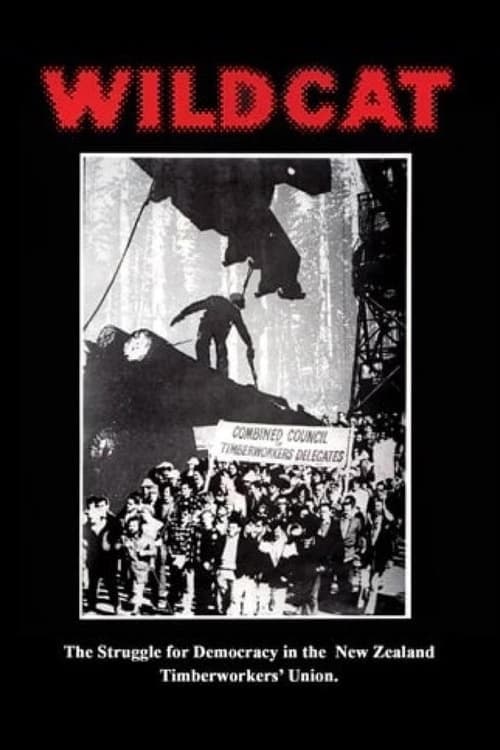
Covers the 12-week-long strike at Kinleith Pulp and Paper Mill, owned by New Zealand Forest Products in January 1980.
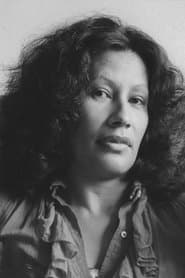
Merata Mita
as Self - Narrator (voice)
On the 5th of March 1985, a crowd gathered in a South Yorkshire pit village to watch a sight none of them had seen in a year. The villagers, many of them in tears, cheered and clapped as the men of Grimethorpe Colliery marched back to work accompanied by the village’s world-famous brass band. The miners and their families had endured months of hardship. It had all been for nothing. The miners had lost the strike called on March 6th 1984. They would lose a lot more in the years to come. But was it a good thing for the country that the miners lost their last battle?
On 28 November 1979, an Air New Zealand jet with 257 passengers went missing during a sightseeing tour over Antarctica. Within hours 11 ordinary police officers were called to duty to face the formidable Mount Erebus. As the police recovered the victims, an investigation team tried to uncover the mystery of how a jet could fly into a mountain in broad daylight. Did the airline have a secret it wanted to bury? This film tells the story of four New Zealand police officers who went to Antarctica as part of the police operation to recover the victims of the crash. Set in the beautiful yet hostile environment of Antarctica, this is the emotional and compelling true story of an extraordinary police operation.
In 1966 a group of determined young men defied the New Zealand government and launched a pirate radio station aboard a ship in the Hauraki Gulf.
Documentary marking the 30th anniversary of the 1984 miners' strike, one of the bitterest industrial disputes in British history, with stories from both sides of the conflict.
In 1992 – 500 years after the beginning of Spain's global empire with the discovery of America – Spain proudly presented itself to the international community as a modern, developed, dynamic country through the Olympic Games in Barcelona and the Expo in Seville. But for filmmaker Luis López Carrasco (1981, Murcia), 1992 was also the year in which the regional parliament building in Cartagena was razed during furious protests against the threatened closure of various local industries. El año del descubrimiento revives this almost forgotten history in a typical Spanish bar in Cartagena, where different generations come together to drink, eat, smoke and talk. Stories from witnesses, demonstrators and strikers from back then and discussions among younger café visitors on themes such as class consciousness, the economic crisis and the role of unions percolate to the surface amidst talk of other life issues.
Reserved by Citroën for immigrant workers, the Aulnay-sous-Bois factory experienced its first strike in 1982. Thirty years later, it's the turn of a new generation to join the fight. Worthy heirs of their parents, the workers revive a forgotten memory and offer a unique perspective on the history of contemporary France. Matteo Severi's film mirrors these two social struggles, led by workers from immigrant backgrounds.
Told through the eyes of an Australian news reporter, Eammon Ashton-Atkinson, who moved to the UK to escape depression, the documentary, follows 3 characters on their journey to overcome their struggles as the club competes against 60 other gay clubs in the Bingham Cup in Amsterdam – the World Cup of gay rugby.
Southern New Zealand is home to an incredible diversity of penguins; each species has its mode of reproduction, its habits of brooding and teaching its young.
Seeing is to painting what listening is to politics. Survival as an artist demands both. Paint Until Dawn is a documentary on art in the life of James Gahagan (1927-1999), who painted all night to push the limits of vision. His life and thought reveal a correlation between art and activism through an interesting angle: the creative process itself.
I have been pretty satisfied with my life before I got on the bus. When I do in June 2011, my whole life turns upside down. I am just a regular passenger at first. Like other people I was sorry, and felt obliged to help and care for other passengers. Then I begin to film these common heroes with my camera. Those who speak about hope, who provide it and get on the bus, Ms. Kim Jin-suk, and other crane laborers who risk their safety while demonstrating for their rights on high. She, while stationed insecurely on high, begins interacting with the world through Twitter and makes friends. Then I realize I really love her. Will we have her back safely?
The struggle of a small group of blacksmiths trapped between keeping a long going strike with claims for better fees and the necessity of getting back to work when there's no money left for basic necessities.
Max Gimblett: Original Mind documents the life and process of eccentric, creative genius Max Gimblett. One of New Zealand’s most successful and internationally prominent living painters, Gimblett has been working in America since 1962. The filmmakers spent a week in Gimblett’s Soho loft where he and his devoted studio assistants generously revealed the techniques and philosophy behind his beautiful art.
This film takes us into the harsh realm of BC's early coal mines, canneries, and lumber camps; where primitve conditions and speed-ups often cost lives. Then, the film moves through the unemployed' struggles of the '30s, post WWII equity campaigns, and into more recent public sector strikes over union rights.
A harsh winter in Canada’s Muskoka, where players face sub-zero temperatures, contrasts with New Zealand, where hockey is just starting to take root. Yet, between these two far-apart nations, there’s one thing they share: a deep love for the game of hockey.
In the years since New Zealand politicians began to grapple with climate change our greenhouse gas emissions have burgeoned. Alister Barry’s doco draws on TV archives and interviews with key participants to find out why.
A place of biological superlatives with a flora and fauna that have only just begun to be researched: Lord Howe Island, between Australia and New Zealand. This is the first documentary on what may be the most isolated nature reserve on the planet.
In 1999, the largely conservative Wairarapa district in New Zealand elected a former cabaret performer/actress named Georgina Beyer to the country's House of Parliament -- a seemingly unremarkable event in that country's history except for the fact that Beyer is a transsexual and may very well be the first transsexual in the world to be elected to a national office. In their 2002 biographical documentary Georgie Girl, co-directors Peter Wells and Annie Goldson highlight the popular Member of Parliament's rapid rise through local government to prominence in the New Zealand national government.
When workers at the Hormel meatpacking plant in Austin, Minnesota are asked to take a substantial pay cut in a highly profitable year, the local labor union decides to go on strike and fight for a wage they believe is fair. But as the work stoppage drags on and the strikers face losing everything, friends become enemies, families are divided and the very future of this typical mid American town is threatened.