Since 1950, Alberta's fabled Rat Patrol has kept the province rat-free. But as pest control meets ecology in the 21st century, what does the future hold for this mythic institution and their "enemy?"
Nathan Dales
as Self - Narrator (voice)
The undertaking of an enthusiastic group of scientists to transform an indoor cycle racing-track built for the 1968 Montréal Olympics into an ecological park. The Biodôme of Montréal contains 4 ecosystems of the 3 Americas, from the Tropical Forrest to the Polar World, from the Laurentian Forrest to the St-Lawrence Marine Environment.
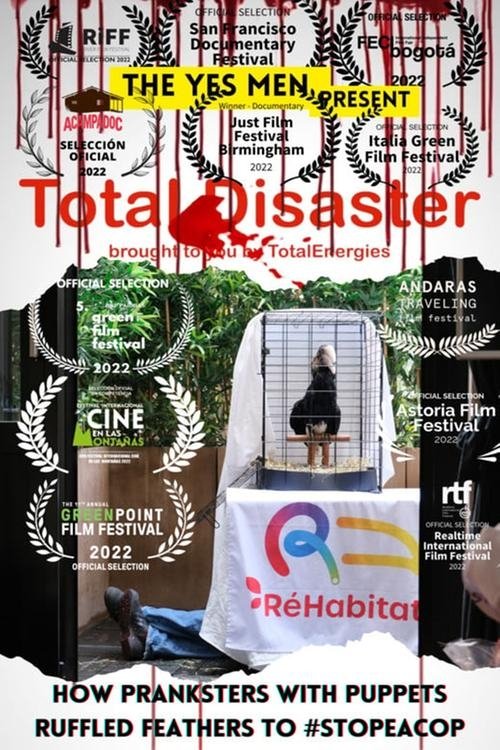
Ed is commissioned to make a documentary intending to change those habits of society that are harmful to animals. But completely alien to the animal protection movement, he will realize that to carry out the project, he must first convince himself.
Animals shock us with the most bizarre appearances - some even look like they've been dressing up. But the weird and wonderful shapes and colours of nature are vital to the animals' lives. Sometimes they're disguised to help blend in, other times they are designed to stand out and show off. But whether it's a monkey in make-up or a salamander's toxic stripes.
In the daily struggle for survival, terrible thirst drives wildlife to water...even when the water is just inches away from the jaws of a crocodile. During one harsh season, a punishing drought draws some of Africa's most magnificent creatures to the shrinking pools of the Luvuvhu River. Its dwindling waters provide relief for baboons, impala, elephants, lions, water birds and bee-eaters - but also a refuge for scores of hungry crocodiles. Amidst the stunning scenes of nature at its harshest, strange things happen. A baby crocodile basks on top of a hippopotamus. Baboons attack a crocodile that has taken a youngster from the troop. Crocodiles harass a heron and steal its hard-won catch. And hippos calmly wade into the middle of a crocodile feeding frenzy. But the power of nature and her relentless drought may prove greater than even that of the most fearsome beasts. This cruel season may turn out to be the LAST FEAST OF THE CROCODILES.
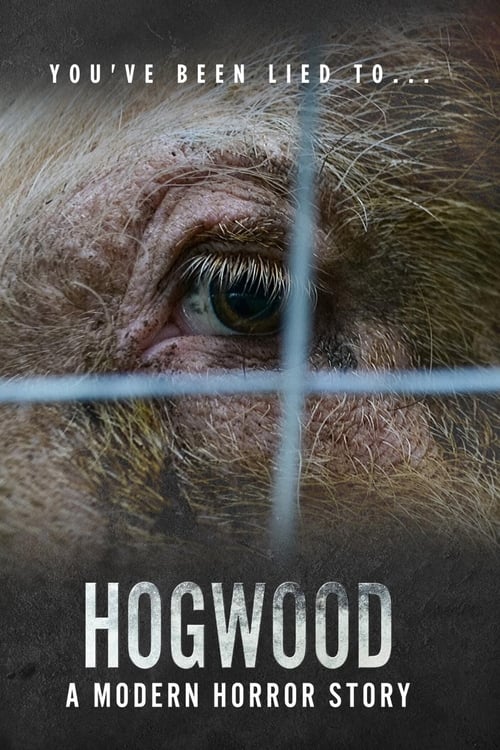
Exposing the dark underbelly of modern animal agriculture through drones, hidden & handheld cameras, the feature-length film explores the morality and validity of our dominion over the animal kingdom.
This feature documentary examines the destruction of the tundra barrens of northern Canada for mineral mining, including that of Canadian diamonds. Many species have been threatened by this development, including the caribou and the Eskimo Curlew, a bird that flew the sky in thousands which is now nearly extinct. This film makes a compelling case for planned conservation in one of the last unspoiled wilderness regions left in the world.
Earth teems with a staggering variety of animals, including 9,000 kinds of birds, 28,000 types of fish, and more than 350,000 species of beetles. What explains this explosion of living creatures—1.4 million different species discovered so far, with perhaps another 50 million to go? The source of life's endless forms was a profound mystery until Charles Darwin brought forth his revolutionary idea of natural selection. But Darwin's radical insights raised as many questions as they answered. What actually drives evolution and turns one species into another? To what degree do different animals rely on the same genetic toolkit? And how did we evolve?
A short documentary on the making of the first live-action Garfield movie.
Why do migratory birds take on the hardships of a long flight year after year? The documentary accompanies migratory birds with breathtaking aerial images of their journeys from a "bird's eye view" in the service of science. The camera helicopter crosses the dangerous Strait of Gibraltar together with storks and accompanies them in the air all the way to Tanzania and Kenya.
This movie captures the motivations of an animal rights activist. Through his eyes, we explore the paradoxes in our society --- of being an animal lover and yet consuming some of them --- stemming from social conditioning and cognitive dissonance. The protagonist describes his journey and his motives and beliefs. Through this film, he tells us the real story behind the happy facade of our food choices and the difficulty and incessant obstruction faced by activists to stand against the unjust and powerful system.
Some champion exhibits from the National Cat Club Show and the Combined Bird and Aquaria Show, described by W. Cox-Ife, F. Hopkins, and L.C. Mandeville.
In the small mountain town of Barga, Italy, a group of four filmmakers speak with local cat lovers and immerse themselves in the unique world of street-trotting felines and Gattaras.
Get acquainted with small animals which live in our parks, roadsides, back yards or homes - the rabbit, squirrel, chipmunk, gopher and others.
Set in the mountains of northeast Italy, this film may be considered an observational documentary about rural life. Although this is undeniably the case, at the same time Under the cold stars can hardly be considered a documentary: the microcosm on which it focuses appears to be a reflection of a broader reality and perhaps a way to deal with the themes of man’s existence and his relationship with animals, nature and, most importantly, with time. As written by Franco Piavoli "it is a film which essentially relies on images and sound, where words themselves are sound and the music of life, of the relentless flow of time."
Wildlife biologist Karsten Heuer and his wife, environmentalist Leanne Allison follow a herd of 120,000 caribou on foot across 1500 km of Arctic tundra, hoping to raise awareness of the threats to the caribou's survival. Along this journey, they brave torrid conditions, dangerous wildlife and treacherous terrain all in the hopes of learning the truth about this epic migration.