Amidst a mostly Catholic community, a small tiny Anglican church offers more to the community of Placentia than people may think, and holds many connections and history to the rest of the world.
Christopher Newhook
as Self
Kevin Noseworthy
Tom O’Keefe
More than 2.000 years ago, Narbonne in today's Département Aude was the capital of a huge Roman province in Southern Gaul - Gallia Narbonensis. It was the second most important Roman port in the western Mediterranean and the town was one of the most important commercial hubs between the colonies and the Roman Empire, thus the town could boast a size rivaling that of the city that had established it: Rome itself. Paradoxically, the town that distinguished itself for its impressive architecture, today shows no more signs of it: neither temples, arenas, nor theaters. Far less significant Roman towns like Nîmes or Arles are full of ancient sites. Narbonne today is a tranquil town in Occitania
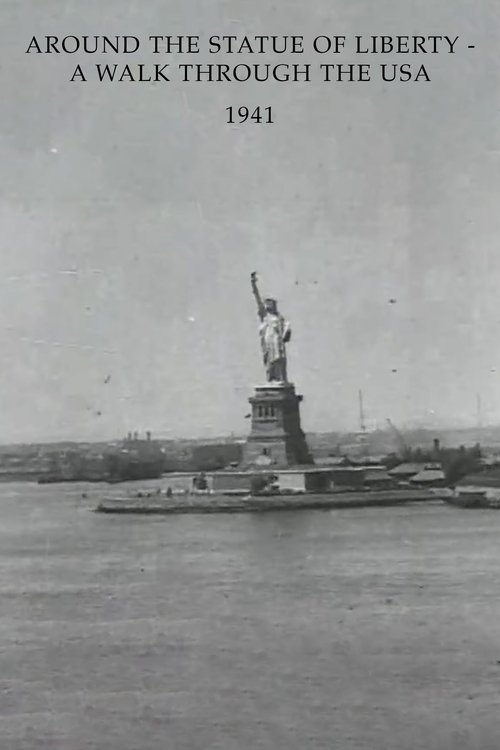
Nazi propaganda film “exposes” the United States and its plans against Germany and the German people. Shows so-called signs of decay, gang-wars, slums, riots of blacks, etc. Small wonder, the comment is, that the Statue of Liberty turns it back on America.
The Pittsburgh History Series is an ongoing series of hour-long documentaries that highlight various parts of our city's history. Since 1988, these documentaries have captivated local audiences by mixing memories, old films, [mementos], home movies, snapshots and new interviews.
A documentary that explores the myth behind the truth. Different people around the globe reinterpret the legend of Che Guevara at will: from the rebel living in Hong Kong fighting Chinese domination, to the German neonazi preaching revolution and the Castro-hating Cuban. Their testimonies prove that the Argentinian revolutionary's historical impact reverberates still. But like with all legends, each sees what he will, in often contradictory perspectives.
This short documentary depicts the search, discovery and authentication of the only known Norse settlement in North America - Vinland the Good. Mentioned in Icelandic manuscripts and speculated about for over two centuries, Vinland is known as "the place where the wild grapes grow" and was thought to be on the eastern coast between Virginia and Newfoundland. In 1960 a curious group of house mounds was uncovered at l'Anse aux Meadows in northern Newfoundland by Drs. Helge Ingstad and Anne Stine Ingstad of Norway. Added to the United Nations World Heritage List, l'Anse aux Meadows is considered one of the most important archaeological sites in the world.
Secluded from view by nine-meter-high walls and composed of 980 buildings, the Forbidden City in Beijing is the largest imperial palace ever built in the world. Three majestic structures form its center and host the city's ceremonies, each of which is considered an architectural masterpiece. In 1406, construction of the Forbidden City was launched at the initiative of one of China's most powerful sovereigns and founder of the Ming dynasty: Yongle. Endowed with divine power, the construction has already resisted more than 200 earthquakes.
Combining archival photos with new and found footage, this short film presents a personal, impressionistic rendering of what it's like growing up Mi'kmaq in Newfoundland, while living in a culture of denial. Vistas is a series of 13 short films on nationhood from 13 Indigenous filmmakers from Halifax to Vancouver. It was a collaborative project between the NFB and APTN to bring Indigenous perspectives and stories to an international audience.
Depiction of Newfoundland's "old times" as seen by Julie O'Brien, an 11-year-old living in Tors Cove. Told in the first person with cutaway shots to the girl's many activities, the film illustrates the way traditions are maintained, remembered and evolved. This film is part of the Children of Canada series.
This short documentary includes three vignettes about life off the coast of Newfoundland. In Island of Birds, we visit Green Island, a sea bird sanctuary where puffins frolic. In Caplin Harvest, little silvery fish called caplin spawn by washing ashore along the waves, making an easy catch for fishermen. In Outports on the Move, off-shore houses are pried loose from their foundation and floated to the Newfoundland mainland, where schools, hospitals, stores and services are available to the community.
For a long time they were an integral part of our society, today they live neglected in our cities and are deemed a problem. The pigeon is a relic of the past that still affects us today.
Benedict Arnold is not the villain of American history most people were taught to believe. New facts and never before presented material illuminate his heroic contributions to the American Revolution and explains his later change of allegiance.
Who are we? Where do we come from? With private recordings, unique archive footage and stories from famous and unknown people, Trondheimsreisen takes a close and personal look at the history of Trondheim.
The film maps the life and work of the historian Ján Mlynárik (1933 - 2012), which took place very close to the controversial events in the historical development of the former Czechoslovakia.
The film is dedicated to the upcoming 150th anniversary of the birth of Kazakh writer and public figure Akhmet Baitursynov next year. Filming began in Almaty in November.
The Spruce Forest explores one of the darkest pages in Romanian history. Inspired by the drama of Fântâna Albă on April 1, 1941, the film reconstructs the fate of a Romanian community in Bessarabia, massacred in a desperate attempt to find refuge from the Soviet occupation. The testimony of a survivor of this genocide becomes the backdrop against which archival images and his wife's memories of Siberia are superimposed, in a dizzying game of mirrors that questions the notion of historical truth and reveals forgotten traumas with potentially devastating consequences in the present.
At once a vast expanse of mesmerizing desolation and the crucible of human history, the Sahara Desert has been both the battlefield of empires and the haunted wilderness at the margins of the known world for thousands of years. Shot on location, this exhilarating documentary brings to life the Sahara’s cruel history and the conflicts that still plague its people. THE SAHARA recounts the story of kings who once led caravans of 30,000 people across the desert, bearing riches beyond imagination. It tells of Roman death squads that exterminated the citizens of the Empire’s most bitter rival and how the Foreign Legion crafted a legend out of last stands and lost causes. From the fabled metropolis of Timbuktu to the shores of Tripoli, THE SAHARA is an illuminating exploration of this unforgiving and remote land of myth and mirage.
Voices in Wartime is a 2004 documentary that explores the human experience of war through poetry. Combining interviews with soldiers, journalists, and historians, it reveals how war affects individuals and societies across time and place. The film features poets from around the world – from Homer and Wilfred Owen to Shoda Shinoe and modern writers in Iraq and Nigeria – showing how poetry expresses the pain, trauma, and truth of conflict. By linking verse with real-life accounts, Voices in Wartime highlights how poetry helps us understand the emotional and moral impact of war.