A film on the "SAPPHIRE", the oldest identified wreck in Canadian waters. Parks Canada's underwater archaeology team is responsible for the excavation of the three-hundred-year-old frigate.
Neil Shee
as Narrator
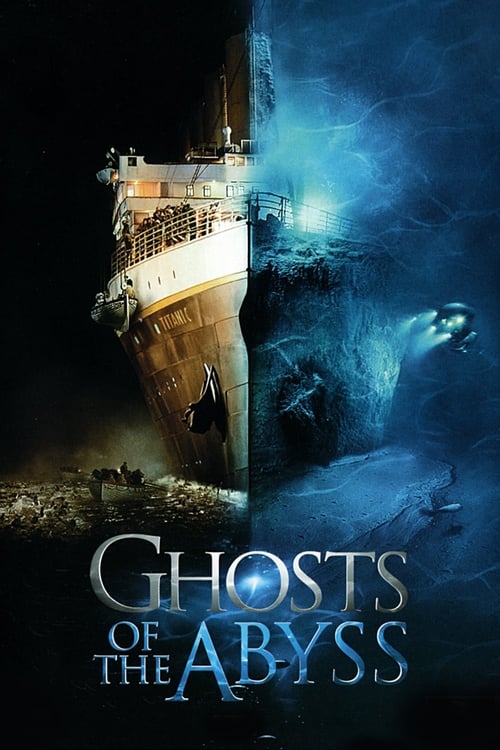
The sinking of the RMS Titanic remains one of the most enduring and mysterious tragedies of the 20th century. For decades, investigators and amateurs alike have floated theories for why it occurred and who was to blame for the extraordinary loss of life, but no one answer could fully explain what happened. Until now. To mark the 100th anniversary of the infamous disaster, Smithsonian Channel will premiere Titanic's Final Mystery. The two-hour special investigates a century of theories and uncovers astonishing new forensic evidence that proves the most likely theory for the case.
An investigation into the mysterious world of the crime novelist Agatha Christie, with comments from poison experts, policeman and pathologists and members of her family.
Step inside one of the most notorious places on the planet in Area 51: I Was There. Made famous by The X Files and generations of conspiracy theorists, only a select few have been to Area 51, and even fewer have spoken of what lies inside. But now you can venture beyond the perimeter fence to discover some of its incredible secrets in our ground-breaking special, Area 51: I Was There. Area 51 was established by the CIA in 1955 to develop classified military projects. Since then the base has gained worldwide notoriety. Satellite images of the area show seven runways and over 25 hangars, and many claim it is here that the US government carries out experiments on everything from UFOs to aliens themselves. Indeed, many insist that the true purpose of the site is to reverse-engineer alien spacecraft recovered from the infamous Roswell crash site. Yet, officially, Area 51 doesn't even exist...
Professor Alice Roberts follows a decade-long historical quest to reveal a hidden secret of the famous bluestones of Stonehenge. Using cutting-edge research, a dedicated team of archaeologists led by Professor Mike Parker Pearson have painstakingly compiled evidence to fill in a 400-year gap in our knowledge of the bluestones, and to show that the original stones of Britain’s most iconic monument had a previous life. Alice joins Mike as they put together the final pieces of the puzzle, not just revealing where the stones came from, how they were moved from Wales to England or even who dragged them all the way, but also solving one of the toughest challenges that archaeologists face.
The SS Central America, a steamer carrying a cache of gold, sank off the southeast coast of the United States in 1857. Part mystery, part adventure story, the film recounts how a group used Bayesian theory to find the ship — and the gold.
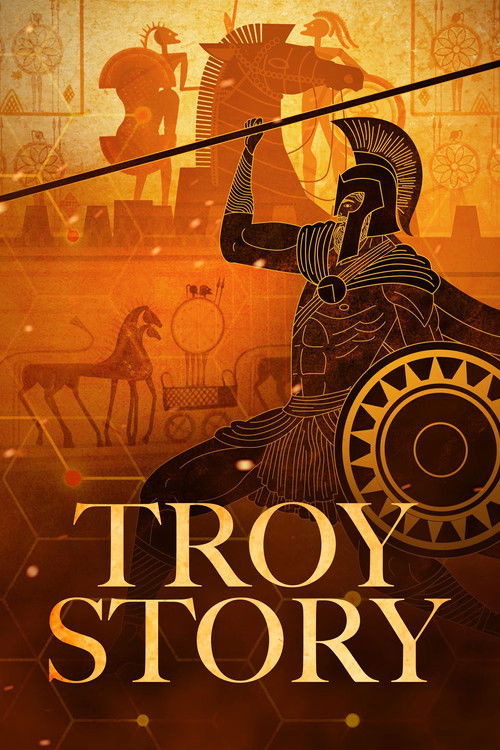
The story of the Trojan Horse is probably one of the most famous stories ever told: after ten years of bloody war, the Greek coalition decides to lift the siege and depart, but not before leaving at the gates a huge wooden horse, which the Trojans confidently lead into the city. A few hours later, the once invincible Troy goes up in flames. What exactly happened? Is this myth true or false?
This documentary records the journey undertaken by Jacques Cousteau, his 24-member team, and an NFB film crew to explore the Grand Banks of Newfoundland, one of the world's richest fishing areas. They discover shipwrecks, film icebergs and observe beluga whales, humpback whales and harp seals. The film also includes a fascinating sequence showing Calypso divers freeing a calf whale entrapped in a fishing net.
In this spectacular feature-length documentary, oceanographer Jacques Cousteau and an NFB crew sail up the St. Lawrence River to the Great Lakes on board the specially equipped vessel, the Calypso. They explore the countryside from their helicopter and plumb the depths of the waters in their diving saucer. They encounter shipwrecks, the Manicouagan power dam, Niagara Falls, the locks of the St. Lawrence Seaway and an underwater chase with caribou.
For centuries, Stonehenge has been cloaked in mystery. Who built it? How did they do it? Why did they do it and what is its significance? Now, a team of archaeologists takes a high-tech approach to find out, and their discoveries will exceed all expectations. Learn the full story of the world's most investigated prehistoric site, featuring a forgotten people who were meticulous planners, profound believers and true warriors. It's a 10,000-year-old tale, pieced together by state-of-the-art survey equipment and compelling archaeological evidence.
What is true and what is false in the hideous stories spread about the controversial figure of the Roman emperor Gaius Julius Caesar Augustus Germanicus (12-41), nicknamed Caligula? Professor Mary Beard explains what is accurate and what is mythical in the historical accounts that portray him as an unbalanced despot. Was he a sadistic tyrant, as Roman historians have told, or perhaps the truth about him was manipulated because of political interests?
A horrific triple child murder leads to an indictment and trial of three nonconformist boys based on questionable evidence.
Titanica is a fascinating non-fiction drama which tells the story of the 1991 expedition to the wreck of the Titanic, the "unsinkable" luxury liner which collided with an iceberg and sank on April 15, 1912, losing 1,522 lives. Viewers experience the adventure, drama and danger of deep sea exploration through the activities of an international expedition team composed of unique and colourful characters, each with their own personal interest in the legendary wreck. Combining spectacular life-size images of the shattered remains on the ocean floor with recollections by survivor Eva Hart and computer-enhanced archival photographs, Titanica brings to life a remarkable tale of history, science and human ambition. IMAX
More than 2.000 years ago, Narbonne in today's Département Aude was the capital of a huge Roman province in Southern Gaul - Gallia Narbonensis. It was the second most important Roman port in the western Mediterranean and the town was one of the most important commercial hubs between the colonies and the Roman Empire, thus the town could boast a size rivaling that of the city that had established it: Rome itself. Paradoxically, the town that distinguished itself for its impressive architecture, today shows no more signs of it: neither temples, arenas, nor theaters. Far less significant Roman towns like Nîmes or Arles are full of ancient sites. Narbonne today is a tranquil town in Occitania
Patrick Bourgeois dives into the history of one of the worst naval tragedies that ever occurred in Quebec. In 1711, Admiral Hovenden Walker lead a 75-ship English fleet, carrying 15 000 soldiers, towards Quebec City. Eight of his boats shipwrecked on l’Île-aux-oeufs and 1000 people lost their life.