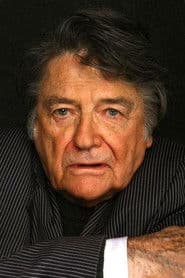
A journey into the mind of French actor and director Jean-Pierre Mocky (1929-2019), author of films both playful and profound, of an impressive richness.
Jean-Pierre Mocky
as Various Roles (archive footage)
Anna Osborn and Sonia Rockhouse were forever changed when the Pike River Mine Disaster stole their loved ones, but instead of sitting down, they stood up! But They Did tells Anna and Sonia's story, following them through the period of time before and during the re-entry of the mine.
Internet comedian Carl Déman from the humor group JLC lived a life that looked glorious. But beneath the surface was a terrible gambling addiction that almost cost him his life. In 2019, he and other gambling addicts struggle to stay afloat in a contemporary age marinated in gambling advertising. Carl wants to ask those who make the advertising how they think and wonders why the advertising profiles now also come from the world of culture and entertainment.
Working men and women leave through the main gate of the Lumière factory in Lyon, France. Filmed on 22 March 1895, it is often referred to as the first real motion picture ever made, although Louis Le Prince's 1888 Roundhay Garden Scene pre-dated it by seven years. Three separate versions of this film exist, which differ from one another in numerous ways. The first version features a carriage drawn by one horse, while in the second version the carriage is drawn by two horses, and there is no carriage at all in the third version. The clothing style is also different between the three versions, demonstrating the different seasons in which each was filmed. This film was made in the 35 mm format with an aspect ratio of 1.33:1, and at a speed of 16 frames per second. At that rate, the 17 meters of film length provided a duration of 46 seconds, holding a total of 800 frames.
A trip that the author makes to a distant beach trying to find the place where his grandfather made a painting years ago.
I have a lot of interest and respect for classic cinema. I tried to make a film with at least 20 portraits of classical actresses whose films I'm familiar with. Difficult choices from all over the world. They each have their own beauty.
Flubs and bloopers that occurred on the set of some of the major Warner Bros. pictures of 1938.
An exploration —manipulated and staged— of life in Las Hurdes, in the province of Cáceres, in Extremadura, Spain, as it was in 1932. Insalubrity, misery and lack of opportunities provoke the emigration of young people and the solitude of those who remain in the desolation of one of the poorest and least developed Spanish regions at that time.
A documentary that details the process of restoring 270 of the 520 lost films of pioneering director Georges Méliès, all orchestrated by a Franco-American collaboration between Lobster Films, the National Film Center, and the Library of Congress.
The story of how Aurora Mardiganian (1901-94), a survivor of the Armenian genocide perpetrated by the Ottoman Empire (1915-17), became a Hollywood silent film star.
Paparazzi explores the relationship between Brigitte Bardot and groups of invasive photographers attempting to photograph her while she works on the set of Jean-Luc Godard's film Le Mépris (Contempt). Through video footage of Bardot, interviews with the paparazzi, and still photos of Bardot from magazine covers and elsewhere, director Rozier investigates some of the ramifications of international movie stardom, specifically the loss of privacy to the paparazzi. The film explains the shooting of the film on the island of Capri, and the photographers' valiant, even foolishly dangerous, attempts to get a photograph of Bardot.
An adaptation of Jérôme Garcin’s novel Le dernier hiver du cid, this documentary built exclusively on archive footage and a delicate story telling style will permit a Cannes style celebration of Gerard Philipe’s 100th birthday anniversary. He will also be coming back to the Croisette through the screening of Fanfan la tulipe.
French writer Jean-Claude Carrière (1931-2021) traces the life and work of Spanish painter Francisco de Goya (1746-1828).
Any given Sunday of 1974 in Spain, soccer games in several stadiums, the sarcastic voice of commentators, the inevitable presence of advertising. Goal! The victors and the defeated.
An account of the childhood and youth of the Peruvian writer Mario Vargas Llosa, Nobel Prize for Literature in 2010, and how the hard experiences he lived during these formative years led him to write and publish his first major work when he was only 26 years old.
SONG 5: A childbirth song (the Songs are a cycle of silent color 8mm films by the American experimental filmmaker Stan Brakhage produced from 1964 to 1969).
Filmmaker Alain Resnais documents the atrocities behind the walls of Hitler's concentration camps.
Set to a classic Duke Ellington recording "Daybreak Express", this is a five-minute short of the soon-to-be-demolished Third Avenue elevated subway station in New York City.
An hour-long discussion between Fritz Lang and Jean-Luc Godard in which they discuss a variety of art forms, the role of the cinema, their collaboration together, and much more. (Filmed in 1964 but released for TV in 1967.)