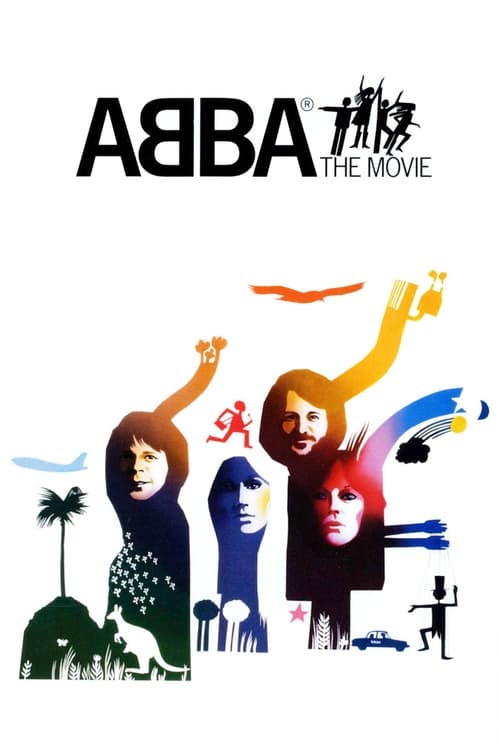
Gert van der Graaf, an infamous stalker, reveals how his childhood crush on Abba superstar Agnetha Fältskog turned into an obsession that shaped the rest of his life, thus showing how compulsive fandom can become criminal obsession.
Fredrik Strage
as Himself
Staffan Erfors
as Self
Rhonda Saunders
Gert van der Graaf
Paul Gambaccini
Divers go to work on a wrecked ship (the battleship Maine that was blown up in Havana harbour during the Spanish-American War), surrounded by curiously disproportionate fish.
Short, evocative documentary on the education of blind and partially sighted children.
The story of the making of The Bell Jar, the unique, semi-autobiographical novel written by American writer Sylvia Plath (1932-63), published in February 1963, shortly before her death.
When a youth football team of 12 boys, aged 11-16, and their 25-year-old coach is trapped deep inside a cave in Northern Thailand, thousands of volunteers and soldiers from around the world unite in a race against time to find them.
Marissa, a 25-year-old woman, goes through an unimaginable journey trying to maintain her sense of self after becoming a victim of human trafficking and sex slavery.
An account of events in Queensland from 1959 to 1988 as disclosed by the Fitzgerald inquiry. Queensland had become as close to a police state as anything since the convict era. Based on real events.
A century after Shackleton's Endurance sank beneath the ice, explorers uncover the legendary shipwreck and an amazing tale of survival.
An account of the life and work of the charismatic Spanish writer Terenci Moix (1942-2003).
Children who refuse to live with their families or give up on the streets work at a bar or steal money. When you don't have money, you'd rather starve than give up playing. Several people have to bowl as much as they want, jump out of the window with their lives, and dance with real dancers at a rock cafe.
A peculiar portrait of the Argentinean writer Jorge Luis Borges (1899-1986) drawn by the extravagant and original look of the Spanish writer Fernando Arrabal, who establishes a bold parallelism between Borges' work and opinions and his own creations, both literary and cinematographic.
An English schoolgirl suspects the foster brother she worships is a serial killer.
Intimate portrait of the social outcast Ricardo Lopez, chronicling the last days of his life in 1996 as he creates and sends a letter bomb rigged with sulfuric acid to Icelandic singer Björk and heads home to record his own suicide on video.
Professor Paul Mullen looks at the way in which admiration can slip into obsession and in some cases, life-threatening behavior.
François van Heerden, a mid-40s Afrikaans family man, has become devoid of any care or concern for his own measure of happiness, and so convinced of his ill-fated existence, that he is wholly unprepared when a chance encounter unravels his clean, controlled life.
An in-depth investigation into the private world of the American writer J. D. Salinger (1919-2010), who lived most of his life behind the impenetrable wall of a self-imposed seclusion: how his dramatic experiences during World War II influenced his life and work, his relationships with very young women, his obsessive writing methods, his many literary secrets.
Dick Perez, official Baseball Hall of Fame artist for over 20 years, painted the game's history and every inductee - a project he continues in his 80s. This childhood immigrant's portraits changed commemoration of America's iconic pastime.
People of different nationalities from Central Europe attempting to reach the West by crossing the controls and “European” rules.
A documentary that brings to light the vision that director George A. Romero had for an adaptation of Resident Evil, using newly filmed interviews with those who were there, and unravels the secrets behind why it was never produced.
In 1794, French revolutionary Maximilien Robespierre produced the world's first defense of "state terror" - claiming that the road to virtue lay through political violence. This film combines drama, archive and documentary interviews to examine Robespierre's year in charge of the Committee Of Public Safety - the powerful state machine at the heart of Revolutionary France. Contesting Robespierre's legacy is Slavoj Zizek, who argues that terror in the cause of virtue is justifiable, and Simon Schama, who believes the road from Robespierre ran straight to the gulag and the 20th-century concentration camp. The drama, based on original sources, follows the life-and-death politics of the Committee during "Year Two" of the new Republic.