A film commissioned by architects Vitangelo Ardito and Nicoletta Faccitondo (Polytechnic University of Bari) as a companion piece to the book 'Umberto Riva. Perciò è sempre una sorpresa - 19 conversazioni'.
Umberto Riva
as Himself
A documentary focusing on the rebuilding projects in Berlin after the fall of the Berlin Wall.
In 1929, Le Corbusier travels to Buenos Aires to give a series of lectures on Modern Architecture. During his visit, he proposed an urban plan for the city. Since his trip and for more than twenty years, he would obsessively develop his proposal, trying by all possible means to make the plan for Buenos Aires a reality.
What’s it like to dedicate your life to work that won’t be completed in your lifetime? Fifteen years ago, filmmaker David Licata focused on four projects and the people behind them in an effort to answer this universal question.
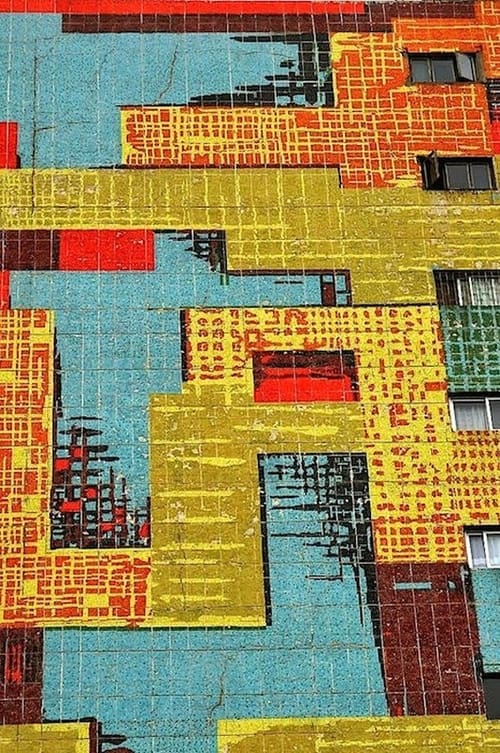
The director asks straightforward questions in a phone call to the lead architect of the district of Lasnamäe, Malle Meelak. The topics include the bureaucracy, planning and living quality in the brutalist district of panel houses. He gets surprisingly straightforward answers because Meelak doesn't know that the call is being recorded. Later, in a public interview conducted in front of the camera, Meelak's answers are quite different.
Comprising new and archival footage, this film observes rituals performed by the South Asian, African, and Caribbean diaspora in Britain, demonstrating an appreciation of land, community values, and the universe we share with other species and planets.
In this dynamic and dramatic short film, an African American veteran takes us on an extraordinary journey through his life. From a chance visit to the Pentagon, to growing up in a vibrant integrated neighborhood, his story is one of resilience and inspiration. Fueled by the determination to seize educational opportunities, he enlists just in time to experience the racial divisions of his era before Truman desegregates the military. Thrust into the brutality of the Korean War, the weight of combat becomes an indelible part of his soul. Returning home, he embarks on a new path as an architect and discovers unexpected connections in far-off Pakistan. As his family expands, his sons reflect on the man who raised them and the legacy he instilled. This film unearths the essence of the Black experience in the early 20th century, paints a vivid portrait of the Chosin Reservoir, and unravels the intricate tapestry of race, family, and personal growth.
In 2024, the iconic Rietveld Schröder House in Utrecht will celebrate its 100th anniversary. Gerrit Rietveld designed and built the house in close collaboration with his secret lover and creative partner Truus Schröder. Rietveld himself did not build his houses for eternity; he thought a life cycle of 50 years was sufficient. But the current owners of houses designed by Rietveld think differently about this. They pull out all the stops to renovate and preserve their Rietveld houses.
A 1996 Dutch documentary film about the Western European architects who were invited by the Soviet Union to construct “Socialist cities” in Siberia during the late 1920s and early 30s. The film draws on interviews of some of the last survivors of this time, including Jan Rutgers (of the Kuzbass Autonomous Industrial Colony), Margarete Schütte-Lihotzky (of the Ernst May group), and Philipp Tolziner (of the “Bauhaus Brigade”), and on letters, articles, and lectures written by those who have already died, including Hans Schmidt, Mart Stam, Johannes van Loghem, and Ernst May. It also follows the daily lives of contemporary residents of Magnitogorsk, Orsk, Novokuznetsk, and Kemerovo.
An ancestral house builds itself, comes to life, and shows us its story spanning one hundred fifty years. Through the ages, it allows us to perceive the passage of time.
A brief overview of the work of the great Russian architect Konstantin Melnikov, with a focus on the famous Melnikov House in Moscow’s Krivoarbatsky Lane and the problems faced by modern architects, echoing Melnikov’s troubles in the era of Stalinist architecture.
In Barcelona, the Casa Batlló alone sums up the genius of Antoni Gaudí. During the exhibition devoted to it by the Musée d'Orsay, we take a guided tour of this eccentric, colorful residence, completed in 1906.
This documentary follows 200 days in the life of contemporary artist Hiroshi Sugimoto— a leading presence in the world of modern art. He is the winner of many prestigious awards and his photographs are sold for millions of yen at overseas auctions. The film shows the sites of the Architecture series shot in southern France, the huge installation art work at 17th Biennale of Sydney, his new work Mathematics at Provence, his art studio while working on Lightning Fields, and more. It thoroughly pursues the question Sugimoto's works pose - "living in modern times, what are these works trying to tell us?" A thrilling look into the world of Hiroshi Sugimoto.
On the tiny island of Martha's Vineyard, where presidents and celebrities vacation, trophy homes threaten to destroy the islands unique character. Twelve years in the making, One Big Home follows one carpenters journey to understand the trend toward giant houses. When he feels complicit in wrecking the place he calls home, he takes off his tool belt and picks up a camera.
In the heart of Paris, an entire palace has disappeared. It was the very first residence of the kings of France. Long before Versailles, long before the Louvre, the Palais de la Cité stood on the most prestigious island in Paris, the historic cradle of France, facing Notre-Dame. So majestic in the Middle Ages, this palace has become a ghost of history. Over the centuries, this architectural masterpiece has almost completely disappeared. A trio of experts will resurrect it in 3D. Using science and unprecedented excavations, they will track down the pieces of the puzzle to reconstruct it at its peak in the 14th century, and bring back to life those who inhabited it. From the Romans to the Vikings, from Saint Louis to the cursed kings, all have left clues of this 'Versailles of the Middle Ages'.
"Solid States: Concrete in Architecture and Structural Engineering" offers examples and insights into the ever-adapting possibilities of concrete. With the participation of prominent architects and engineers such as Steven Holl, Toshiko Mori and Bernard Tschumi, the lectures consist of footage and theories pertaining to the developments of concrete as a material within the architectural world.
In 1919 an art school opened in Germany that would change the world forever. It was called the Bauhaus. A century later, its radical thinking still shapes our lives today. Bauhaus 100 is the story of Walter Gropius, architect and founder of the Bauhaus, and the teachers and students he gathered to form this influential school. Traumatised by his experiences during the Great War, and determined that technology should never again be used for destruction, Gropius decided to reinvent the way art and design were taught. At the Bauhaus, all the disciplines would come together to create the buildings of the future, and define a new way of living in the modern world.
50 years after the realization of their utopias, three old architects take the director on a journey to discover extraordinary housing. A joyful journey through time, from which emerges a crucial question: how will we live tomorrow?