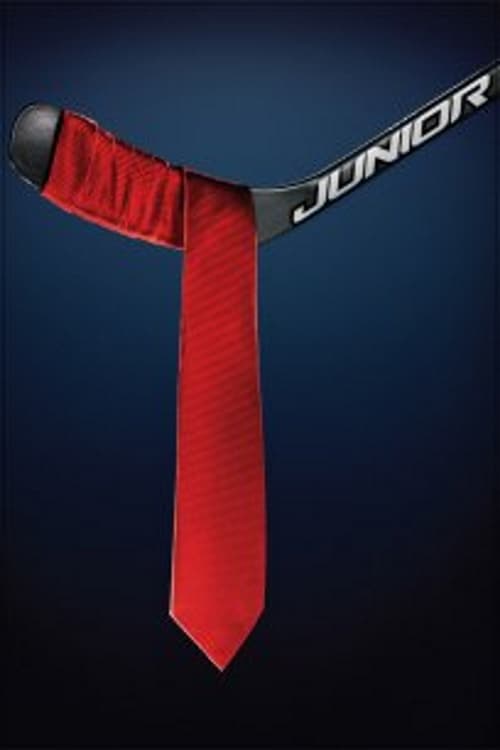
Following multiple scandals surrounding Canada’s hockey infrastructure and its dishonest leaders, a generation of young athletes find themselves facing a moral dilemma. Frédérique describes her exit from the game.
December 2th, 2023, a group of drunk friends get together after watching a football match to discuss the recent performance of the team that just played.
The remarkable true story of Donald Trump's family history - one of the most extraordinary immigration success stories ever told - and what it reveals about the United States' 45th President
This timely, bold set of one-on-one interviews presents two of the most venerable figures from the American Left—renowned historian Howard Zinn and linguist and philosopher Noam Chomsky—each reflecting upon his own life and political beliefs. At the age of 88, Howard Zinn reflects upon the Civil Rights and anti–Vietnam War movements, political empires, history, art, activism, and his political stance. Setting forth his personal views, Noam Chomsky explains the evolution of his libertarian socialist ideals, his vision for a future postcapitalist society, the Enlightenment, the state and empire, and the future of the planet.
All About Ann celebrates the achievements of larger-than-life Ann Richards, who became the first elected female governor of Texas. Her cool demeanor, acid wit, and passion for social inclusivity made her one of the most powerful and progressive governors in U.S. history, a liberal democrat intent on building “the new Texas.” But, when the 1994 election begins, Richards is faced with her toughest challenge yet, as an increasingly conservative majority turn towards a new, pro-business candidate: George W. Bush.
In a behind-the-scenes look at the biggest political upset in recent history, Mark Halperin, John Heilemann and Mark McKinnon offer unprecedented access and never-before-seen footage of candidate Trump, from the primaries through the debates to the dawning realization that the controversial businessman will become the 45th President of the United States.
My family has lived in a house across from the Blue House, the presidential palace, for 50 years. During the era of military dictatorship, the Blue House was a place of fear and inaccessibility. But as South Korea democratized, more and more people were allowed to approach it. I had grown up surrounded by countless protests, but it was the first time their sound followed me home. The never-ending noise made the house where I was born and raised feel unfamiliar. But the place they now stood was the very spot where I had held a candle to protest just months before. My right to raise my voice also guarantees theirs.
The film deals with the process of globalization based on the thought of geographer Milton Santos, who through his ideas and practices, inspires the debate about Brazilian society and the construction of a new world. Santos discusses his views on the importance of respecting difference and his belief that an alternative globalisation model could wholly enfranchise all citizens of the world. An illustrious presence in 20th century social sciences, the man dubbed as ‘geography’s philosopher’ eloquently elucidates a developing world perspective on the global age.
Chris Marker and François Reichenbach document the massive anti–Vietnam War protest held in Washington, D.C., on October 21, 1967, where more than 100,000 demonstrators gathered at the Lincoln Memorial before marching on the Pentagon. Filmed amid the crowd, the short captures the tension, idealism, and growing radicalism of the American peace movement.
Once one of the most densely populated neighborhoods in the country, Griffintown (in the heart of Montreal) is now dotted with vacant lots and uninhabited areas. But just around the bend, at the end of a dirt alley, the sun still rises over the Horse Palace. Leo Leonard, its owner, stands alone, fragile, like the place that embodies his whole life. At 83, Leo, the last representative of the Irish community that founded the neighborhood, must resign himself to leaving the premises.
At underground film of the 1st Popular Festival of Catalan Poetry filmed in the Proce Theater in Barcelona on May 25, 1970, in solidarity with political prisoners. The participating poets were: Agustí Bartra, Joan Oliver (Pere IV), Salvador Espriu, Joan Brossa, Francesc Vallverdú and Gabriel Ferrater.
David Olusoga opens secret government files to show how the Windrush scandal and the ‘hostile environment’ for black British immigrants has been 70 years in the making.
Edward Said, Professor of English & Comparative Literature at Columbia University, was a prominent literary critic of the late 20th century and a leading spokesperson for the Palestinian cause in the US. Born to a Palestinian family in Al-Quds (Jerusalem) in 1935, he and his family were dispossessed in 1948 and settled in Cairo. Educated in the US, he lived in New York for many years. Said was a member of the Palestine National Council. After resigning from the PNC in 1991, Said wrote critically about the post-Oslo peace process, the political failures of Yasser Arafat and the PLO. Said was diagnosed with leukemia in 1991 and struggled with the disease while continuing to write and teach. He stopped giving interviews but made an exception less than a year before his death in 2003, speaking about his illness, work, Palestine, politics, life, and education. The last interview is the final testament of this passionately committed intellectual.
A short film following the release of journalist and activist Barrett Brown from prison, and his drive across Texas to a halfway house. 'Relatively Free' is an examination of Brown's return to a very different world, post the election.
In southern Italy, stateless migrants pick the tomatoes the rest of the world will taste. But what about these workers’ European dreams? Will they be ground to a pulp? Our canned tomatoes are picked by migrant workers who have come to southern Italy to realise their dream of Europe. However, they never get beyond the tomato fields. This documentary shows how the tomato broaches a broader issue. Will the pickers keep believing in their dream, or fight against a Europe where others reap the sweet rewards of their disillusion?
The first time Chris Evert and Martina Navratilova stepped onto a tennis court together, the world scarcely noticed. Only a few hundred spectators saw the pert 18-year-old beat the scrappy 16-year-old Czech in 1973. “I remember that she was fat,” Evert recalled. “She was very emotional on the court, whining if she didn't feel she was playing well. But I remember thinking, if she loses weight, we’re all in trouble.” Said Navratilova, “My goal was for her to remember my name.” Eighty matches later – amid the extraordinary growth of women’s tennis – Evert not only remembered, but became a tried and true friend and confidante, remarkable considering the two appeared to be polar opposites in upbringing, life styles and personal relationships. Through a series of personal conversations, this documentary will tell the story of one of the greatest one-on-one sports rivalries and capture these two extraordinary athletes’ views on tennis and an ever-changing world.
Do you remember where you were on June 17, 1994? Thanks to a wide array of unrelated, coast-to-coast occurrences, this Friday has come to be known for its firsts, lasts, triumphs and tragedy. Arnold Palmer played his last round at a U.S. Open, in Oakmont, PA, the FIFA World Cup kicked off in Chicago, the New York Rangers celebrated on Broadway, Patrick Ewing desperately pursued a long evasive championship in Madison Garden and Donald Fehr stared down the baseball owners. And yet, all of that was a prelude to O.J. Simpson leading America on a slow speed chase in a white Ford Bronco around Los Angeles.