Jocelyne Saab toured the city of Beirut devastated by Israeli bombings. She assesses the number of victims and the extent of the destruction.
Jocelyne Saab
as Self - Narrator (voice)
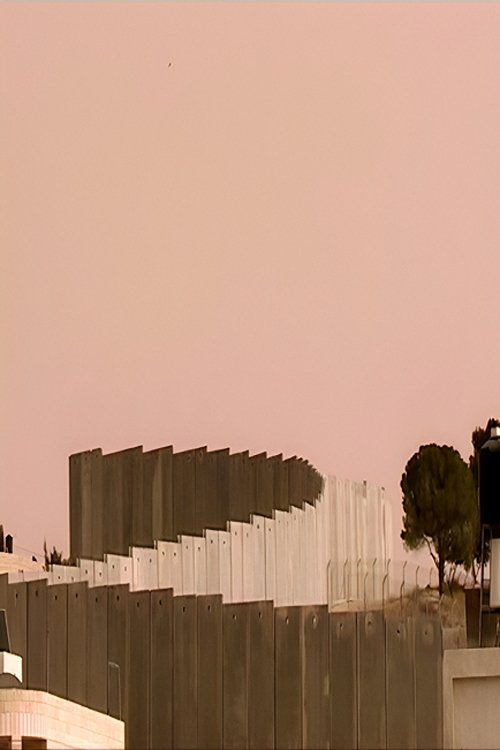
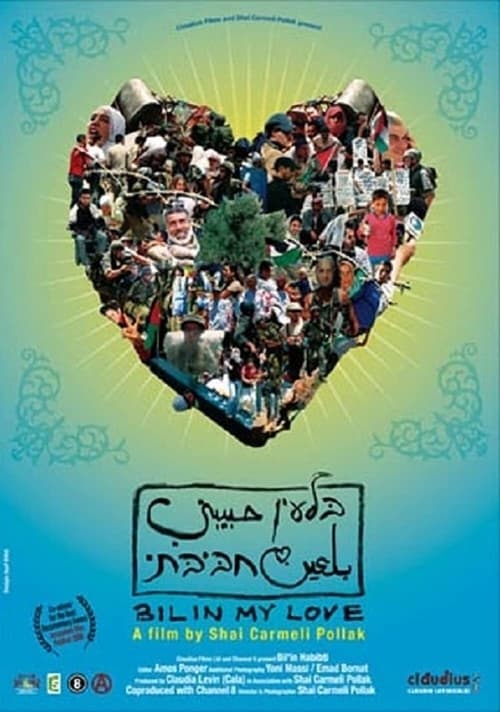
The Israeli filmmaker Shai Corneli Polak records the building of the 'security wall' through Palestinian territory at the village of Bil'in. The villagers protest mostly peacefully, while the Israeli army doesn't react peacefully. By now the Israeli High Court has ruled that the building of the wall was illegal.
How mass protests on the Israel-Gaza border led to one of the deadliest days in a generation. One year later, a moment-by-moment investigation, drawing on exclusive interviews in Gaza and Israel and videos of the protests and bloodshed.
Documentary about war photographer James Nachtwey, considered by many the greatest war photographer ever.
Accompanying from a place to another the poet who spent years in exile far from his native land of al-Birwa, in Haifa, Cyprus, Tunis, Amman, Paris, Cairo and Ramallah.
Gazans have been living under siege for four years. After the closure of all crossing points from Egypt into Gaza, they were forced to dig tunnels under the border town of Rafah to provide a lifeline to their families. So far, Israeli air raids have killed over 400 Gazans working in these tunnels, even post-graduate students. Today, as digging develops and tunnels are now able to accommodate cars, working in them has become even more dangerous.
Part of a series of promotional films commissioned by Romania's National Tourism Office in the early 1970s with the aim of reconnecting diasporic communities with the country they left behind. In this case, the film is addressed to Jews who emigrated in the context of the Second World War or were sold by the Romanian state to the State of Israel starting in the 50s and settled in Israel and the USA - therefore, a target group made up of seniors, probably retired , possibly prosperous, eager to revisit the places of youth and willing to forget, temporarily, the traumas associated with them.
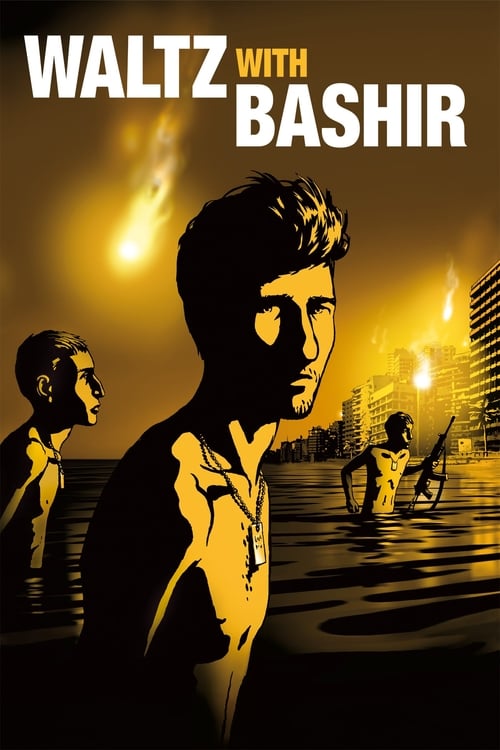
An Israeli film director interviews fellow veterans of the 1982 invasion of Lebanon to reconstruct his own memories of his term of service in that conflict.
A deeply moving portrait of an architect tested by the impossible choices between career, country and motherhood
The long lasting Palestinian-Israeli conflict has created appaling phenomenons that have horrified the Israeli society. the "politically conscience-refusals" or those individual soldiers refusing to fight in the occupied territories, are one of those phenomenons. In opposition to them stand a thousand immigrants from the former Soviet Union, ex-military men from the Red Army, who yearn to be recruited into the IDF and fight for Israel, but who are denied the right to serve in the army. Through the stories of Oleg and Alex, immigrants and the battalion's charismatic commanders, the story of the Russkii Battalion is told. It is a story of contrasts between the hardships of the daily struggles they face as new immigrants against the pride and the sense of belonging they find in the battalion. The Russkii Battalion is a film about a militaristic social bubble, in a country that is in constant war.
Writer-actor Aaron Davidman embodies seventeen different characters in and around the sacred city of Jerusalem as he takes us on an eye-opening journey into the heart of the Israeli-Palestinian story. Exploring universal questions of identity and human connection, the film is about one man's effort to embrace a multiplicity of conflicting viewpoints, chronicling a brave exploration of the complex humanity at the heart of one of the world's most troubling conflicts.
Over the past few years, Israel's ongoing military occupation of Palestinian territory and repeated invasions of the Gaza strip have triggered a fierce backlash against Israeli policies virtually everywhere in the world—except the United States. This documentary takes an eye-opening look at this critical exception, zeroing in on pro-Israel public relations efforts within the U.S.
This real-life thriller tells the story of one of Israel’s prized intelligence sources, recruited to spy on his own people for more than a decade. Focusing on the complex relationship with his handler, The Green Prince is a gripping account of terror, betrayal, and unthinkable choices, along with a friendship that defies all boundaries.
Through real-time bodycam and phone footage, frontline activists take audiences along on their audacious raids to tear down arms factories around the UK. Since 2020, direct action group Palestine Action have documented their operations to dismantle the companies and infrastructure supplying weapons to the ongoing genocide in Gaza.
Archival film maestro Göran Hugo Olsson has assembled—from a vast catalogue of footage in the vaults of Sweden’s national television service SVT—accounts of the Israeli-Palestinian conflict as witnessed and represented by Swedish journalists. Stories of the beginning of the Israeli state interwoven with the Palestinian struggle for independence. News coverage with Yasser Arafat and interviews with Israeli foreign minister Abba Eban during a visit to Sweden unseen since first broadcast. From the tenth anniversary of Israel’s founding to the First Intifada, perspectives and encounters with statesmen, civilians, revolutionaries, and intellectuals tell the story from myriad angles of an evolving media landscape, revivifying a history of the ongoing conflict.
A portrait of two Palestinian women whose individual struggles both define and transcend the politics that have torn apart their homes and their lives. Farah Hatoum, a widow living with her children and grandchildren, and Sahar Khalifeh, a novelist from the West Bank.
WINE and WAR is a documentary about one of the the oldest winemaking regions on earth and the resilience of the Lebanese entrepreneurial spirit seen through the lens of war and instability.
BLESSED BLESSED OBLIVION weaves together a portrait of masculine performativity in East Jerusalem, as manifested in gyms, body shops and hair dressing parlors.
This deeply affecting documentary follows a small number of Israelis and Gazans through the most dramatic and tragic year of their lives. Using personal and previously unseen footage, it tells the story of the war in Gaza and the October 7 attacks through deeply emotional stories from both sides of the conflict. In Gaza, the film follows three individuals from reaction to the October 7th attacks to the start of the bombing by the Israeli military and to the loss of family members that all three suffer. In Israel, we witness footage of the Israeli characters, as they and their family members are attacked by Hamas on October 7th and then follow their stories through the year.