After years of mass tourism in the Alps, a rethinking is slowly taking place. Whether researchers, artists or philosophers, many are trying to approach the essence of the mountains in new ways.
Claudio Landolt
as
Jörg-Michael Janke
Luc Moreau
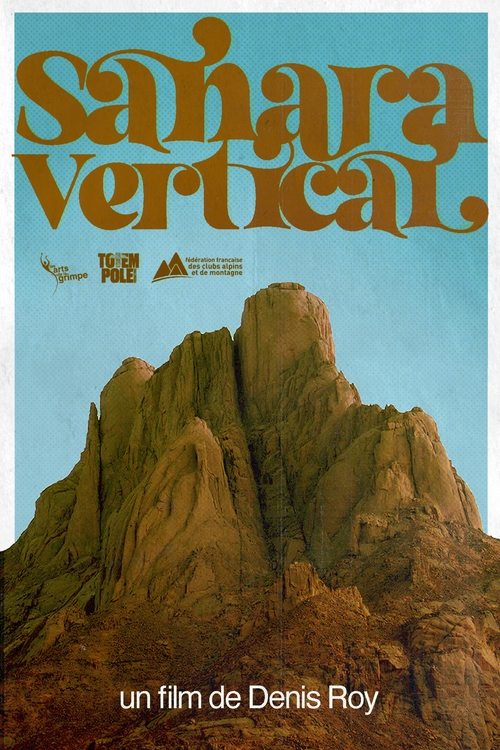
Following in the footsteps of Frison Roche, 7 climbers explore the main Hoggar massifs in Algeria. Their main objective is the ascent of the Garet El Djenoun summit via the north ridge, a long climb symbolic of a certain difficulty and a significant commitment, due to its location in the desert. They also attempt the Diedre Agresti, a daring route from the 70s, opened in around ten days on artificial, and unequipped; it is a path that has never been repeated; the objective is to do it free and almost only on wedges, with difficulties up to 7b/c in a sometimes very delicate rock... Excerpts from the film shot in 1970 by Henri Agresti on this same route, allow us to compare the technical and material means of the time to those of today. They also discover the beauty of the Algerian desert, its silence, its rock paintings, the customs of the Tuaregs, etc... a fascinating journey.
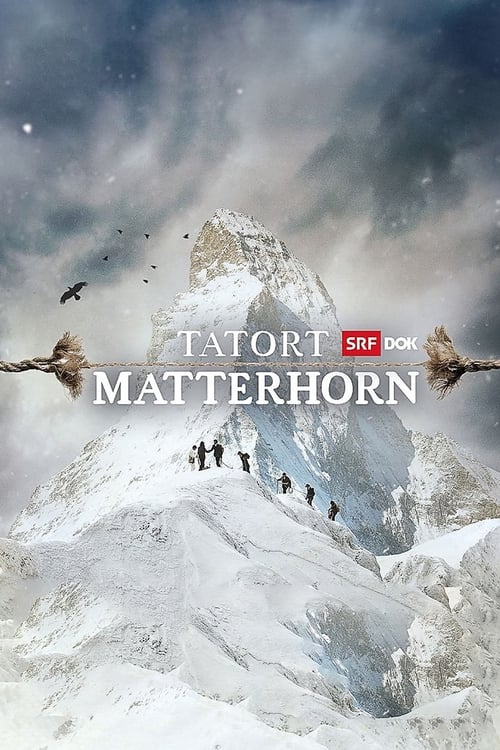
The first ascent of the Matterhorn was made on July 14, 1865 by Edward Whymper, Francis Douglas, Charles Hudson, Douglas Hadow, Michel Croz and two guides from Zermatt, Peter Taugwalder father and son. Douglas, Hudson, Hadow and Croz are killed on the descent after Hadow slips and drags the other three men down the north face. Whymper and the two Taugwalders, who survive, are later accused of having cut the rope that connected them to the rest of the group so as not to be dragged into the fall, but the ensuing investigation finds no evidence of their guilt and they are acquitted. The Matterhorn is the last great peak in the Alps to be conquered and its ascent marks the end of the golden age of mountaineering. One hundred and fifty years later, a team undertakes the same expedition in order to unravel the mystery.
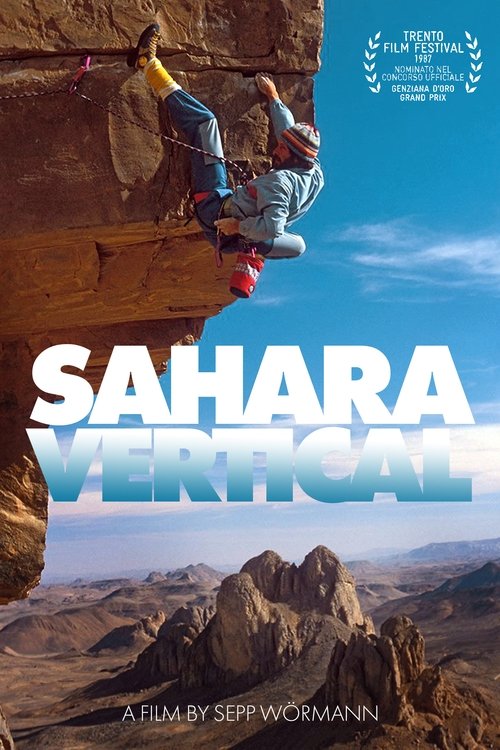
The climbing couple Heinz Mariacher and Luisa Iovane abandon their usual winter training spot to go in search of places more conducive to free climbing in Algeria in the Sahara desert, more precisely in the Hoggar massif, which saw pass the cream of world climbing Lionel Terray, Roger Frison-Roche, Lucien Bérardini, Michel Vaucher, Pierre Mazeaud, Guido Monzino, Patrick Edlinger, Patrick Berhault and many others. Their objective, to climb the east face of Garet El Djenoun, 500 m high, failed because the wall was too smooth and the cracks unstable. The journey continues in the Hoggar massif towards other peaks, where they find the climbing conditions they were hoping for. An overhang in the face of Tizouyag Nord will prove to be a major challenge for Heinz Mariacher.
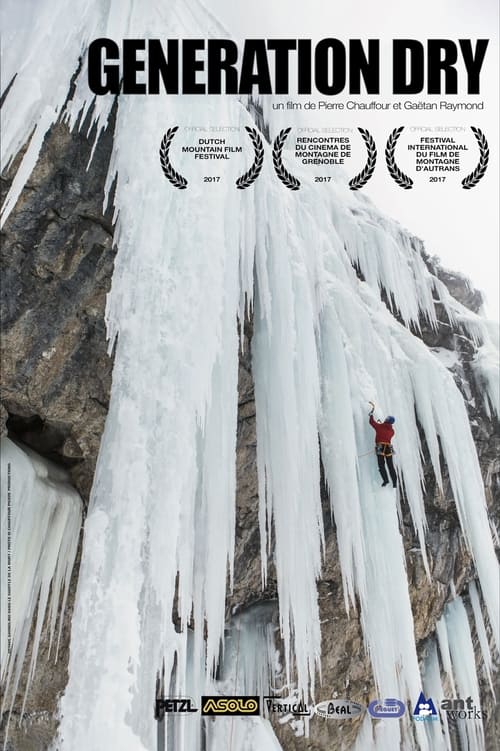
It is a fact that our winters are less and less cold. Therefore it is harder and harder to get the conditions for ice-climbing. Fortunately, man adapts to his environment and makes progress: this is how dry-tooling was born. This movie will make you discover this discipline: its history, its evolution and the current practice. You will also see how much excitement dry tooling can bring. Dry-tooling now allows to free-climb some routes which were impossible to climb without aid in the past.
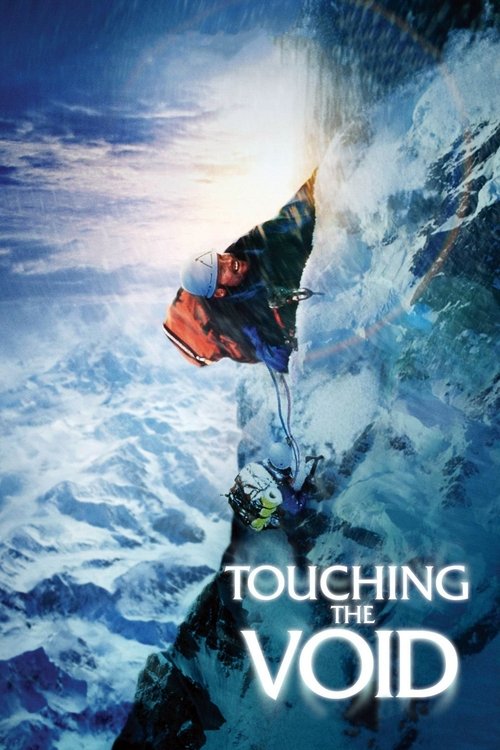
The true story of Joe Simpson and Simon Yates' disastrous and nearly-fatal mountain climb of 6,344m Siula Grande in the Cordillera Huayhuash in the Peruvian Andes in 1985.
Filmed chronicle by mountain filmmaker Mario Fantin, of the 1964-1965 expedition of the Italian mountaineer Guido Monzino to the summits of Hoggar in the Algerian Sahara with the ascents of Garet el Djenoun, Tizouyag Nord, Saouinan and Iharen. The mountain ranges of the Hoggar desert turn out to be more complex and interesting than most mountaineers suspected at the time.
Less than two years after his serious road accident, Eric Escoffier brought together the "Turbo" team (Frédéric Ancey, Michel Fauquet, Christine Janin and Stéphane Schaffter) with whom he will attempt to climb Everest without oxygen and without prior acclimatization in the Himalayas, the project being to complete the Paris-Everest-Paris loop in two weeks. It is also a medical experiment: the athletes spend a week at Mont Blanc, at the Vallot observatory between 4000 and 4800m, then a week in a hypobaric chamber in Grenoble. Doctors (Dr. Richalet, Herry and Bittel) perform tests throughout this training, which will learn about how the body acclimatizes to altitude and allow applications in the management of mountain-related illnesses . On September 2, 1989, they arrived at Everest base camp in China. They attempted the ascent via the North Col but could not carry out their project, prevented by bad weather.
A documentary about climbing in mythical climbing locations with bouldering in grace (Tinos), in South Africa (Rockland), in Italy (Chiomonte) and in Annot (France), on routes in Fournel and Tournoux, all in a friendly atmosphere with a cast of international climbers including Tony Lamiche, Gérôme Pouvreau, François Lombard, Yann Ghesquier, Ben Semiond, Mat Semiond, Vincent Albrand, Wills Young, Isabelle Carrier, Jérémie Pancol, Lionel Daudet & Véro Daudet.
Six blind Tibetan teenagers climb the Lhakpa-Ri peak of Mount Everest, led by seven-summit blind mountain-climber Erik Weihenmayer.
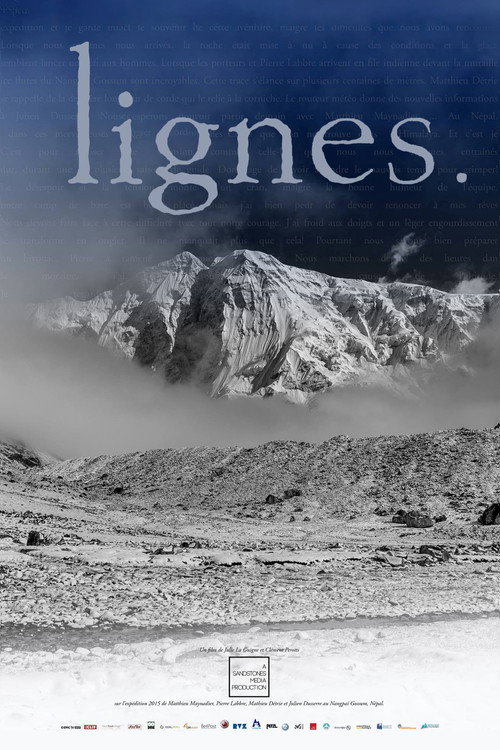
Lignes chronicles the sublime interplay between alpine literature and an expedition seeking the true meaning of mountaineering. Four high-mountain guides—Matthieu Maynadier, Pierre Labbre, Matthieu Détrie, and Julien Dusserre—embark on a project: to summit Nangpai-Gosum, an unclimbed 7,000-meter peak in Nepal, using the "alpine style" adapted to the Himalayas—the toughest and purest approach of all. Through this expedition, Lignes attempts to answer the question: "Why do we climb mountains?" Why, despite the harsh conditions and exhaustion, do these four Alpine guides pursue a perilous dream in a realm that belongs to no one? Lignes finds some answers in the past, drawing on 150 years of alpine literature. Serving as both narrator and seasoned guide, Raymond Renaud takes us on a tour of his books and speaks of the "conquerors of the useless"—from the turn of the century to the present day.
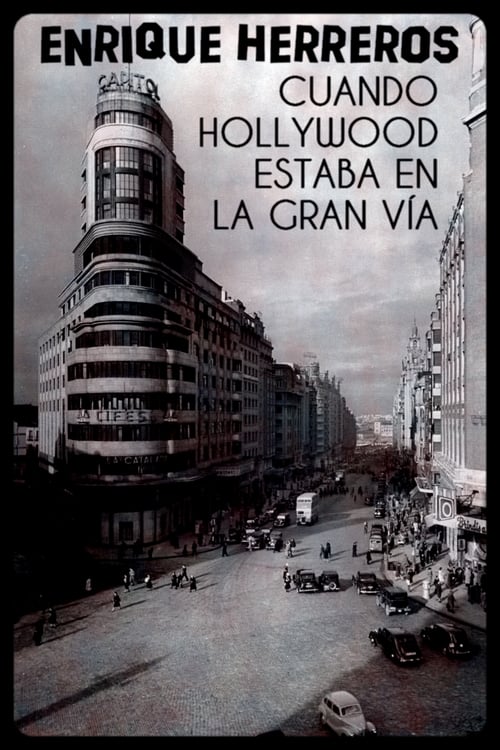
The story of Enrique Herreros (1903-1977), cartoonist, advertiser, poster designer, talent manager, actor, producer and filmmaker, and the most daring of mountaineers; the man who, along with his companions from the so-called “other Generation of '27,” brought Hollywood to Madrid's Gran Vía, turning a grey and sinister post-war city into the capital of an incipient and ambitious cultural industry.
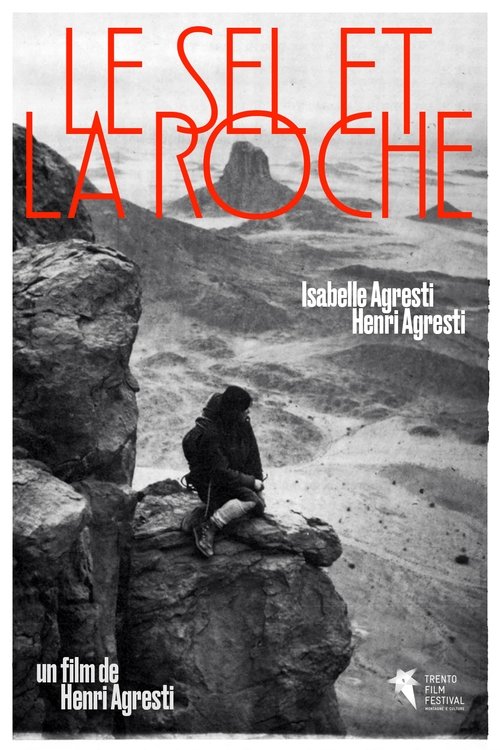
After reading the book "Guide to Hoggar Climbing," guide Pierre Agresti and his wife Isabelle Agresti set off into the Hoggar massif in the Algerian Sahara and tackled the west face of Garet El Djenoun. After a first attempt in 1967, they successfully reached the summit in 1970 and, with an old camera, made a film that remained unused for 25 years. In 1996, they decided to bring the past back to life through the ascent and encounters with the Tuaregs in the rock salt mines of Amadror. The film was shown in competition at the Trento Film Festival in 1997.
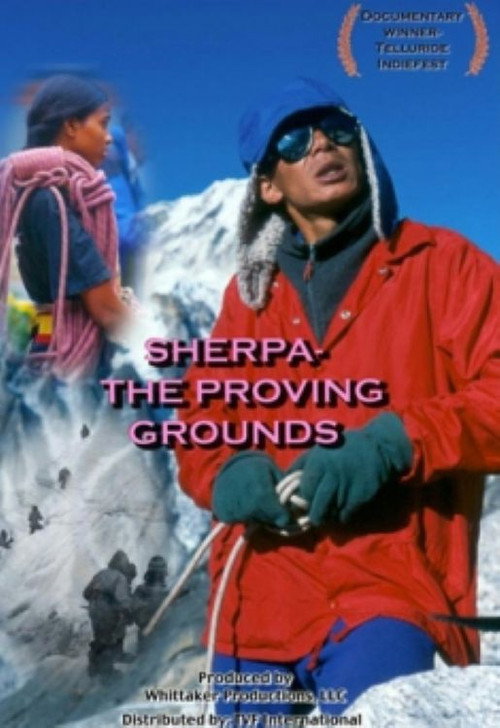
When Tenzing Norgay, a Sherpa, joined Edmund Hillary as the first men to summit Mount Everest in 1953, it alerted the world to the indispensable role of the Sherpas on any Himalayan expeditions. By 1954 the Himalayan Mountaineering Institute (HMI) was founded to marry the high-altitude strengths of the Sherpa with technical climbing skills. The HMI’s arduous training program has been developing mountaineers who play crucial roles in the success of Himalayan ascents. In 1967, HMI’s field director Nawang Gombu, a Sherpa and the first man to summit Everest twice, was charged with training women as well. In Sherpa: the Proving Grounds we follow a team of intrepid young women as they attack the grueling 28-day course.
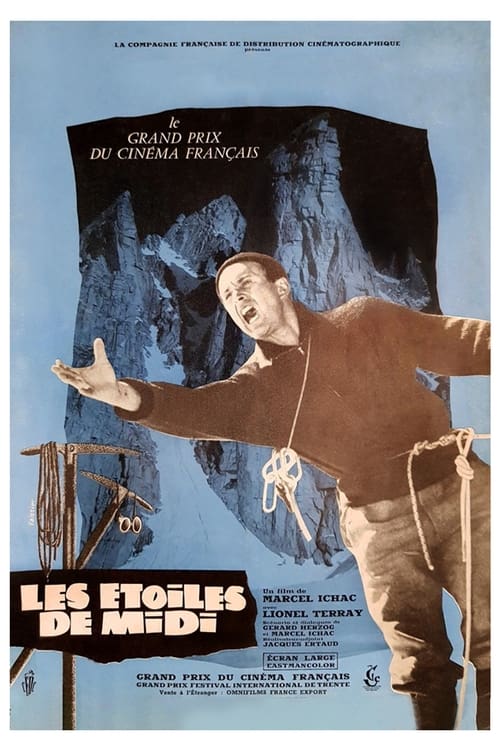
Les Etoiles de Midi is an engaging docudrama about some of the more spectacular exploits of French mountain climbers over the last several decades. In one re-enacted story, there is a wartime escape through the mountains, and in another, a daring rescue of a pair of climbers who had been missing. The actors themselves are adept at the sport of climbing, and they give the scenes an immediacy and real daring that brings the stories alive. A combination of their acrobatics and skill and the outstanding episodes in the history of French climbing creates a winning 78 minutes.
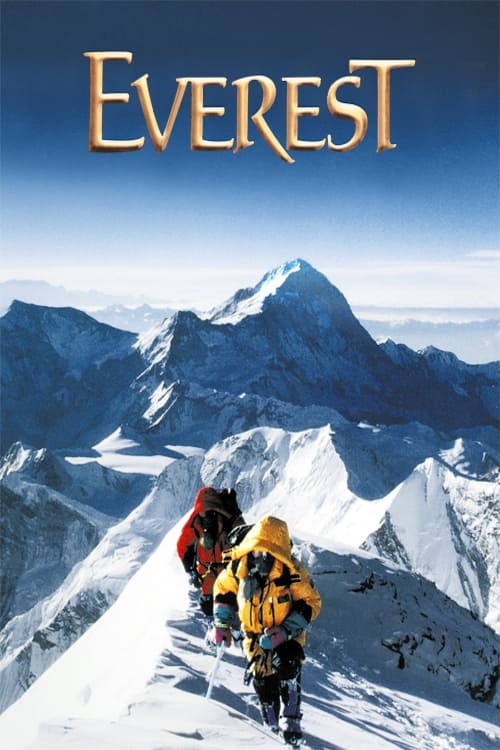
An international team of climbers ascends Mt. Everest in the spring of 1996. The film depicts their lengthy preparations for the climb, their trek to the summit, and their successful return to Base Camp. It also shows many of the challenges the group faced, including avalanches, lack of oxygen, treacherous ice walls, and a deadly blizzard.
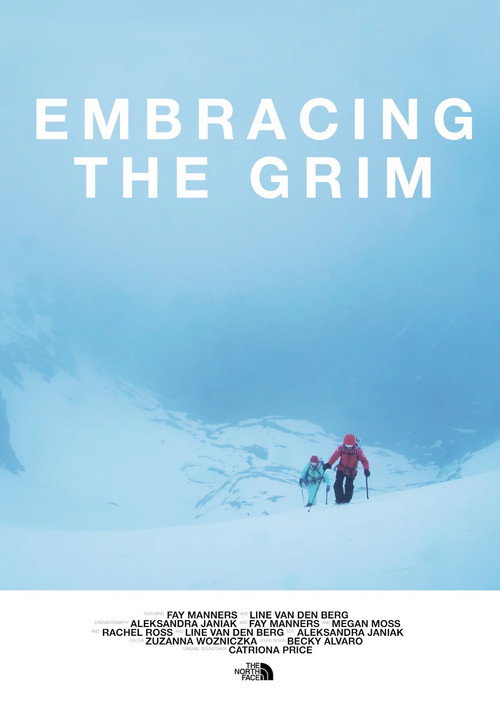
Follows Line van den Berg and Fay Manners to the ephemeral landscapes of the Scottish Highlands, on an ambitious mixed climbing mission beset by typically fickle weather. Despite the numerous obstacles they encountered, the most unexpected twist was yet to come. Tragically, since filming, Line lost her life in an avalanche in the Swiss Alps. The film was finished in her memory.