After the 1999 premiere of the first Matrix movie, it became a pop culture phenomenon. A special documentary about the Matrix saga and its prophetic aspects.
The Living Room of the Nation is a documentary film that portrays a number of Finnish living rooms. The film is a story of changes, the inevitable passing of time, and the human desire to be needed, visible.
From our window one can see a set of the film The Green Years, directed by Paulo Rocha in 1963. This was our starting point: guided by Rocha's gaze, we look back at the places of that film. The successive geological, urbanistic and social strata of Lisbon, besieged by the pandemic that interrupted the shooting, are drawn out in front of our camera, like a contemporary jazz impro from a score written in 1963.
Fleeing religious persecution, resilient Jewish immigrants arrive in Toronto and begin building affordable, quality housing in a growing metropolis.
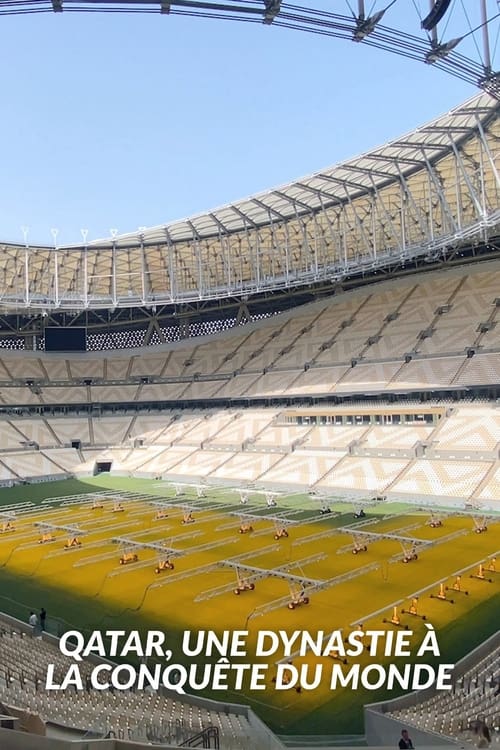
For three decades now, Qatar, this small desert kingdom, has not stopped being talked about; because of its financial power and the secrecy that surrounds it, the royal family that runs it fascinates as much as it frightens.
Everyone thinks that Bob Kane created Batman, but that’s not the whole truth. One author makes it his crusade to make it known that Bill Finger, a struggling writer, actually helped invent the iconic superhero, from concept to costume to the very character we all know and love. Bruce Wayne may be Batman’s secret identity, but his creator was always a true mystery.
Behind the glitz of Miss Italia, director Patrizia Mirigliani fights to save the iconic pageant, now wavering amid scandals and changing beauty standards.
MAXIMÓN - Devil or Saint is a documentary about the controversial Maya deity, also known as San Simon or the drinking and smoking saint of Guatemala. He is a mixture of ancient Maya beliefs and Christianity. The movie concentrates on the people who surround Maximón with their strong personalities, opinions and faith. The documentary gives us a rare view into the rituals and fiestas honoring Maximón. The cult of Maximón is flourishing because he performs miracles. He is also feared and despised because he is used to cast curses that can result in death. Ultimately, Maximón transcends the duality of good and evil, reflecting the Maya cosmovision in which everything in the universe co-exists.
Director Dominique Leclerc spent years depending on medical devices for her survival. Then, looking for alternative solutions, she entered the world of emerging technologies. Posthumans follows her as she meets with cyborgs, biohackers, and transhumanists who are trying to use these technologies to outsmart illness, aging—and even death. The documentary looks at pressing ethical and political questions that are sure to impact the future of our species.
The Berrigan Brothers, Daniel and Philip were Catholic priests dedicated to non violent resistance of the violent policies of the United States government. They rose to prominence as outspoken opponents of the Vietnam War.
How the Monuments Came Down is a timely and searing look at the history of white supremacy and Black resistance in Richmond. The feature-length film-brought to life by history-makers, descendants, scholars, and activists-reveals how monuments to Confederate leaders stood for more than a century, and why they fell.
The film chronicles the life of Waluyo, a confident young puppeteer who is fighting to pursue his career. The various obstacles he went through did not make him give up on living life. Even it becomes a lighter to continue working. However, the Covid-19 pandemic strikes and changes his perspectives to survive. He also has to be realistic and has to adjust to the situation.
A journey into the unique, often bizarre, world of Japanese cat culture. Cat themed cafes, bars, temples, cat islands, cats with human jobs, cat friendly businesses, and the origins of the iconic beckoning cat statue.
In 1921 the Kwakiut'l people of Alert Bay, British Columbia, held their last secret potlatch. In 1980 at Alert Bay, the U'mista Cultural Centre (U'mista means "something of great value that has come back") opened its doors to receive and house the cultural treasures which were seized decades earlier and only then returned to the people. The center also took up activities such as recording stories told by elders so that some part of the past would always be alive and teaching children about their heritage in order to make them feel connected to their ancestors. This film documents the cultural significance of these events for today's Kwakiut'l people. It is an eloquent testimony to the persistence and complexity of Kwakiut'l society and to the struggle for redefining cultural identity for them.
A nuanced portrait of a new generation, Dear Thirteen is a cinematic time capsule of coming of age in today’s world. Through the eyes of nine thirteen-year-olds, we see how pressing social, geographical and political challenges are shaping, and being shaped by, young people: rising anti-Semitism in Europe, guns in America, gender identity and racial divisions across Australia and Asia. With no adult commentary outside the filmmaker, Dear Thirteen offers an intimate view into the universal uncertainty inherent in growing up.
Guy Debord's analysis of a consumer society.
A documentary film about trading security and stability for passion. A surprising number of small businesses and niche restaurants originate and thrive in the small college town of Provo, Utah. A senior capstone project at Brigham Young University.