A documentary about the making of Wallace & Gromit’s Cracking Contraptions.
Nick Park
as Self
Peter Sallis
as Wallace (archive footage) (uncredited)
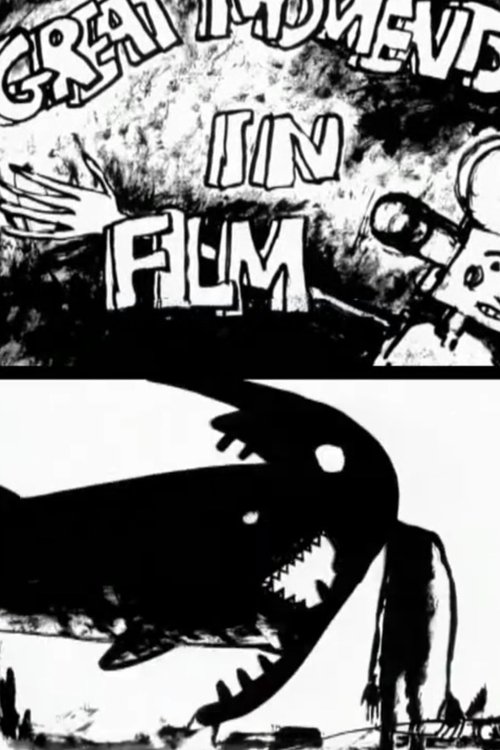
Bob Spit, a comic book character, lives in a post-apocalyptic desert inside the mind of his creator, the legendary Brazilian cartoonist Angeli. When Angeli decides to kill off Bob, the old punk leaves this wasteland and faces his creator.
In 2009, two family fathers in Budapest who had lost their jobs and all their money decided that the solution to their problems would be to rob a post office, with a Wartburg. Lacking any previous experience, they studied movies to learn the trade. The robbery did not go as planned and ended with the escape vehicle breaking down in front of a prison. Who where they and why would anybody chose such a solution? The film explores the real events of an absurd and tragic story from 2009 through the eyes of a Swedish filmmaker.
A 16mm anthology of experimental super 8 films by Derek Jarman, Michael Kostiff, Cerith Wyn Evans and John Maybury, with framing footage by Tim Burke of Brion Gysin using a dream machine. Jarman's contribution is a version of his 1977 Art and the Pose (aka Arty the Pose), refilmed at 3fps, with a musical soundtrack. Jarman planned The Dream Machine as a commemoration of William Burroughs and Gysin's 1982 visit to the UK, and received initial funding from the Arts Council in 1983, then rethought the project as a portmanteau film featuring Gysin alone. The production remained in limbo until 1986, when James Mackay obtained completion funding from the British Film Institute. (Since this film was released on VHS accompanied by Jarman's Broken English: Three Songs by Marianne Faithfull, T.G.: Psychic Rally in Heaven and Pirate Tape under the umbrella title The Dream Machine, synopses of this film have often muddled up its details with those of the earlier films. )
Stop Motion Collage Animation.
Worldy renowned for his masterpiece The Housemaid (1960), Kim Ki-young debuts with his first short film I Am a Truck (1953), which was sponsored by UN and made a year after the armistice of the Korean War. This film is a fascinating glimpse into the mind of a soon-to-be powerful auteur and influential filmmaker in the post-war Korean cinema, if not the whole history of Korean cinema.
Betrayed by those desperate to bury the secrets of Edo Castle’s reconstruction, Jingoro loses everything. His father figure, fiancée, and even his right arm. On the brink of despair, the legendary craftsman transforms his grief into an unyielding drive for vengeance. Armed with his extraordinary carpentry skills and a series of lethal mechanical prosthetic arms, Jingoro carves his own path to justice. With his loyal companion, the Sleeping Cat, he faces his enemies in a gripping tale of revenge and self-discovery.
A woman is caught up with house chores after someone rings her door.
This short focuses on the job of the costume designer in the production of motion pictures. The costume designer must design clothing that is correct for the film historically and geographically, and must be appropriate for the mood of the individual scene. We see famed costume designer Edith Head at work on a production. The Costume Designer was part of The Industry Film Project, a twelve-part series produced by the film studios and the Academy. Each series episode was produced to inform the public on a specific facet of the motion picture industry. Preserved by the Academy Film Archive in 2012.
On an idyllic beach in the Pacific Northwest, curiosity gets the better of a young raccoon whose frustrated parent attempts to keep them both safe.
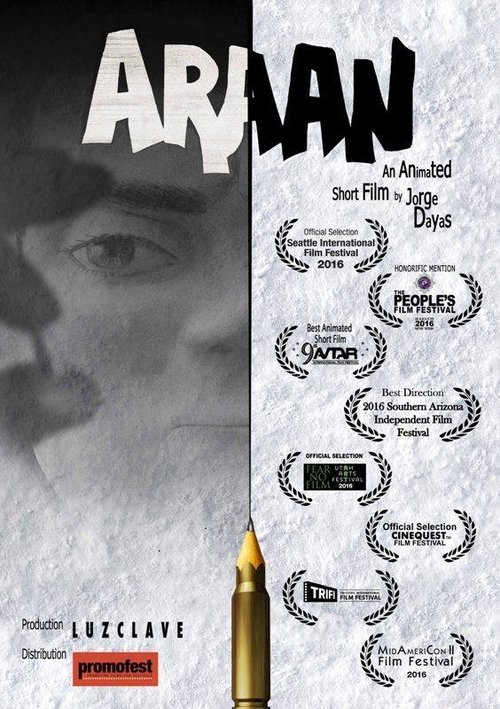
Allegory of men's use of fire to kill, when it was given by Prometheus to help them.
Web Corp. follows the inescapable cycle of a worker fly trapped in a systemic web spun by a boss spider. Crafted through traditional stop-motion, the film clashes the organic, vulnerable texture of papier-mâché against the harsh, cold authority of steel wires, transforming capitalist exploitation into both a thematic and physical allegory.