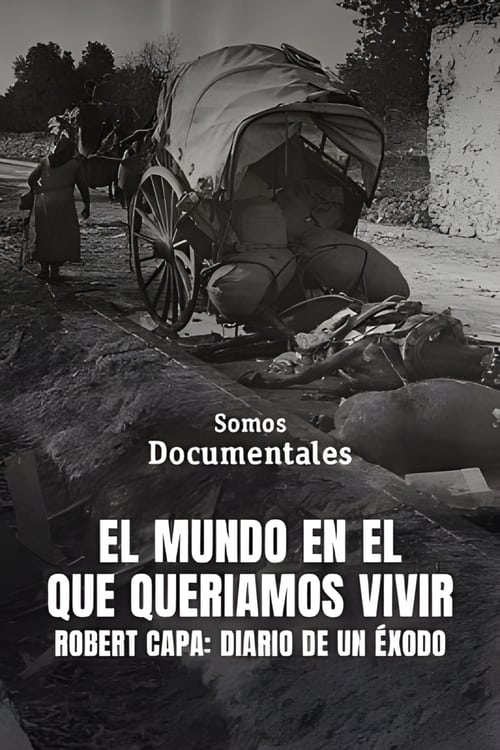
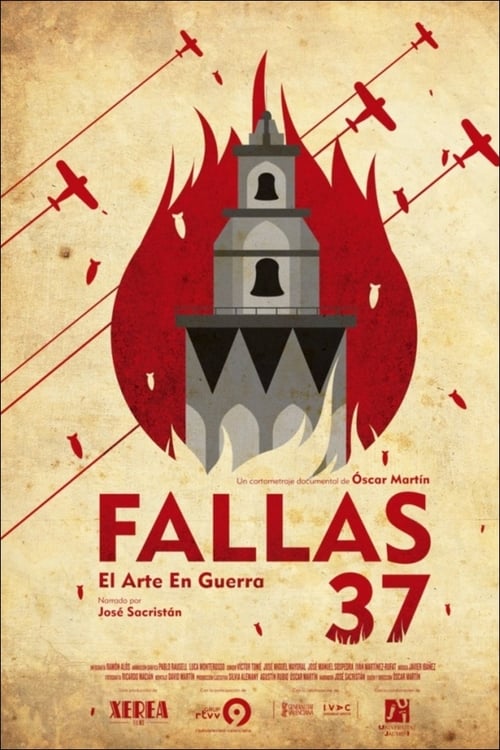
Heart of the Generacion 27, Spanish poet Emilio Prados recalls his lifetime from Mexican exile where Spanish Civil War has forced him, as other Spanish intellectuals in 1930s.
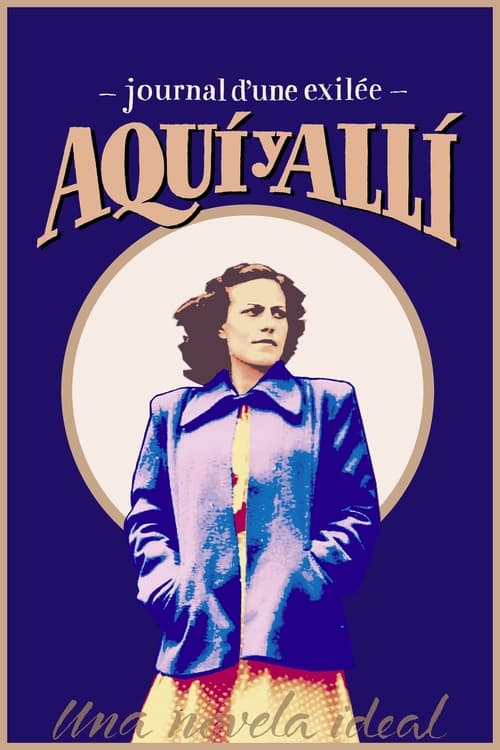
An account of the brief life of the writer Albert Camus (1913-1960), a Frenchman born in Algeria: his Spanish origin on the isle of Menorca, his childhood in Algiers, his literary career and his constant struggle against the pomposity of French bourgeois intellectuals, his communist commitment, his love for Spain and his opposition to the independence of Algeria, since it would cause the loss of his true home, his definitive estrangement.
Obsessively referring to the traumas and wounds that the Spanish civil war (1936-39) and Franco's dictatorship (1939-75) caused in their day no longer serves to explain the impassable abyss of incomprehension and hatred that the abject policies and radical positions adopted by both the right and the left in recent decades have opened up before the citizens of a country that is barely known beyond hackneyed cultural clichés.
The Colegio de Arquitectos de Catalunya commissioned Pere Portabella to make this film for the Joan Miró retrospective exhibit in 1969. There were heated discussions on whether it would be prudent to screen the film during the exhibit. Portabella took the following stance: "either both films are screened or they don't screen any" and, finally, both Miro l'Altre and Aidez l'Espagne were shown. The film was made by combining newsreels and film material from the Spanish Civil War with prints by Miró from the series "Barcelona" (1939-1944). The film ends with the painter's "pochoir" known as Aidez l'Espagne.
After more than 75 years, Vicente Montejano tells us first-hand about his experience of more than 14 years in the Russian Gulag after the end of the Spanish Civil War.
After the Civil War, between 20,000 and 30,000 Spaniards went into exile in Mexico. This was the country that welcomed the most exiles, after France.
Caudillo is a documentary film by Spanish film director Basilio Martín Patino. It follows the military and political career of Francisco Franco and the most important moments of the Spanish Civil War. It uses footage from both sides of the war, music from the period and voice-over testimonies of various people.
Documentary produced by Falange and edited in Berlin, in response to the international success of the Republican production "Spain 1936" (Le Chanois, 1937).
The young farmer Aalami leaves his family to find work elsewhere. He gets to know the country and its people, customs and traditions at Küste in North Africa: Market life in Tetuan, the art of craftsmanship, the life of the Moors, dances and festivities in honour of the caliph, white mosques, the call of the muezzin of the minaret and the music of the shepherd flutes. Aalami also follows Franco's call and flies from Morocco to Spain to fight at Bürgerkrieg. In the end Aalami comes back to his wife and children.
In 1939, just finished the Spanish Civil War, Spanish republican photographer Francesc Boix escapes from Spain; but is captured by the Nazis in 1940 and imprisoned in the Mauthausen concentration camp, in Austria, a year later. There, he works as a prisoner in the SS Photographic Service, hiding, between 1943 and 1945, around 20,000 negatives that later will be presented as evidence during several trials conducted against Nazi war criminals after World War II.
A documentary, of incalculable power, that reflects the abrupt interruption of childhood through thirteen survivors who at the time of 1936 were between six and twenty-two years old. The film narrates his experiences during the conflict, his fears, his hunger, which became more acute after 1937 when Madrid was isolated by Franco's troops. The memories of the protagonists are interwoven with archival images and with the testimony of Eduardo Haro Tecglen and several other people, respecting the silences and pauses in which the interviewees relax the emotions that these memories stir up in them. A cinematic beast's blow where life becomes death: the story of a childhood lost in the midst of embers, hunger and blood.
Goazen gudari danok is a documentary that recounts the battle of San Miguel and its importance for the creation of the Basque Government.
Activist, lover, visionary, renegade - For 75 years, Abe Osheroff fought on the front lines of social activism - from the battlefields of the Spanish Civil War to the killing fields of Nicaragua; from the witch hunts of McCarthy to the sharecroppers of Mississippi to streets all across the United States, Osheroff put his life on the line to keep justice alive. Through the unflinching lens of this documentary feature, this master storyteller takes us on an insightful journey inside the defining conflicts of 20th Century activism with irreverent humor and unwavering commitment to a lifetime of engagement. Osheroff's confessions strike a resounding chord in today's world with a singular voice that never stopped chanting "yes we can!"
While cleaning the apartment of Lucía, her deceased grandmother, Anna finds a notebook where she discovers the story of a secretly kept love, lived during the turbulent years of the Second Republic and the Spanish Civil War.
A feature-length documentary based on film reports from the Spanish civil war.