Abel Ferrara explores human conflict and the search for peace and balance through the music and words of Patti Smith and the experiences of people at war in Ukraine.
Patti Smith
as
Andrii Yermak
Volodymyr Zelenskyy
as Self (archive footage)
Constantin is a Moldovan young man who emigrated to Italy when he was only a child. Right before his marriage, he decides to go back to Moldova to discover more about his cultural roots and understand about his identity. He found a different country, with a danger of an impending war and where he feel as a stranger.
The filmmaker, Alexandros Papathanasiou, travels to Crete to meet Lefteris Eliakis, a guerrilla fighter during the Greek Civil War and a political prisoner for two decades. This insightful portrait conjures the ghosts of the Greek Civil War – the maverick people, revolutionary politics, and breathtaking events that have shaped today’s Greece.
Mykola is an eccentric pacifist who wants to be useful to humanity. When the war begins in Donbas, Mykola’s naive world is collapsing as the militants kill his pregnant wife and burn his home to the ground. Recovered, he makes a cardinal decision and gets enlisted in a sniper company. Having met his wife’s killers, he emotionally breaks down and arranges “sniper terror” for the enemy.
Four hard-hitting stores, from the deadliest period in U.S. Army Aviation, since Vietnam. Actual footage from the events, and interviews from the Soldiers, who were there - bring these intense and touching stories of courage and sacrifice to life.
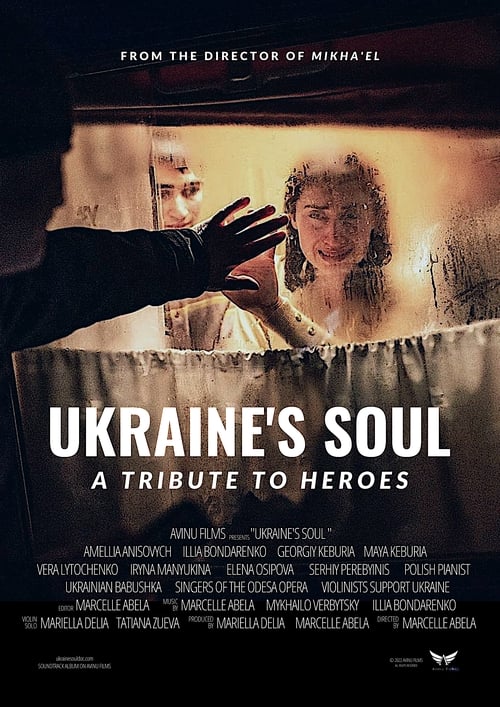
A film about the collective psychological traumas of Ukrainians.
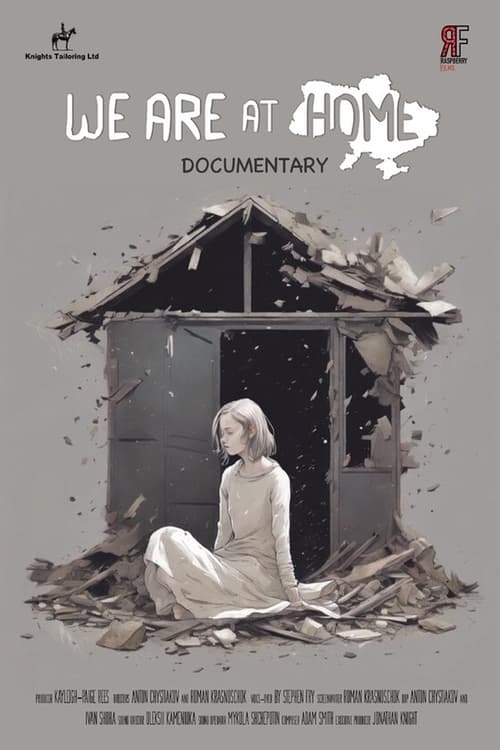
While the armed conflicts on the Ukrainian front have become a traumatizing everyday reality, out of necessity new structures of care have developed among Ukrainian society. As a contemporary document, this film looks at unseen moments of care work - continuous attempts to restore respect and security to people who have been violently deprived of them.
From Gaza’s Jabaliya refugee camp, to the University of Toronto and the Supreme Court of Israel, I Shall Not Hate follows the uncharted path of Dr. Izzeldin Abuelaish, The first Palestinian doctor that worked in an Israeli hospital delivering babies, whose ethos of forgiveness and reconciliation is put to the ultimate test when an Israeli tank bombs his house, killing his three daughters. Against all odds, he turns his tragedy into a global campaign to eradicate hate.
In this documentary, experts dissect the Battle of Britain, which took place on Sept. 15, 1940 — a day that determined the fate of the nation.
Adolf Hitler's Nazi megalomania knew no limits. The most daring of his plans World War II involved German fighter planes crashing into Manhattan's skyscrapers as living bombs, like the Japanese kamikazes. Hitler understood the huge symbolic power of Manhattan's skyscrapers. He believed suicide bombing would have a devastating psychological impact on the American people and the U.S. war effort.
CHARBON depicts how Europe was built on fossil fuels over the past 100 years. And how it was torn apart by wars that were the result of these same fossil fuels. During 3 trips to Ukraine, Italy and Iraq, filmmaker Manu Riche explains how he and his French-German family are inseparably connected to the fate of the Iraqi filmmaker and refugee Hayder Helo.
Dmytro Komarov's documentary project The Year. Kharkiv Region. Dmytro Komarov will show Kharkiv in the first months of the full-scale invasion of Ukraine by Russian troops. Viewers will hear the stories of people who found themselves in the epicentre of the brutal attacks: at the air defence base destroyed by a Russian missile, in the residential area of the city - Northern Saltivka - which was ravaged by shelling. The journalist will talk to those who played a key role in the liberation of the Kharkiv region. One of these people is Roman Hryshchuk, the commander of the 127th separate territorial defence brigade of Ukraine. He told us how the military practice of the past - using decoys in the form of dummies - helped to identify and destroy the occupiers. How did the full-scale war begin for Kharkiv? What plans did the enemy have for Kharkiv? What united people and gave them hope in the most difficult times? Find out in the documentary project "Year. Kharkiv Region".
The story of the first months of the Russian invasion of Ukraine through the eyes of a volunteer from Kamianets-Podilskyi and a female volunteer who ended up in occupied Mariupol.
Skip Liberty enlisted in the Army in 1968. During his tour in Vietnam he shot 3,100 feet of Super 8 film, over 3 hours worth. Upon returning to the states the film was placed in storage, Skip had never seen the footage he shot. Until now.
Archival footage, animation and music are used to look back at the eight anti-war protesters who were put on trial following the 1968 Democratic National Convention.
In autumn 1944, during the Liberation of Brittany, writer Louis Guilloux worked as an interpreter for the American army. He was a privileged witness to some little-known dramatic aspects of the Liberation: the rapes and murders committed by GIs on French civilians. He also discovered the racism of American military justice. This experience haunted the novelist for thirty years. In 1976, he recounted it in a short novel, "Ok, Joe", which went unnoticed. This film compares his account with the memories of the last witnesses to these forgotten crimes and their punishments.