A Moment in Her Story is an honest, complex exploration of some of the major challenges faced by those active in the Second Wave women's movement of the late 60s and early 70s.
Blending drama with the explanations of passionate historians and specialists, this enriched historical reconstruction traces 60 years in the life a man who transformed the Middle Ages and laid the foundation of modern Europe, William The Conqueror.
Guest speakers from "Women In Motion" Conference, Vancouver, B.C. 1975.
Over two hours of intimate, in-depth conversation between Howard Stern and Bruce Springsteen, taking a candid look at Springsteen’s musical, professional and personal journey.
This documentary attempts to understand why so many comedians experience mental health issues, a condition that stands in stark contrast to their profession. Anxiety, depression, suicidal thoughts: these are the heavy subjects they dare to tackle on stage. Cathy Gauthier, Coco Belliveau, Jean-François Mercier, Mario Jean, Maude Landry, Preach and Simon Gouache testify.
Billy Connolly returns to Glasgow’s famous Kings Theatre, where his journey into comedy first began, to talk life, death and laughter, in a no holds barred encounter with Will Gompertz.
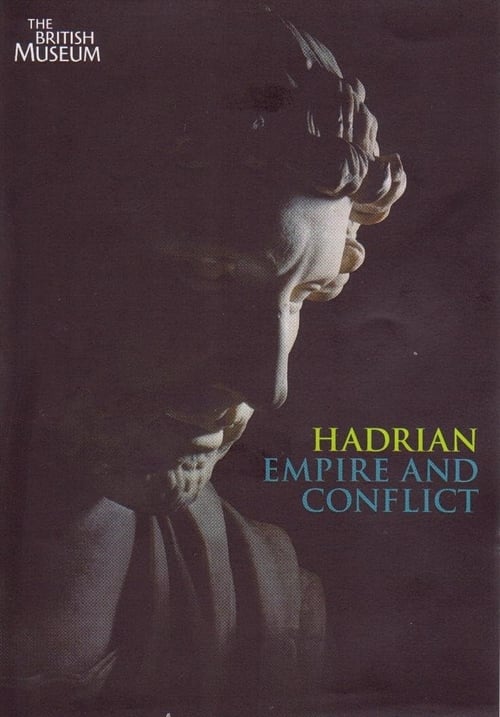
Documentary released to coincide with the British Museum's exhibition dedicated to the man who ruled the Roman Empire from 117 to 138 AD. The programme explores the life, achievements, passions and legacy of the emperor who was both soldier and poet and responsible for that most famous construction - Hadrian's Wall. The documentary was produced in conjunction with the exhibition Hadrian: Empire and Conflict at the British Museum 24 July - 26 October 2008.
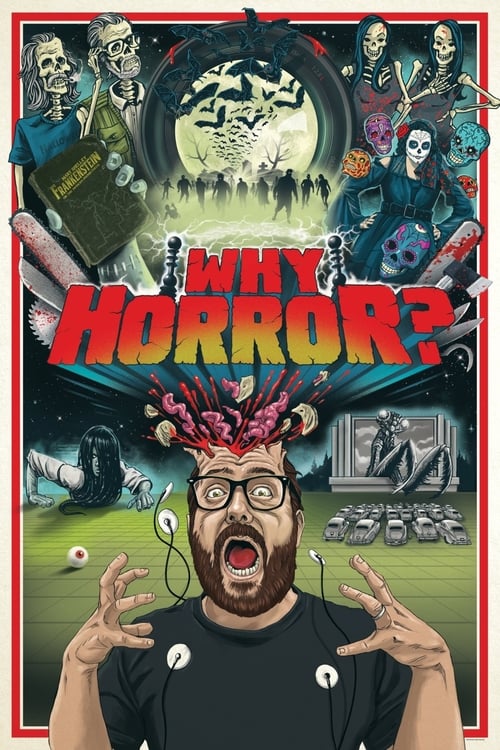
Graphic Sexual Horror takes a peek behind the terrifying facade behind the most notorious of bondage websites, exploring the dark mind of its artistic creator and asking hard questions about personal responsibility. Interviews reveal deep fascinations with bondage and sadomasochism that run parallel, and in fact become irreversibly entwined with the lure of money.
Peter Whitehead’s disjointed Swinging London documentary, subtitled “A Pop Concerto,” comprises a number of different “movements,” each depicting a different theme underscored by music: A early version of Pink Floyd’s “Interstellar Overdrive” plays behind some arty nightclub scenes, while Chris Farlowe’s rendition of the Rolling Stones’ “Out of Time” accompanies a young woman’s description of London nightlife and the vacuousness of her own existence. In another segment, the Marquess of Kensington (Robert Wace) croons the nostalgic “Changing of the Guard” to shots of Buckingham Palace’s changing of the guard, and recording act Vashti are seen at work in the studio. Sandwiched between are clips of Mick Jagger (discussing revolution), Andrew Loog Oldham (discussing his future) – and Julie Christie, Michael Caine, Lee Marvin, and novelist Edna O’Brien (each discussing sex). The best part is footage of the riot that interrupted the Stones’ 1966 Royal Albert Hall concert.
On an overcast morning in 1999, William Gibson, father of cyberpunk and author of the cult-classic novel Neuromancer, stepped into a limousine and set off on a road trip around North America. The limo was rigged with digital cameras, a computer, a television, a stereo, and a cell phone. Generated entirely by this four-wheeled media machine, No Maps for These Territories is both an account of Gibson’s life and work and a commentary on the world outside the car windows. Here, the man who coined the word "cyberspace" offers a unique perspective on Western culture at the edge of the new millennium, and in the throes of convulsive, tech-driven change.
His work illustrates people. Densha Tattoo reflects on craft, inspiration and the scene. — What is the essence of a human being? One stitch at a time. A portrait about the tattoo artist.
Heavy Metal Parking Lot documents heavy metal music fans tailgating in the parking lot outside the Capital Centre (since demolished) in Landover, Maryland, on May 31, 1986, before a Judas Priest concert (with opening act Dokken).
Decolonising the Curatorial Process is a forty-minute documentary which explores decolonial strategies in an academic and curatorial context. The film features academics, activists and practitioners, and contains case studies of institutions that are deploying critical, self-reflective forms of curatorial practice. The Museum of London Docklands exhibition on slavery and the sugar industry is examined as an example of how an institution can decolonise the curatorial process, utilise the work of artists in a museum context, and critically examine East London's imperial history. The Pitt Rivers museum in Oxford, who are working with Maasai activists from Kenya and Tanzania on a project centred on repatriating the museum's collection of sacred Maasai artefacts, also features in the film.
Filmmaker Roman Polanski and photographer Ryszard Horowitz meet in Kraków, Poland, where, strolling the streets, they share memories of their childhood and youth, the hardest days of their lives, when, during World War II, they met in the ghetto established by the Nazi occupiers.
A documentary that traces the life and times of Bhagat Singh, a committed Marxist who most ably exemplified the spirit of revolutionary resistance against British imperialism in undivided India.
Using previously unreleased archival material in addition to contemporary interviews, this Academy Award-winning documentary tells the story of the Frank family and presents the first fully-rounded portrait of their brash and free-spirited daughter Anne, perhaps the world's most famous victim of the Holocaust.