Twelve shots, four sequences. Each of them will try to evoke a feeling, a sensation, an idea, a landscape… just like the iconic and transcendental Japanese poems known as “Haiku”.
A fictionalised documentary about the great Japanese poet Bashô (1644–1694), the spiritual father of haiku poetry. A monk, portraying the poet, journeys through Japan, following Bashô's journal and writing many of his haikus. A ruminant, poetic, Zen Buddhist observation of nature – a return to the lost paradise of unspoilt nature.
Mio is 20 years old. Having lost her parents early, she and her grandmother run a traditional inn in Nagano. However, her grandmother gets sick. Mio moves to Tokyo and lives with her father’s best friend, Kyosuke. He runs a public bath. She begins to work at the public bath, but it is scheduled to be demolished to make way for redevelopment.
Video poem based on The Last Dragon by Radu Stanca.
Is it possible to travel twice to the same memory? The filmmaker built a cabin on an isolated riverbank, just opposite his childhood island, which had disappeared under the water after the construction of a dam. The goal was to go back to that place, which had become invisible. Only the trees of the island where he’d played stood firm in the middle of the water, like the masts of a broken toy boat, so the air was the only space left, the only vestige of the past to be conquered. This film is a diary of a castaway in memories: four months of a Walden experience in a lost paradise with two hens, a small vegetable garden and a clock that stopped forever at 11.36 and 23 seconds.
It's been years since Stef last left her house. The loss of her brother combined with the quiet dread of the unknown conspiring to keep her inside. When her brother Liam's best friend, Evan, arrives to give Liam's journal to Stef, they begin a relationship. However, when Stef and Evan start to unpack their shared trauma, they question if their relationship can ever break free from its confines? Caught between Evan's images of a world outside that they could inhabit, and a story of lost love that Stef is translating from a previous generation, Stef must choose the kind of future she wants, and whether Evan will be a part of it.
A psychiatrist attempts to cure a patient who thinks he's the son of Zeus, while dodging the mental ward himself.
"Taniel" looks at the last months of poet Taniel Varoujan's life, who was murdered in the Armenian Genocide of 1915. The film's narrative is heard in poetry and seen through Film Noir images.
Martin (Joe Newton) is a casualty of society. He is under appreciated and overworked as a salary man in the city. With mounting pressure on his shoulders, he experiences a breakdown at work and loses his job. After visiting his childhood home to collect some possessions, he opts not to go home but instead chooses to live off grid in the vast woodland. Here he attempts to survive, to try and find himself again, through being amongst nature and his love of writing poetry.
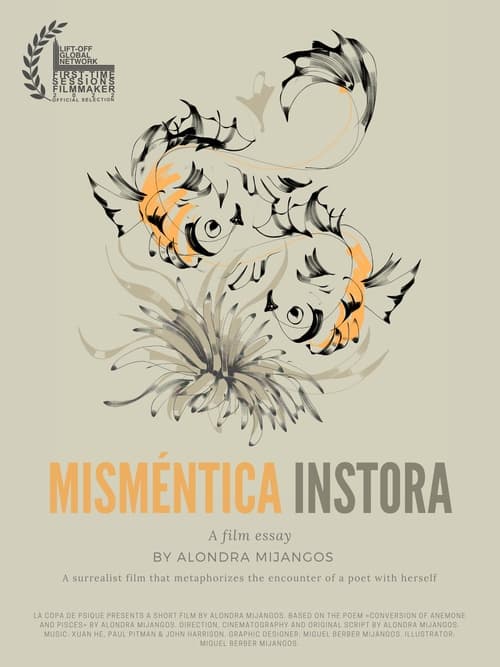
Anémona and Pisces live a capicua experience: they are at the same time the woman who looks, the woman who is looked at, and the very act of looking. Between fractal scenes and images multiplied in reference to Man Ray, Anémona assumes the will to, through the state of trance, always be a foreigner within herself, while Pisces goes in search of an alien vision, to assume herself as the self and otherness to understand the world.
Based on the only extensive prose work by the surrealist painter Josef Capek, Shades of Fern most resembles the philosophical fairy tales and fables of Josef’s older brother, the legendary Czech novelist and playwright Karel Capek. Two young poachers, more boys than men, kill a gamekeeper when they are caught illegally hunting. Panicked, they retreat into a forest that grows steadily more forbidding and deadly as their fear for the future—and guilt over their action—mounts. Loosely based on hundreds of oral folk tales and legends that haunt the woods of Czechoslovakia, Vlácil’s contemporary updating artistically underscores the relationship between man and nature, crime and punishment, isolation and society, and guilt and memory.
As a kid, Leo thought he possessed, like a magician, the secret power to make things happen. As a young man, he certainly knows how to make things happen with women. But as his best friend Krantz would say to him, "Why do you always ask questions you already know answers to?" Leo believes firmly in what he invents from one day to the next. Images, impressions, stories fill his head. That's just how he is: life, for Leo, is just a game. Behind this childlike attitude, hides the very essence of his own life's quest.
A sumptuous short film of friendship and adoration between boys, based on a poem by Peter LeBerge. Moments of joy, bonding and roughhousing on a school trip to the beach counterpoint one teen boy’s introspective sexual awakenings and questionings. Magnificent cinematography and editing create a visual feast that provides the imagery for a narrated poem by Peter Laberge alluding to early homosexual desires, but with Catholic overtones never directly expressed.
Rubén tries to describe the color blue as "The color of dreams, of art, of the ocean and of the firmament", thereby unleashing half a century of poetry.