Documentary recounting the story of the Cuban Revolution and its impact on the young people of Cuba.
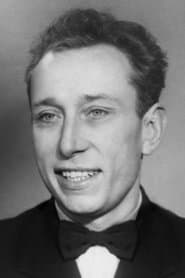
Leonid Khmara
as Self
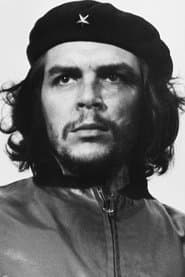
Che Guevara
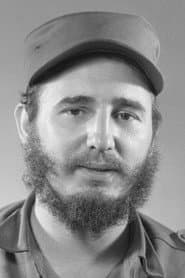
Fidel Castro
Born to Korean immigrant parents freed from indentured servitude in early twentieth century Mexico, Jerónimo Lim Kim joins the Cuban Revolution with his law school classmate Fidel Castro and becomes an accomplished government official in the Castro regime, until he rediscovers his ethnic roots and dedicates his later life to reconstructing his Korean Cuban identity. After Jerónimo's death, younger Korean Cubans recognize his legacy, but it is not until they are presented with the opportunity to visit South Korea that questions about their mixed identity resurface.
Documentary footage of late 1950s Russia covers such cities and towns as Moscow, Leningrad, Kiev, Yalta, the Black Sea, Kharkov, Sochi, Sukumi, Gori, Bukhara, Samarkand, Frunzo and Siberia.
The story of the Arrow had its origins in the Cold War and the growing spectre of Soviet bombers invading our northern skies.
A young man decides to join the army. He becomes the drummer in the military band, and his everyday life is now a combination of military training and music. What does the Argentine Army do these days, more than thirty years after the dictatorship? What does it mean to be a soldier in a country without wars?
The fascinating history of the U.S. Air Force comes to life via vintage footage culled from official Air Force newsreels that were created to educate the public during wartime. Formed in World War I as a tiny airborne offshoot of the Army's American Expeditionary Force, the division subsequently grew into its own armed services branch and became the largest modern air force in the world.
This 1982 film explains the KGB infiltration of America. Who they are, what they are doing, and how well they have infiltrated North America.
Thomas Sankara came to power in Burkina Faso in 1983, with the promise of a revolutionary government that would transform the West African country. To help build the revolution, he sent 600 children — many orphans from rural areas — to be educated in Cuba. But after Sankara’s assassination, the children were stranded. The last would only return to Burkina Faso in 2005. SANKARA’S ORPHANS tells their stories through interviews with some of the 600, along with archival footage of their lives on Cuba’s Isle of Youth — where both Sankara and Fidel Castro came to visit. Along with their education, the children worked in the fields and received weapons training. This, combined with their idealism, frightened the new Burkina Faso regime, which worried they might return and take up arms.
Going from 0 to 150 mph in three seconds, withstanding three Gs of force, and taking off from what's often called "the most dangerous place on the planet" are just parts of everyday life for an aircraft carrier pilot-and it's no different for the crew aboard the USS Enterprise. After being stationed in the Middle East for a year, these pilots have seen heavy action in Afghanistan and Iraq. Now, finally, they're returning home. With amazing personal stories and real-time footage from missions, this is an exciting insider's peek at life onboard a wartime aircraft carrier.
Wes Hurley's autobiographical tale of growing up gay in Soviet Union Russia, only to escape with his mother, a mail order bride, to Seattle to face a whole new oppression in his new Christian fundamentalist American dad.
The story of the Americans who are fighting against one of the largest- known polluters in the country - the United States military.
In 1944 Crimean Tatars has suffered a long road in exile. It was accompanied by famine, illness and loss. In the first years of exile, almost half of deported Crimean Tatars died. But those, who survived, dreamed of only one thing - to return to Crimea. The documentary 1944 tells about the tragedy of all Crimean Tatars through several separate life stories. They are cherished by each Crimean Tatar family and must be remembered by all generations to come.
Oliver Stone spends three days filming with Fidel Castro in Cuba, discussing an array of subjects with the president such as his rise to power, fellow revolutionary Che Guevara, the Cuban Missile crisis, and the present state of the country.
In 2008, German U- boat U-455 was discovered off the coast of Italy. 400 feet down, the submarine stands almost vertically on the ocean floor. This documentary will reveal its history and the cause of its demise.
A cameraman wanders around with a camera slung over his shoulder, documenting urban life with dazzling inventiveness.
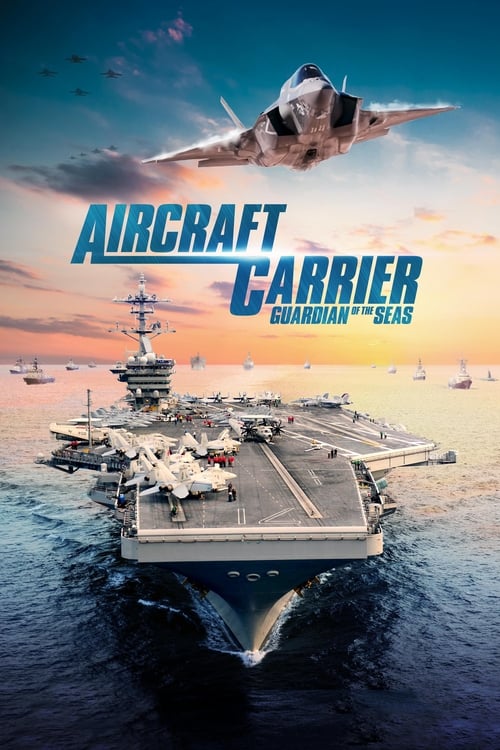
One of the greatest engineering feats in history, the modern US nuclear carrier is a masterpiece of technology, and the flagship of a fleet.
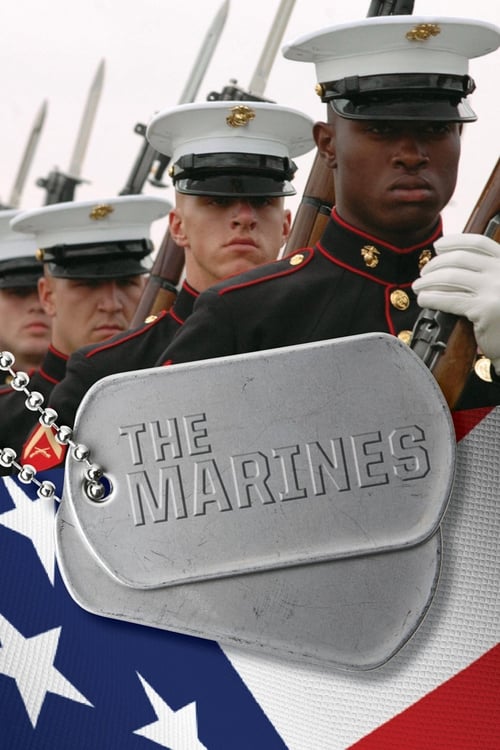
For longer than the United States has been an independent nation, there has been a Marine Corps. They consider themselves the very best America has to offer. Embodying fierce patriotism, extraordinary courage, and innovative weapons, they are a force. This documentary focuses on their training and examines what it means to be a Marine.
Oliver Stone's second documentary on/interview with Fidel Castro specifically addresses his country's recent crackdown on Cuban dissidents; namely, the execution of three men who hijacked a ferry to the United States.