Thierry Frémont
as
Cyril Aubin
Olivier Bouana
Benjamin Egner
Jochen Hägele
Stéphanie Hédin
Jérémy Prévost
Caroline Victoria
Stéphanie Caillol
Sébastien Desjours
Trials and tribulations of a Croatian communist intellectual in the turbulent years before, during and after the Second World War.
Britain's Special Operations Executive (SOE) provides trained agents, arms and other assistance to the European resistance groups fighting against Hitler. British agents, Captain Harry Rée DSO, OBE, Croix De Guerre, Médaille de la Résistance, aka "Felix", and Jacqueline Nearne, MBE, aka "Cat", recreate some of their adventures in France.
The story of the legendary battle through the eyes of Jedrek - a boy who went through the hell of the gulag and left Russia with the Polish Army as one of thousands of polish orphans. Soon a decisive attack on a monastery located on the hills of Monte Cassino is to take place at the front - this spectacular battle will decide the lives of many soldiers and the fate of the Allied offensive in Italy, and will change Jedrek's life forever.
A landscape gardener is hired by famous architect Le Nôtre to construct the grand gardens at the palace of Versailles. As the two work on the palace, they find themselves drawn to each other and are thrown into rivalries within the court of King Louis XIV.
The story of the HMS Torrin, from its construction to its sinking in the Mediterranean during action in World War II. The ship’s first and only commanding officer is Captain E.V. Kinross, who trains his men not only to be loyal to him and the country, but—most importantly—to themselves.
Wrongly accused of physically abusing a fellow actor, starving thespians Arthur and Maurice find themselves pursued by the law aboard a cruise ship.
A British wartime aviator who cheats death must argue for his life before a celestial court, hoping to prolong his fledgling romance with an American girl.
Frenchwoman Michele de la Becque, an opponent of the Nazis in German-occupied Paris, hides a downed American flyer, Pat Talbot, and attempts to get him safely out of the country.
Paul, a teenager in the underground scene of early-nineties Paris, forms a DJ collective with his friends and together they plunge into the nightlife of sex, drugs, and endless music.
The Black Contribution – Literature and Theater 1978 is a rare documentary highlighting the voices and cultural impact of African American writers and performers during the civil rights era. Introduced by NAACP leader Benjamin Hooks and narrated by Roscoe Lee Brown, the film weaves together dramatic readings, theatrical excerpts, and candid urban street footage. Margaret Walker’s poem For My People is performed alongside scenes of daily Black life in New York City — children playing, families on stoops, open fire hydrants, and the realities of poverty in 1970s neighborhoods. James Baldwin appears in interview footage, while signs for his play The Amen Corner and stage excerpts from Lorraine Hansberry’s A Raisin in the Sun underscore the powerful presence of Black voices in American theater. With rare shots of Harlem life, literature, and performance, this film documents the enduring contributions of African American artists to U.S. culture and history.
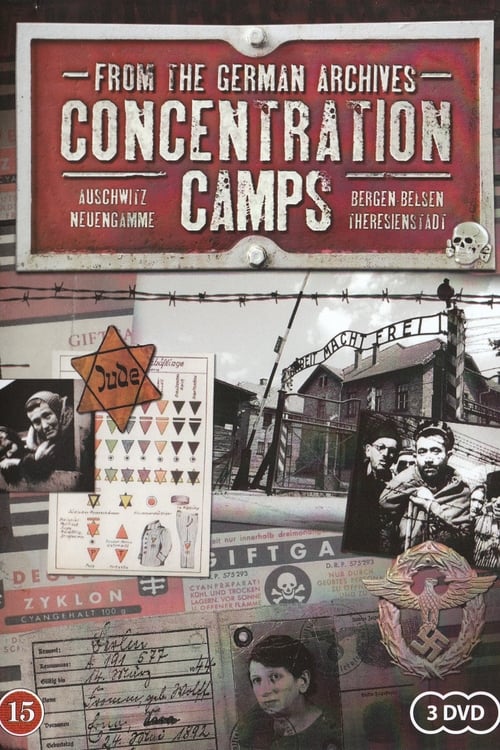
In 1945, Allied troops invaded Germany and liberated Nazi death camps. They found unspeakable horrors which still haunt the world’s conscience. A film was made by British and American film crews who were with the troops liberating the camps. It was directed in part by Alfred Hitchcock and was broadcast for the first time in its entirety on PBS FRONTLINE in 1985.
Three penniless artists become friends in modern-day Paris: Rodolfo, an Albanian painter with no visa, Marcel, a playwright and magazine editor with no publisher, and Schaunard, a post-modernist composer of execrable noise.
The story of an introverted young girl just reaching adulthood who takes a liking to an older woman she meets at a party and determines to match her off with her father, despite the latter's already having a lover of his own.
This story follows one man's quest to uncover the origins and reveal the mysteries of a possible Holocaust artifact some historians now say never existed: lampshades made of human skin. When the flood waters of Hurricane Katrina receded, they left behind a wrecked New Orleans and a strange looking lamp that an illicit dealer claimed was 'made from the skin of Jews.'
Proud Irishwoman Bridie Quilty journeys to Dublin while World War II rages across Europe. During her travels, she encounters J. Miller, who recruits her as a Nazi spy. She acquires the necessary information that leads to the breakout of a German spy who holds key information about the Allies' newest offensive plans. However, the arrival of British officer David Baynes and his romancing of Bridie lead to unexpected consequences.
It’s the spring of 1945 in a small resort town on the Baltic. Günter is 16 and firmly believes that the Germans will win the war. During the hunt for a forced labourer who is on the run, Günter catches him and watches as he is shot to death. He proudly accepts the award of an Iron Cross before being shipped to the nearby front as part of the last contingent of troops. He is quickly captured by Soviet soldiers, but manages to escape and return home. When the town is occupied by the Red Army, Günter is arrested for the murder of the forced labourer. The film was banned in 1968 before it was completed, and a large portion of the negative was later destroyed.