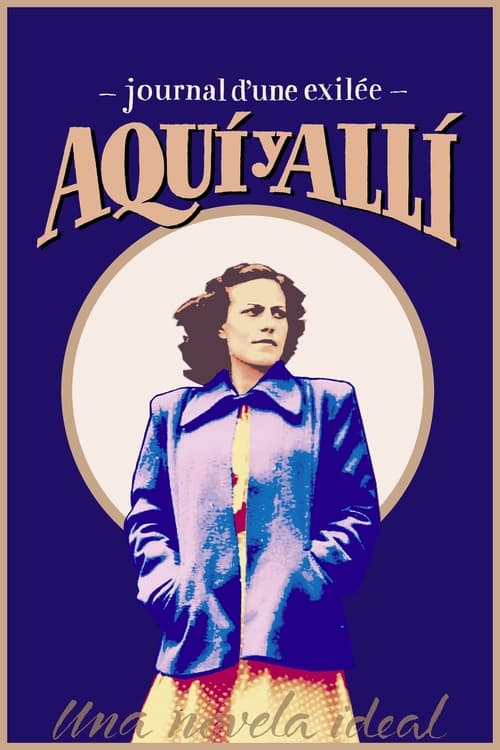
The film weaves together the filmmaker's introspections with survivor's collective memories. Amid deciphering a diary, the filmmaker reflects on personal encounters.
Podumi Rabha
as As herself
Monjula Rabha
as
Birubala Rabha
Usharani Rabha
The end of World War II brings Europe a new political system, reshapes national and personal identities. Three women from Milan, Paris and Berlin report on the days of liberation in their diaries. Their personal stories expand the historical picture and make LIBERATION DIARIES a chronicle of female self-empowerment, resistance and resilience.
In 2011, the director and screenwriter Wolf Gremm receives the diagnosis - prostate cancer. According to the doctors, he has not much longer to live, maybe eight months. Wolf Gremm is torn by these devastating news in the midst of an active, fulfilling life, but he decides to deal with the disease offensively and to fight. From now on smartphone and mini camera are his constant companions.
A mysterious rumble splits the sky and reverberates in the middle of the forest. A man delves into its depths to discover its origin and answer the questions presented by the universe.
How is secularism depicted in films? The term "Aa'La'Ma'Ni" means worldly in Arabic. It's significant in the Middle East, where secularism is controversial since the majority often link secularism with atheism and anti-religious sentiment. SECULAR | Aa'La'Ma'Ni, a documentary based on academic research, explores the depiction of secularism in Middle Eastern cinema and TV channels. Filmmakers and regional producers openly discuss religion, sectarianism, authorities, minorities, and industry challenges.
Ompung Putra Boru, a sixties indigenous Batak woman from Humbang Hasundutan, North Sumatra, retraces her life stories through photographs that interweave her past and present as a wife, mother, healer and indigenous land defender in two neighboring villages. Her multi-layered stories are juxtaposed with visual records of everyday life in the two villages, where people’s living space is still increasingly threatened by a giant pulp expansion.
Every morning, Marcel confides in his tape recorder. It is from his reflections on life that this film takes us into the wake of his story.
Initially embarking on an unplanned personal filmmaking project, Ilias Boukhemoucha finds himself drawn to the overlooked corners and marginalized communities within Canadian cities.
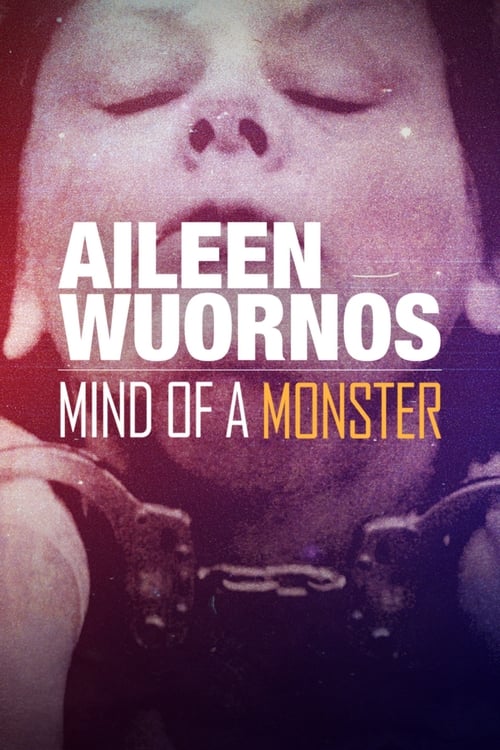
Serial killer Aileen Wuornos writes down her darkest secrets for her best friend while on Florida's death row; now, for the first time, those secrets are revealed in detail.
Examines the violence and civil disobedience leading up to the hallmark decision in U.S. v. Washington, with particular reference to the Nisqually Indians of Frank's Landing in Washington.
The 6 Guarani villages of Jaraguá, in São Paulo, fight for land rights, for human rights and for the preservation of nature. They suffer from the proximity to the city, which brings lack of resources, pollution of rivers and springs, racism, police violence, fires, lack of infrastructure and sanitation, among others. Unable to live like their ancestors, their millenary culture is lost as it merges with the urban culture.
In "Reflections on Dutch Capitalism: Zero Sugar Version," Lakaaysha van Ewijk delves into how capitalism molds identity and desire, using an Italian expat's journey in the Netherlands as a lens. The film critiques the deep entanglement of consumer habits with our sense of self, showcasing the absurdities of a system where products shape identities. Through a narrative rich in symbolism, it probes the paradoxes of consumer culture versus the quest for authenticity, compelling viewers to question the impact of capitalist values on human nature and societal bonds.
This short, started early on into sobriety, finished about nine months in, is a collage of diaries and notes, collected from within addiction and into recovery.
Migrant families experience violence, but they also keep beautiful memories when they arrive in new lands. Fantastic and intimate stories, recalled from childhood, travel across time and space, magically intermingling with the help of the four elements and breaking the boundaries of cinema.
Wild Butterfly is true crime documentary that follows the tragic story of 24 year-old Claire Murray and her desperate search for a life- saving liver transplant that became a trial by national media. Depicted as an ungrateful junkie who recklessly destroyed her first transplant, Wild Butterfly investigates the true story behind the events that lead to Claire's death in 2010 including new criminal evidence. Catholic institutional cover-up, medical negligence, missing police records, and trial by mainstream and social media, are all at play in this heartbreaking and gripping documentary. This is not just the tragic story of one young woman and her family - this story opens our eyes to the impacts of universal social injustices and prejudices, that could befall any family and anybody's daughter.
A documentary account by award-winning filmmaker John Ferry of the events that led up to the 1969 Native American occupation of Alcatraz Island as told by principal organizer, Adam Fortunate Eagle. The story unfolds through Fortunate Eagle's remembrances, archival newsreel footage and photographs.
A collection of memories from a tumultuous time at University.
It was one of the great crimes of the Second World War: from 1941 to 1944, a total of 872 days, the siege and starvation of Leningrad by the German Wehrmacht on Hitler's orders lasted. Over a million people fell victim to the blockade, most of them dying of hunger. Countless of these starving people wrote diaries with the last of their strength, and cameramen filmed in the paralyzed city. Evidence from the hell of the siege, many of the film recordings, but above all the written memories on which this documentary on the occasion of the 80th anniversary of the liberation is based, remained under lock and key after the war. The voices of those who had suffered through this terrible time should not be heard by anyone, because they did not fit the pathos of the Leningrad heroic song that was officially sung. Most of the recordings come from women. The writers feared neither the enemy nor the Communist Party or Stalin, who often proved incompetent in providing for the population.
In the early 1960s the Canadian government conducted an experiment in social engineering. Three young Inuit boys were separated from their families in the Arctic and were sent to Ottawa, the nation's capital, to live with white families and to be educated in white schools. The consequences the experiment would have on the boys, their identity and culture was brushed aside. The bureaucrats did not anticipate the outcome. The three grow up to be political activists and leaders - often at odds with the government that brought them south. They establish aboriginal rights in Canada and are instrumental in the creation of Nunavut, the world's largest self-governed aboriginal territory. But it all comes at a tremendous personal cost. Peter Ittinuar, Zebedee Nungak, and Eric Tagoona recount their stories, achievements and challenges in this film about an attempt at assimilation, empowerment, and the triumph of the human spirit.