Simone de Bollardière
as Self
Jacques Pâris de Bollardière
as Self (archive footage)
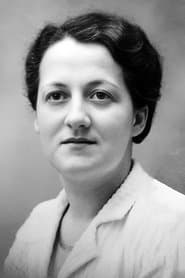
Germaine Tillion
Henri Alleg
The incredible story of the Avro Lancaster, one of the finest bombers of the Second World War, which played a crucial role in the long and savage campaign to defeat Hitler's Third Reich. This documentary features interviews with surviving veterans of Bomber Command, who share frank personal accounts of their part in an aerial battle of attrition which claimed the lives of 55'000 aircrew.
It is the evocation of a life as brief as it is dense. An encounter with a dazzling thought, that of Frantz Fanon, a psychiatrist of West Indian origin, who will reflect on the alienation of black people. It is the evocation of a man of reflection who refuses to close his eyes, of the man of action who devoted himself body and soul to the liberation struggle of the Algerian people and who will become, through his political commitment, his fight, and his writings, one of the figures of the anti-colonialist struggle. Before being killed at the age of 36 by leukemia, on December 6, 1961. His body was buried by Chadli Bendjedid, who later became Algerian president, in Algeria, at the Chouhadas cemetery (cemetery of war martyrs ). With him, three of his works are buried: “Black Skin, White Masks”, “L’An V De La Révolution Algérien” and “The Wretched of the Earth”.
This captivating documentary on J. Robert Oppenheimer, the architect of the atomic bomb, explores his journey before the historic test and reveals the burden he carried after. De-classified documents, rare film footage and exclusive interviews, including Oppenheimer's grandson, show an intimate exploration of the burden Oppenheimer carried and the profound global impact still being debated today.
Hundreds of frozen and starved people floating on boats in the middle of the Mediterranean Sea fleeing from the war... Familiar scenes that we are used to seeing in recent times. But the year is 1944, and the refugees are travelling from Europe to Africa. After Italian capitulation,and before the arrival of German army, 28 000 Dalmatian Croats left their home villages and towns to live for two years under the tents in the middle of Egyptian desert, in a kind of a communist model village that was formed to show the Allies how the new Yugoslavia will look like when the war ends. This is a story about them.
Das radikal Böse is a German-Austrian documentary that attempted to explore psychological processes and individual decision latitude "normal young men" in the German Einsatzgruppen of the Security Police and SD, which in 1941 during the Second World War as part of the Holocaust two million Jewish civilians shot dead in Eastern Europe.
We've all heard of the atomic bomb, but in the late 1950s, an idea was conceived of a bomb which would maximize damage to people, but minimize damage to buildings and vital infrastructure: perfect for an occupying army. This is the story of a man and his bomb: a melding of world events and scientific discovery inspire the neutron bomb, one of the most hated nuclear weapons ever invented.
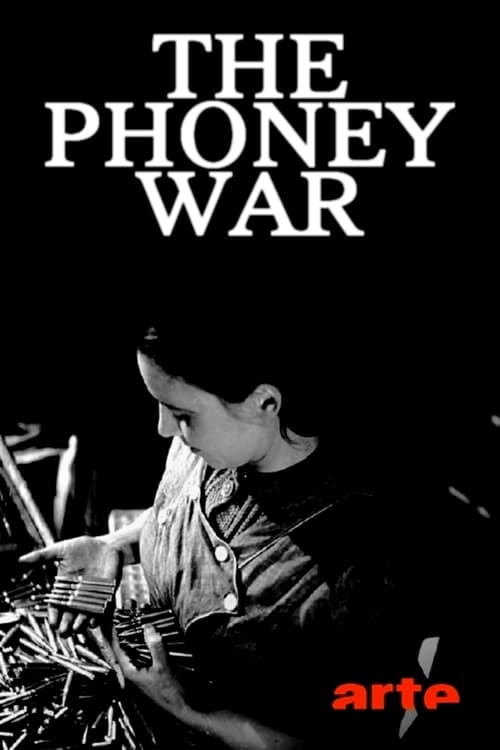
Three part documentary of the history of the Royal Air Force during World War Two. They combine actual Air Ministry films and period newsreel footage with interviews of surviving members of the air force. The first part covers the period from the 'phoney war', the invasion of Poland and the early bombing raids on enemy shipping, through to the attacks on France. Aircraft featured include the Blenheim and Wellington bombers, the Sunderland flying boat, Spitfires and Hurricanes and the opposing ME109.
Three part documentary of the history of the Royal Air Force during World War Two. They combine actual Air Ministry films and period newsreel footage with interviews of surviving members of the air force. The second part covers the early years of 1939-1940 from the threat of German invasion preceded by Oporation Eagle attacks on airfields and ports, through the Battle of Britain to the commencement of the British bombing of Berlin after attacks on London and wider civilian casualties such as Coventry.
The riveting story of the first all-Black tank battalion to fight in US military history. Under General George Patten's command, the 761st fought heroically throughout WWII and were the furthest east of all US troops in the European theater of war.
Algiers. From the port to the souks, passing through the Jardin d'Essai, Dominique Cabrera transports us to the land where she was born, on the other side of the Mediterranean "where the sea is saltier". If most of the pieds-noirs left Algeria in the summer of 1962, some -a minority- remained. By going to meet them, the director makes her own inner journey.
Originally there was a silence. That of Malek, the filmmaker’s father, who for years said nothing of his childhood in Algeria. And then, the need to break the silence, with a script that he gives to his children, to start telling his story. Several years later, the father and daughter finally make the journey to Mansourah, his native village: seeing his house, meeting other men who experienced the same heartbreak. Little by little, the film reveals what Malek, like many others, has long kept quiet about.
Everyone knows the public archive footage of Hitler. But most of it is silent. What was he saying? Special computer technology enables us for the first time to lip-read the silent film.
To mark the 70th anniversary of the Dunkirk evacuation, Dan Snow tells the story of the 'little ships' which made the perilous cross-channel voyage, as 50 of them return to France.
Filmmaker Fang Li and his crew explore exhaustive historical investigation, as far as possible to find the core of the British, American, Japanese and Chinese parties and descendants, trying to infinitely close to the truth of the World War II "Death Ship" — "Lisbon Maru", which is 30 meters under the sea off the East Polar Island in Zhoushan, China.
Henry Ford, the legendary automobile manufacturer, James D. Mooney, the GM manager and Tom Watson, the IBM boss, were all awarded the Grand Cross of the German Eagle, the Nazis' highest distinction for foreigners, by Hitler for their services to the Third Reich. At this time, in 1937 and 1938, Hitler's armaments industry was running at full speed. The German subsidiaries of these American companies - Opel, the Ford Werke AG and Dehomag - had willingly allowed themselves to be integrated into the "Führer's" war preparations. The film concentrates on the companies which were indispensable for Hitler to wage war. The documentary is supported by new archive material, as well as interviews with contemporary witnesses and experts.
Documentary on the beginnings of Algerian independence filmed during the summer of 1962 in Algiers. The film was banned in France and Algeria but won the Grand Prize at the Leipzig International Film Festival in 1965. Out of friendship, the production company Images de France sent an operator, Bruno Muel, who later declared: "For those who were called to Algeria (for me, 1956-58), participating in a film on independence was a victory over horror, lies and absurdity. It was also the beginning of my commitment to the cinema."
Using exclusively archival footage, this documentary traces the rise and collapse of the Third Reich, from Adolf Hitler’s early years to the devastation of Europe and his suicide in 1945. Directed by Erwin Leiser, the film draws heavily on material produced and preserved by the Nazi propaganda apparatus to confront the mechanisms, imagery, and consequences of totalitarian power.
The 'mighty' Hood was the pride of the British Navy for more than 20 years, revered around the world as the largest and most powerful warship afloat. But when it was sunk by the German battleship Bismarck off the coast of Greenland on 24 May 1941, its end was shockingly swift.