Gerald S. Doyle was one of the first collectors of Newfoundland folk songs. He was also an avid cinematographer who left a collection of 12 hours of colour film, shot in outport Newfoundland and Labrador in the 1930's, 40's, and 50's.
Gerald S. Doyle
as Self
Hundreds of boxes left by the famous uruguayan musician and political activist Alfredo Zitarrosa (1936-1989) who run away the dictatorship in the 70s, have not been touched since his death 27 years ago. Now his wife and daughters are trying to save the memories, tapes, music and sound recordings that the boxes contain to the posterity.
As debate in Canada and the world rages over health care, Hospital City offers a moving, human portrait of the people whom the issues touch most closely.
In the Bernese Alps, the Agassizhorn peak memorialises Louis Agassiz – a controversial 19th-century scientist, who not only named the mountain after himself, but who claimed he had discovered the Ice Age and went on to become one of the century's most virulent, most influential racists.
Following the 1884–85 Berlin Conference resolution on the partition of Africa, the Portuguese army uses a talented ensign to register the effective occupation of the territory belonging to the Cuamato people, conquered in 1907, in the south of Angola. A STORY FROM AFRICA enlivens a rarely seen photographic archive through the tragic tale of Calipalula, the Cuamato nobleman essential to the unfolding of events in this Portuguese pacification campaign.
Stan Hill Jr. is a Haudenosaunee artist living in Miawpukek First Nation Reserve, Conne River, Newfoundland. In “The Bear Inside a Whale,” he and his family discuss racism, identity, religion, creation and art, along with the cultural extinction of the Beothuk of Newfoundland. Throughout the film, we follow Stan carving a bear out of a whale vertebra. And we visit The Rooms (museum) in St. John’s, Newfoundland, where Stan talks about viewing and reclaiming Indigenous artefacts.
This documentary follows 200 days in the life of contemporary artist Hiroshi Sugimoto— a leading presence in the world of modern art. He is the winner of many prestigious awards and his photographs are sold for millions of yen at overseas auctions. The film shows the sites of the Architecture series shot in southern France, the huge installation art work at 17th Biennale of Sydney, his new work Mathematics at Provence, his art studio while working on Lightning Fields, and more. It thoroughly pursues the question Sugimoto's works pose - "living in modern times, what are these works trying to tell us?" A thrilling look into the world of Hiroshi Sugimoto.
A portrait of Newfoundland that records a way of life that has all but disappeared.
Shot in the Dark is a documentary on three blind photographers: Pete Eckert, Sonia Soberats and Bruce Hall. A documentary on three blind people who devote their lives to creating images. What do they see in their mind's eyes? Do they sense that which we sighted miss, overlook, or don't take into consideration? Their images, as we sighted can see, are extraordinary. "Even with no input the brain keeps creating images," says Pete Eckert. Sonia Soberats states, "I only understood how powerful light is after I went blind." Shot in the Dark is a journey into an unfamiliar yet fascinating realm. "My camera is like a bridge," claims Bruce Hall. All these photographers embrace fantasy, chance, and contingency at a fundamental level. Shot in the Dark enriches our understanding of perception and creation. We all close our eyes in sleep, the sighted and blind alike, and in our dreams - we see.
CBC News Newfoundland Labrador's documentary entitled “Trail of the Caribou” traces the journey of the brave men of the Newfoundland Regiment. Created to mark the 100th anniversary of the Battle of Beaumont-Hamel, the movie gives a detailed account of the role the Regiment played in the First World War, putting faces to the story. Since the War, Caribou statutes were constructed in Europe to memorialize the significant places the Newfoundland Regiment fought. Trail of the Caribou transports the viewers to these places to trace the footsteps of the Newfoundland soldiers.
Whether famous or anonymous, stars or prisoners, models or sex workers, women have always been at the center of Bettina Rheims' photographic work since her debut in 1978. Both subversive and glamorous, trashy and sophisticated, her photographs mark and bear witness to the upheavals of the era, which this leading photographer both anticipated and accompanied.
An account of the professional and personal life of renowned American photographer Annie Leibovitz, from her early artistic endeavors to her international success as a photojournalist, war reporter, and pop culture chronicler.
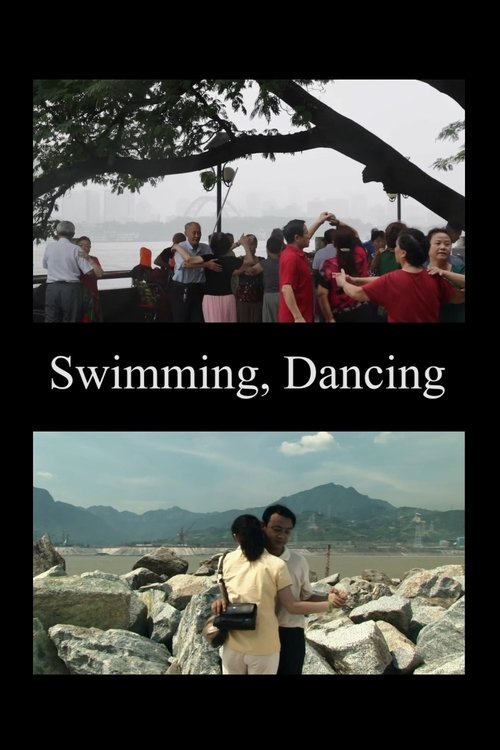
Swimming, Dancing examines audiovisual representations of the Yangtze (1934–present), from silent film to video art to the contemporary vlog. Inspired by the city symphonies of the 1920s, Swimming, Dancing pieces together a “river symphony”, evoking the images, sounds and contradictions that make up the river’s turbulent history.
Man Ray, the master of experimental and fashion photography was also a painter, a filmmaker, a poet, an essayist, a philosopher, and a leader of American modernism. Known for documenting the cultural elite living in France, Man Ray spent much of his time fighting the formal constraints of the visual arts. Ray’s life and art were always provocative, engaging, and challenging.
A beautiful collection of pictures ties Frank Cancian, an elderly photographer and retired professor of anthropology, American with origin from Veneto, to the people of Lacedonia, a small town in southern Italy. Thanks to the rediscovery of the photos taken in 1957 by the young Cancian in that rural village where he had arrived almost by chance, the story resumes there where it was interrupted 60 years earlier. And the thread of memories ties back to people and places, bringing with itself some essential reflections on how photography can become an ethnographic look at small communities.
The joys of 1960s modern education - as seen at a not-exactly-typical local comp.
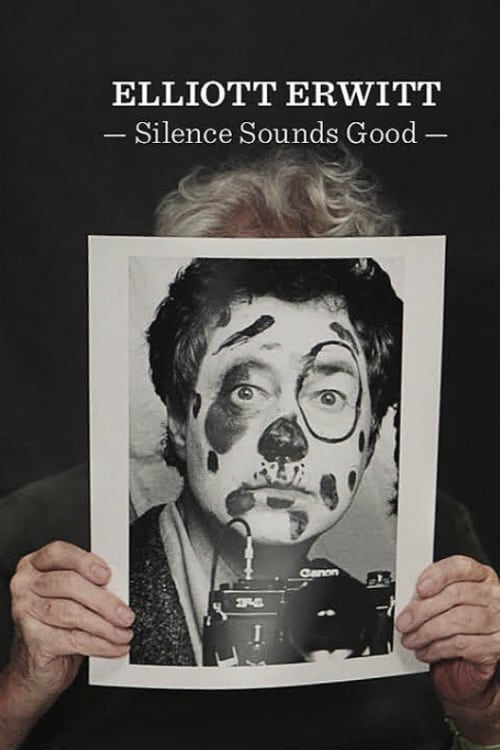
Elliott Erwitt has spent his entire adult life taking photographs, of presidents, popes and movie stars, as well as regular people and their pets. His work is iconic in world culture while his life is largely unknown.
In the year following the 9/11 terrorist attacks, young journalist Claude Baechtold finds himself in the war zone of Afghanistan. Not entirely voluntarily, the avowed anti-militarist is dragged by two fearless reporters on a round trip through the entire country.
Follow the animated journey of an Indigenous photographer as she travels through time. The oral and written history of her family reveals the story — we witness the impact and legacy of the railways, the slaughter of the buffalo and colonial land policies.