The footage was shot in the writer's room a few days after his death. Everything in the room was untouched. The poet György Petri reads from one of Péter Hajnóczy's works, Miss Embolia. A sacred image of the Eastern European "beaten generation".
György Petri
as Reader
Hungary was the site of serial murders on ethnic basis. Over the course of one year, the murderers killed and seriously injured Roma children and adults. The state charged 4 men with committing the crime with racial motivation. This historical trial started March, 2011, and ended August, 2013 in Budapest. The 167 days of hearings was only documented continuously by our crew. We had exclusive permission to use multiple cameras in the court-room. The film is a classical chamber-drama, taking place in a small, claustrophobic court room, in the middle of Europe. What will be the outcome of the marathon, 3 year-long trial?
Entering a seamy underground world of peep shows, nude clubs, and live Internet sex is David Huxley, an aspiring politician who has everything to lose. Secretly filmed in a steamy three-way with his fiancée Tish and a gorgeous young model, David is desperate to find the extortionist who's demanding an exorbitant amount of money for the negatives. But when the blackmail trail ends in murder and David is kidnapped, Tish must come up with $5 million ransom or her fiancé's once-promising career, and life, may come to a dead end.
The Toth family resides in Northern Hungary. The couple has a daughter and a son, the latter a member of the armed forces. When his weary major is ordered to take a vacation, the son talks him into a visit to his family home. Comedy ensues when the Toths go overboard trying to make things pleasant for the visiting major in hopes of an easier life for their son the soldier.
When a young boy comes in to see a doctor abourt a red mark on his face, the doctor's wife welcomes him into the consulting room instead. As they talk, she offers him something to eat and then notes that his manner of eating is just like that of her previous husband, who died in prison many years earlier. It turns out that the young man had been his cell mate for a year, and he tells her the story of how her husband died. She then remembers (in flashbacks) how she had helped her first husband rid himself of his sexual repression, and how she had promised him she would marry her current husband if she were widowed. It seems her doctor-husband was a man who could remain untouched through any political climate, and was much admired by her first husband. Now that her memories have been awakened by the young man's account, she ignores the repeated phone calls of her current husband and decides to rid this young man of his own sexual repressions.
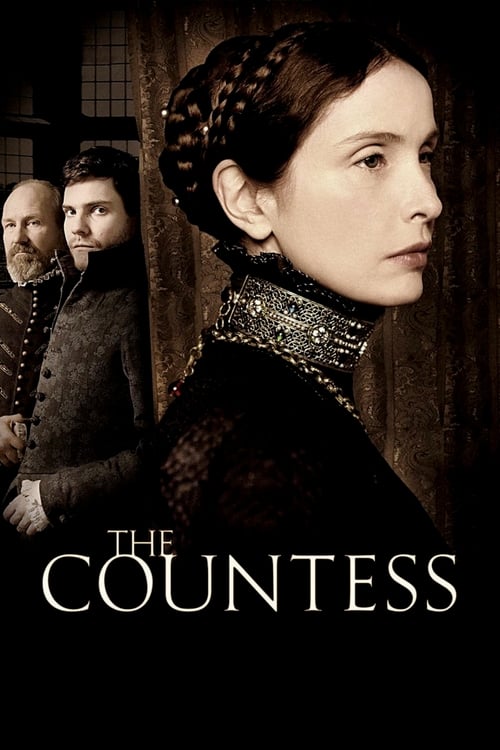
In the Seventeenth Century, while Hungary is fighting the Turks, the population of a small village in the Carpathian Mountains faces the evil Countess Elizabeth Bathory, accused of drinking and bathing in blood of virgin women.
A documentary chronicling the adolescent years of Elie Wiesel and the history of his sufferings. Eliezer was fifteen when Fascism brutally altered his life forever. Fifty years later, he returns to Sighetu Marmatiei, the town where he was born, to walk the painful road of remembrance - but is it possible to speak of the unspeakable? Or does Auschwitz lie beyond the capacity of any human language - the place where words and stories run out?
A naive young man witnesses an escalation of violence in his small hometown following the arrival of a mysterious circus attraction.
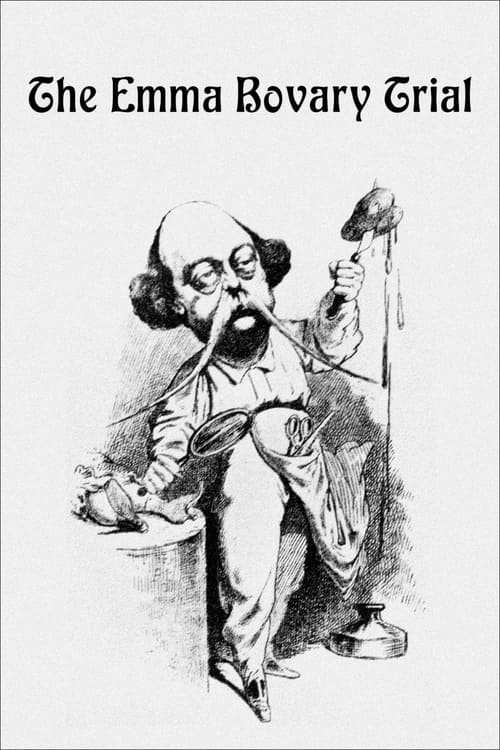
On January 31, 1857, the French writer Gustave Flaubert (1821-80) took his place in the dock for contempt of public morality and religion. The accused, the real one, is, through him, Emma Bovary, heroine with a thousand faces and a thousand desires, guilty without doubt of an unforgivable desire to live.
What if democracy fails citizens by not serving them all equally? What if inequality becomes the norm and the most vulnerable citizens are left behind with no money, no home, no rights, and no country of their own? In Hungary, the government has slashed social benefits and criminalized homelessness, but a group of activists, homeless and middle class, is confronting authorities to defend social justice and their right to be citizens. After the tragic death of two of its founding members, the group feels that Hungary is growing more hostile and their struggle is more important than ever. Despite all odds, their own community keeps them going—a mini-society with democracy and solidarity at its heart, an island of hope, belonging and dignity in a society gradually shifting the other way.
The first civil guardsman rises to the task of apprehending a dangerous serial killer before his city descends into chaos. Set ten years before the events of 'The Siege'.
Kingdom of Hungary, 17th century. As she gets older, powerful Countess Erzsébet Báthory (1560-1614), blinded by the passion that she feels for a younger man, succumbs to the mad delusion that blood will keep her young and beautiful forever.
During the ill-fated Hungarian revolution of 1956, Karcsi Szabo, star player on the water polo team, is torn between his love for a revolutionary student and his training for the Melbourne Olympics.
A young gay Romani couple from a remote village in Hungary has a dream so absurd that it seems impossible: making a musical film based on their lives.
Having suffered as a boy under a brutal Communist-era coach, champion Hungarian gymnast Miklos moves to Canada years later in search of a new start - only to find himself unwittingly perpetuating the very same cycle of abuse among his own pupils.
Inhabitants of a small village in Hungary deal with the effects of the fall of Communism. The town's source of revenue, a factory, has closed, and the locals, who include a doctor and three couples, await a cash payment offered in the wake of the shuttering. Irimias, a villager thought to be dead, returns and, unbeknownst to the locals, is a police informant. In a scheme, he persuades the villagers to form a commune with him.
A Hungarian youth comes of age at Buchenwald during World War II. György Köves is 14, the son of a merchant who's sent to a forced labor camp. After his father's departure, György gets a job at a brickyard; his bus is stopped and its Jewish occupants sent to camps. There, György find camaraderie, suffering, cruelty, illness, and death. He hears advice on preserving one's dignity and self-esteem. He discovers hatred. If he does survive and returns to Budapest, what will he find? What is natural; what is it to be a Jew? Sepia, black and white, and color alternate to shade the mood.
Hungary, XVII century. After being widowed, the old countess Elizabeth Nádasdy, of the Báthory lineage, fortunately discovers a way to become young again; but the price to be paid by those around her will be high and bloody.
An account of the life and work of the Swiss writer Johanna Spyri (1827-1901), the barely known artistic mother of Heidi, her brave alpine heroine, who was first introduced to the world between 1880 and 1881, in a novel published in two parts, and became definitely immortal thanks to an anime series, released in 1974, directed by the Japanese genius Isao Takahata.
The film presents the wildlife of the Gemenc flood area sanctuary, arranging the episodes of each selected species into little etudes: how the fox steals the chicken from the pen, how the roused deer flees jumping across a huge abyss, how the sturgeon sticks to the bottom of the water, how the adoption of an orphaned fawn takes place. Wildlife is wound into striking novellas by shedding light on the inner life of the forest’s inhabitants.
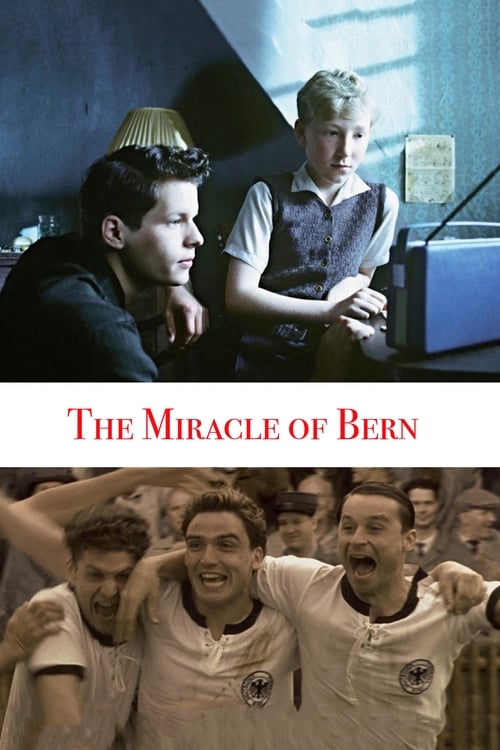
The movie deals with the championship-winning German soccer team of 1954. Its story is linked with two others: The family of a young boy is split due to the events in World War II, and the father returns from Russia after eleven years. The second story is about a reporter and his wife reporting from the tournament.