Ángel Morales Ballesta
as Ángel Morales Ballesta
Ángeles Cabrero García
as Ángeles Cabrero García
as voice
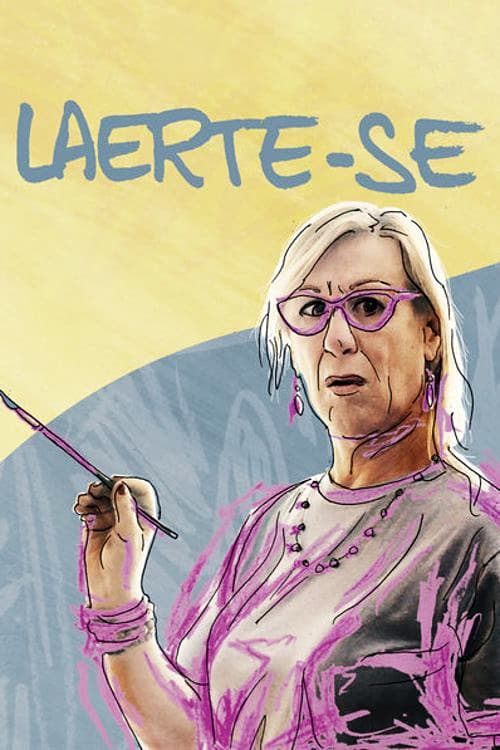
Rafaela, an 80-year-old woman, has a long conversation with her grandson, going over his path from childhood to old age. Now that she has been diagnosed with chronic breast cancer, faith is more present in her life than ever, which coexists with Rafaela's fear of death, and her grandson's fear of dying.
For more than a decade, my grandmother has been the tireless caregiver of my grandfather, who suffers from Alzheimer's disease. Through this story, we explore the love, sacrifice, and despair of someone who devotes their life to caring for another.
Honduran immigrants living in Mexico, teenage siblings Rocío and Ale must take over care of their two younger siblings after their mother is sentenced to prison on dubious grounds. Tensions grow between the pair as the decision must be made on whether to stay together in Mexico or split the family up to cross into the US to work.
The Alexander Ball is an observational documentary extravaganza celebrating Samoan-Māori-Australian trans woman of colour, Ella Ganza, and the Meanjin (Brisbane) ballroom scene, as she and her ballroom family prepare for one of the biggest pride events of the year: The Alexander Ball.
Three music-loving teens clash with the popular kids as the Christmas show nears—until a surprise substitute teacher, Santa Claus, arrives to save the day in this festive, feel-good adventure!
Two men undertake a thought-provoking journey to parenthood. Not by adoption or surrogacy, but by Frankie, a trans man, carrying their baby. Made with support from NZ on Air.
As Isyak and his daughter Maya face the ups and downs of life, from losing a job to battling illness and the loss of hearing, their strong bond reveals the enduring power of love and family to carry them through the toughest times.
A year after Thadd and Shannon gave birth to their son, A Conversation Between Parents highlights a climactic conversation in their lives -- as both young parents grasp at the last threads of their ideal family. On an afternoon off of work, the couple sits on their couch, while their son sleeps in his crib, and the family grapples with their limited options one last time. Dietrich’s camera ties the couple’s painful conversation together with flashbacks of both parents’ precious memories of their first year with Jasper, attempting to find a way to articulate their struggles in the last conversation they have together as a couple.
A silent day unfolds on the slope of a mountain… A child exists alongside his mother and father, yet each of them seems to inhabit a different world. With no dialogue, the film relies on visual storytelling. In certain close-up shots, color fades to black and white; symbolizing moments of inner solitude, personal conflict, and emotional disconnection. The unseen distances within the family are revealed not through words, but through images.
A dialogue and home video about belonging, from young people living in modern colonial society.
Adapting to her new home in Melbourne, Vietnam War immigrant Hanh (9 years old) mistakes the cunningness of her new “friends” as an act of kindness, forcing her to come to terms with the reality of human betrayal through the loving and tender guide of her family - especially her father, Quan.
It isn't easy to find a dream to chase when you're young, but Mugiko has one: she can't wait to become an anime voice actress. Saving up for classes while she works part time in a manga store, she lives with her older, gambler brother after her father's death. When the mother she never knew turns up out of nowhere and moves in, it only causes irritation for the aspiring otaku. But when her mother just as quickly disappears, it leaves Mugiko (or "Sweet Pea") searching for answers, bringing her back to her mother's hometown to discover what happened to her mother's own dream.
The Kitades run a butcher shop in Kaizuka City outside Osaka, raising and slaughtering cattle to sell the meat in their store. The seventh generation of their family's business, they are descendants of the buraku people, a social minority held over from the caste system abolished in the 19th century that is still subject to discrimination. As the Kitades are forced to make the difficult decision to shut down their slaughterhouse, the question posed by the film is whether doing this will also result in the deconstruction of the prejudices imposed on them. Though primarily documenting the process of their work with meticulous detail, Aya Hanabusa also touches on the Kitades' participation in the buraku liberation movement. Hanabusa's heartfelt portrait expands from the story of an old-fashioned family business competing with corporate supermarkets, toward a subtle and sophisticated critique of social exclusion and the persistence of ancient prejudices.
Daru is an orphan who keeps having the same dream where he becomes a tree being struck by lightning. Between trying to fix the troubles he made at school and maintaining his relationship with his hard-pressed aunt, Daru discovers the meaning behind his dreams.
A man claiming to be Carol Brady's long-lost first husband, Roy Martin, shows up at the suburban Brady residence one evening. An impostor, the man is actually determined to steal the Bradys' familiar horse statue, a $20-million ancient Asian artifact.
Three children are accidentally transformed into fish after consuming a potion made by an eccentric scientist. The kids end up in the sea, with one problem: they must find and drink the antidote within 48 hours, or forever remain as fish.