At 96, Lawrence Herbert reflects on his life, from his Depression-era Brooklyn upbringing to creating the Pantone Matching System, which revolutionized the worldwide use of color.
Lawrence Herbert
as Self
Award-winning documentary Resilience & Sacrifice follows an emerging musician from Vermont’s Northeast Kingdom who shelved his dreams to raise his family. Years later, he returns to the stage, facing the music industry and a medical crisis that nearly ends his career. A story of grit and passion.
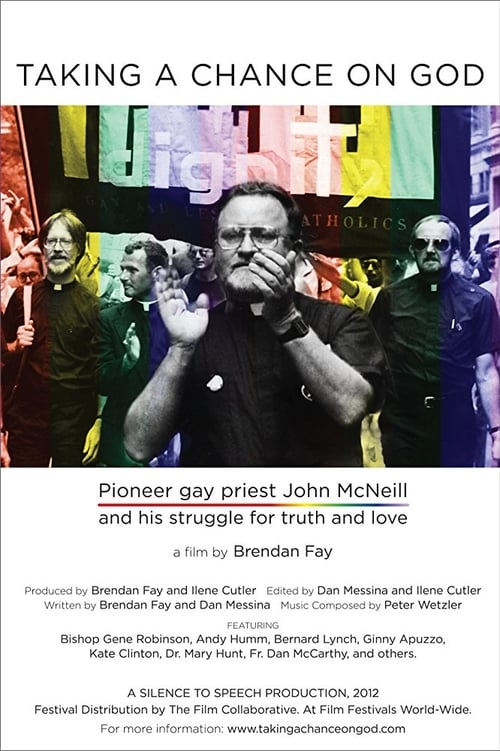
William Hart McNichols is a world renowned artist, heralded by Time magazine as "among the most famous creators of Christian iconic images in the world". As a young Catholic priest from 1983-1990 he was immersed in a life-altering journey working as a chaplain at St. Vincent's AIDS hospice in New York city. It was during this time that he became an early pioneer for LGBT rights within the Catholic church. "The Boy Who Found Gold" is a cinematic journey into the art and spirit of William Hart McNichols. The film follows his colorful life as he crosses paths with presidents, popes, martyrs, and parishioners, finding an insightful lesson with each encounter. McNichols' message as a priest, artist and man speaks to the most powerful element of the human spirit: Mercy.
This shows physicist Stephen Hawking's life as he deals with the ALS that renders him immobile and unable to speak without the use of a computer. Hawking's friends, family, classmates, and peers are interviewed not only about his theories but the man himself.
Trond-Viggo Torgersen used to be a children's ombudsman and caretaker in Oslo, and at the same time had a wife and three children in Bergen. And it just had to slam. Not at least, he was a well-known NRK celebrity nationwide. He is now 70 years old, and will tell you his life story in this movie.
A celebration broadcast for Trond Kirkvaag, Knut Lystad & Lars Mjøen which marks 40 years of humor on Norwegian television screens. Knut Lystad and Lars Mjøen talk about the comedian trio's career, and we also get to revisit the best KLM sketches. The presenter is comedian Jon Niklas Rønning.
Emerging from the Detroit music scene of the 1970s in a flurry of long hair and sequins, Alice Cooper restored hard rock with a sense of showmanship, while simultaneously striking fear into the hearts of Middle America with the chicken-slaughtering, dead-baby-eating theatrics that would cement his identity as a glam metal icon. Meticulously crafted from rare archival footage, Super Duper Alice Cooper tells the story of the man behind the makeup, Vincent Furnier, the son of a preacher, who got caught in the grip of his own monster.
Loïe Fuller, stage name of Marie Louise Fuller: the American actress and dancer trained in burlesque, circuses and variety shows who, in the 1890s, signed by the Folies Bergère of Paris, became a star. She was portrayed by Toulouse-Lautrec, loved by the symbolists, the inspiration for Art Nouveau, in her shows she combined dance, spirals of fabric and light, reflected from behind or from below through the glass floor that she had created. She transformed into the "Fairy of Light", was taken up (especially in her Serpentine Dance) by Georges Méliès and Alice Guy and influenced René Clair's early films.
Seemayer Studios presents a new documentary about the American Hotel in downtown Los Angeles and the Arts District that surrounds it. Since 1979, the American Hotel has been the beating heart of a rich community of artists who began moving into the deserted factory buildings between Alameda and the Los Angeles River.
The life of internationally renowned artist and activist Nan Goldin is told through her slideshows, intimate interviews, ground-breaking photography, and rare footage of her personal fight to hold the Sackler family accountable for the overdose crisis.
Claude Lelouch was a Jewish child in occupied France. In this documentary, he talks about the trauma he still feels from that experience, but also how it inspired him to become a filmmaker. The 1940s appear to be a formative period, key to understanding the work and career of this famous director, whose films and life have always been inseparable.
Documentary about the killer of Trotsky
Biographical film about the life and work of the Belgian painter Jan Cox. Cox had a tempestuous youth, during which he co-founded the Jeune Peinture Belge group and worked on the fringes of the Cobra movement.
Some folks squirm at mention of a woman’s period…not Arunachalam Muruganantham. Considered a madman and pervert by his community, he ignores his detractors and makes his dream—low-cost sanitary pads made by and for rural Indian women—a reality. Using manually operated machines, Muruganantham’s microbusiness model is focused on something more important than profits: providing sustainable employment, hygiene and emancipation to women who would otherwise go without. He’s a man with a million-dollar idea—except money has nothing to do with it. His goal is to make a livelihood, not to accumulate wealth; to operate at a human scale, not a multinational one. Menstrual Man is the inspiring story of a hero who rises above poverty and a lack of education to become a superstar social entrepreneur in the business of breaking cultural taboos and re-inventing the economic pyramid. Muruganantham is leading a movement, not a company. And it’s spreading.
In this somewhat whitewashed documentary on Manhattan's Bowery a newcomer to the area takes his first step toward redemption after a meal, bed, and inspiring talk.
The documentary was created to mark the 50th anniversary of Pablo Picasso's death. Inspired by his famous quote, "Painting isn't an aesthetic operation; it's a form of magic" the film focuses on Picasso's life and legacy, centered around the Picasso Museum in Paris. It explores his deep connection to the city, his personal complexities, and new aspects of his work recently uncovered by historians.
Shake ‘Em On Down is a one-hour documentary film which aims to tell the story of Fred McDowell, who was first recorded by Alan Lomax in 1959, traveled to Europe with the Rolling Stones in the mid-1960s, mentored Bonnie Raitt, and served as the cornerstone of the unique and enduring North Mississippi- style of blues music.
When Covid-19 hit New York City in 2020, filmmaker Matthew Heineman gained unique access to one of New York’s hardest-hit hospital systems. The resulting film focuses on the doctors, nurses, and patients on the frontlines during the “first wave” from March to June 2020. Their distinct storylines each serve as a microcosm to understand how the city persevered through the worst pandemic in a century