A seagull, a dog, a child, a call to prayer; Looking through a window, the corridor of a train, the wall of a medina; Everyday life is momentarily paused through the eyes of a stranger in an unknown land.
The young farmer Aalami leaves his family to find work elsewhere. He gets to know the country and its people, customs and traditions at Küste in North Africa: Market life in Tetuan, the art of craftsmanship, the life of the Moors, dances and festivities in honour of the caliph, white mosques, the call of the muezzin of the minaret and the music of the shepherd flutes. Aalami also follows Franco's call and flies from Morocco to Spain to fight at Bürgerkrieg. In the end Aalami comes back to his wife and children.
Washed ashore and taken in to a gothic manor by an unseen masculine force, a lost girl dances in gratitude before him until one day she says no and begins to suspect she might not be the first person to be brought here.
Made in Japan, Last Room is both fiction and documentary. The occupants of the love-hotels and capsule-hotels tell their own intimate, dreamlike stories, interspersed with journeys through the archipelago's landscapes. Soon, these personal stories resonate with a collective history: that of Gunkanjima, the abandoned ghost island of Nagasaki, and then that of Japan as a whole.
The horses in Denys Colomb Daunant’s dream poem are the white beasts of the marshlands of the Camargue in South West France. Daunant was haunted by these creatures. His obsession was first visualized when he wrote the autobiographical script for Albert Lamorisse’s award-winning 1953 film White Mane. In this short the beauty of the horses is captured with a variety of film techniques and by Jacques Lasry’s beautiful electronic score.
Starts off in the 15th century, with Connor McLeod training with another immortal swordsman, the Japanese sorcerer Nakano. When an evil immortal named Kane kills the old wizard, the resulting battle leaves him buried in an underground cave. When Kane resurfaces in the 20th century to create havoc, it's up to McLeod to stop him.
This short film is part of Karpo Aćimović Godina's experimental and documentary work in 1970s Yugoslav cinema. It extends his interest in regional identities, minorities, and the visual traces left by different cultures on Yugoslav territory. The film offers a journey through examples of architecture, decor, and objects related to Islamic tradition in the former Yugoslavia, such as mosques, ornamental elements, and calligraphy. It explores how this art is embedded in the region's history and in the daily lives of the communities that produced it. It is an observational film, without a dramatic plot, functioning primarily as a "visual essay" on the material culture of Islam in a Balkan context. The tone is analytical and contemplative, closer to a cultural study or a poetic inventory.
A tactile exploration of the inherent duality of violence and sensuality in nature.
“Beneath the Concrete, The Forest” is a short experimental documentary that takes us inside an ongoing struggle inside the city of Atlanta, GA between two sides to determine the future of Weelaunee, the biggest contiguous urban forest in the country.
An intimate portrait of Matthew Shepard, the gay young man murdered in one of the most notorious hate crimes in U.S. history. Framed through a personal lens, it's the story of loss, love, and courage in the face of unspeakable tragedy.
During the pandemic, a 14 year old boy remains stuck in his school dormitory while his mother tries to contact him.
Glittering illusions of vectorized providence struggle to guide the viewer toward a path of re-enchantment.
Is the eye the window of the soul? - Mydriasis is a movie that reflects about the early discoveries of queerness and its impact on the self perception of a person.
People-watching across lower Manhattan.
In this single character-driven movie, we follow the life of meta, an archaeologist. In her excavation she comes across an old ruin and unknowingly falls trap to a curse. This curse later leads her head to get stuck in a mystical pot. It is the nature’s payback to her unknown karmic cycle.
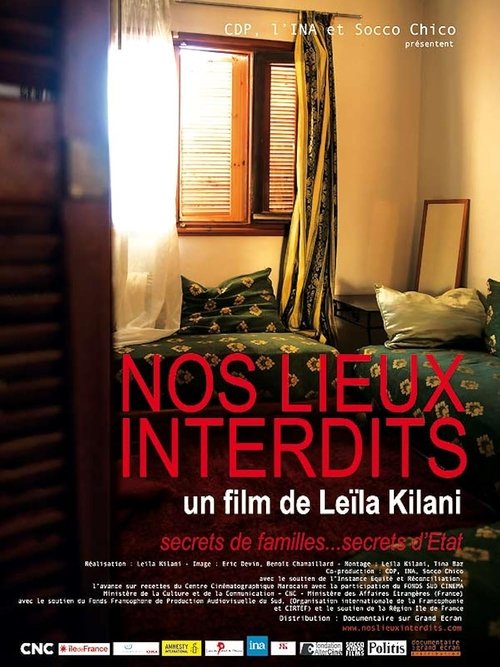
During the oppressive reign of Moroccan King Hassan II in the 70s and 80s (Years of Lead), many dissidents went missing. After the throning of a new king, a truth commission was formed in the 2000's. Families of the missing speak.
Yann Arthus-Bertrand flew over Morocco with his cameras and asked the journalist Ali Baddou to write and record the comment.
A documentary featuring 30 Argentinian women aged between 4 and 80, sharing their stories of resilience, strength, and unique perspectives on womanhood through performance art.
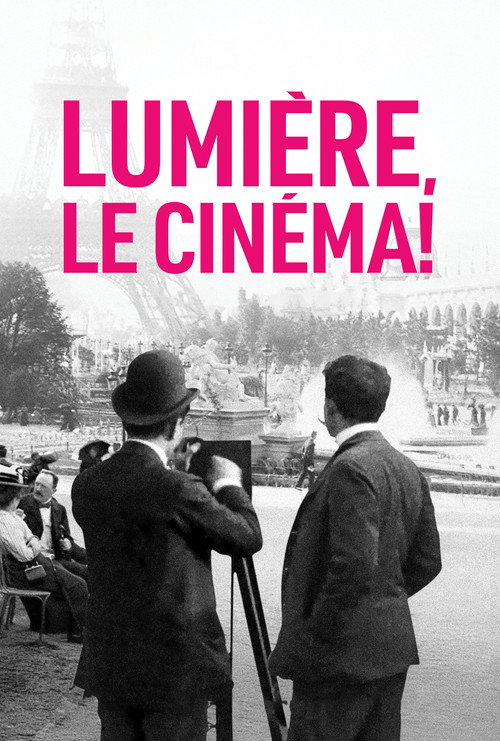
X-ray images were invented in 1895, the same year in which the Lumière brothers presented their respective invention in what today is considered to be the first cinema screening. Thus, both cinema and radiography fall within the scopic regime inaugurated by modernity. The use of X-rays on two sculptures from the Bilbao Fine Arts Museum generates images that reveal certain elements of them that would otherwise be invisible to our eyes. These images, despite being generally created for technical or scientific purposes, seem to produce a certain form of 'photogénie': they lend the radiographed objects a new appearance that lies somewhere between the material and the ethereal, endowing them with a vaporous and spectral quality. It is not by chance that physics and phantasmagoria share the term 'spectrum' in their vocabulary.
A film essay that intertwines the director's gaze with that of her late mother. Beyond exploring mourning and absence as exclusively painful experiences, the film pays tribute to her mother through memories embodied by places and objects that evidence the traces of her existence. The filmmaker asks herself: What does she owe her mother for who she is and how she films? To what extent does her film belong to her?