Hana Zaoralová
as Baroness Ilona von Szentivanyi
Jürgen Reuter
as Dr. Birnbaub
Klaus-Dieter Klebsch
as Von Sanden

Dirk Wäger
as Fehlbosch
Horst Hiemer
as Dresde
Hans-Peter Reinecke
as
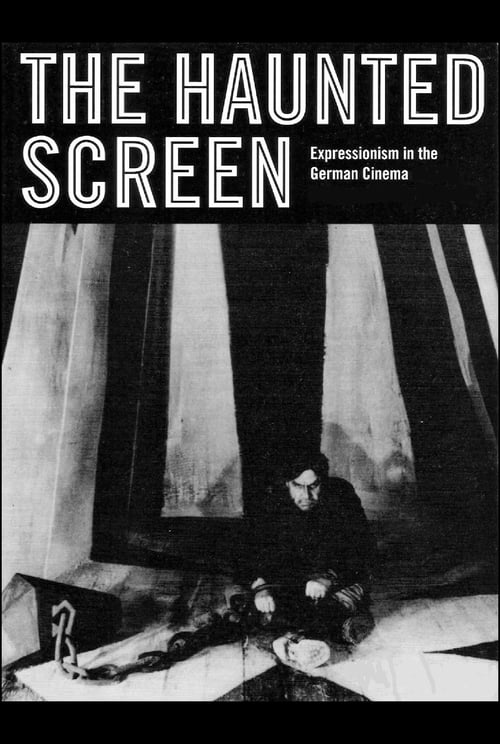
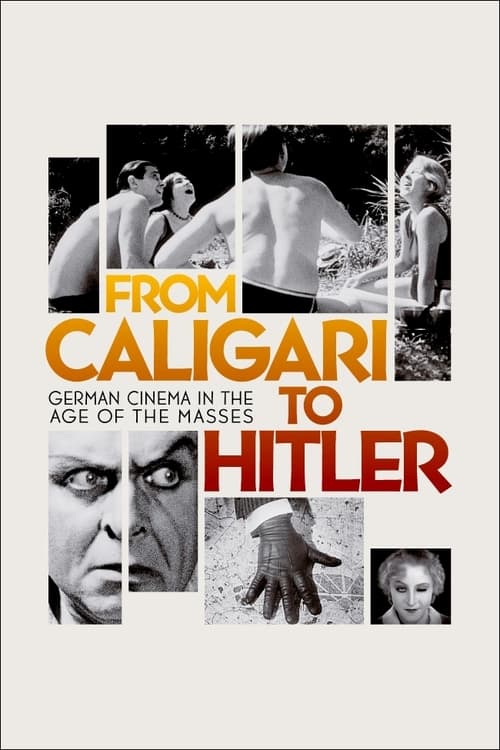
In this film essay, critic Peter Buchka explores the German cinema of the 1920s, ranging from the disquieting images of Fritz Lang's Metropolis to the castrating sexuality of Marlene Dietrich in Die Blaue Engel. The program provides an introduction to Weimar cinema, with Buchka's essay narrated over the images from film clips of 1920s era German films.
The intricate history of UFA, a film production company founded in 1917 that has survived the Weimar Republic, the Nazi regime, the Adenauer era and the many and tumultuous events of contemporary Germany, and has always been the epicenter of the German film industry.
A keen chronicle of the unlikely rise to power of Adolf Hitler (1889-1945) and a dissection of the Third Reich (1933-1945), but also an analysis of mass psychology and how the desperate crowd can be deceived and shepherded to the slaughterhouse.
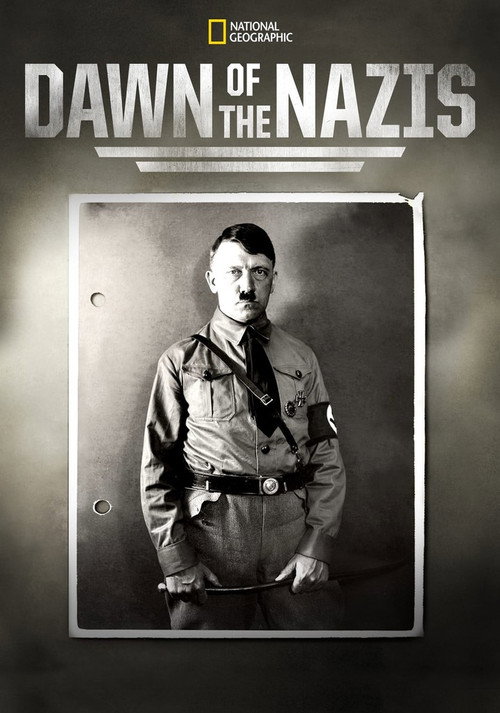
Presents a unique and disturbing look at the rise of the Nazi party. The documentary, directed by Lutz Becker, attempts to remain as objective as possible, serving as a neutral observer of the years 1918 through 1933 in Germany. Via newsreel footage and clips of features from the era, the film offers a kaleidoscopic view of the many elements that fueled the rise of the Socialist Nationalist Party, including post-WWI poverty. Hitler occupies a central place in the documentary.
Berlin, 1930, during the rise of Nazism. Hermann Hermann, a Russian emigrant and chocolate manufacturer, married to the capricious Lydia, loses his temper more and more every day when dealing with his workers and other businessmen; until he meets Felix, a vagrant, who seems to be physically identical to him; a disconcerting fact that leads Hermann Hermann to plot a particular way out of a fake world he actually hates.
Film journalist and critic Rüdiger Suchsland examines German cinema from 1919, when the Republic of Weimar is born, to 1933, when the Nazis come into power. (Followed by Hitler's Hollywood, 2017.)
How Germany was when its people entered the nightmare of World War II? Despair and fear lead a hungry population to follow the chilling call of just one man to world domination. A real-life horror story, an ominous tale of violence and deception, which takes place from 1919 to 1934. (Entirely made up of restored, colorized archival footage.)
On February 26, 1920, Robert Wiene's world-famous film The Cabinet of Dr. Caligari premiered at the Marmorhaus in Berlin. To this day, it is considered a manifesto of German expressionism; a legend of cinema and a key work to understand the nature of the Weimar Republic and the constant political turmoil in which a divided society lived after the end of the First World War.
In Russia shortly before the outbreak of the First World War, Princess Vorontsov (Ellen Richter) is in love with a high-ranking officer of the tsarist army. When he is murdered, she craves revenge. The leading suspect is a lawyer with ties to nihilist revolutionaries. On behalf of the secret police, she travels to Switzerland in order to gain his trust and facilitate his arrest. Too late she realizes that she has been toyed with all along. Her fiancé was not the man she thought she was.
Kuhle Wampe takes place in early-1930s Berlin. The film begins with a montage of newspaper headlines describing steadily-rising unemployment figures. This is followed by scenes of a young man looking for work in the city and the family discussing the unpaid back rent. The young man, brother of the protagonist Anni, removes his wristwatch and throws himself from a window out of despair. Shortly thereafter his family is evicted from their apartment. Now homeless, the family moves into a garden colony of sorts with the name “Kuhle Wampe.”
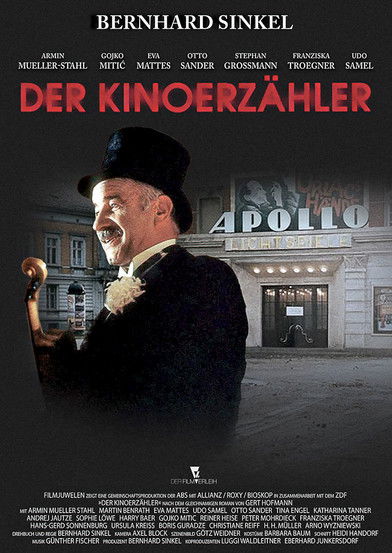
Germany in the Thirties. A movie teller realizes that his profession is not longer needed. Silent movies are not produced any longer. Telling stories is the only thing the man was ever good in, so he does not know what to do now. As political circumstances are changing dramatically these days in Germany, he gets new hope that things will again be going better for him...
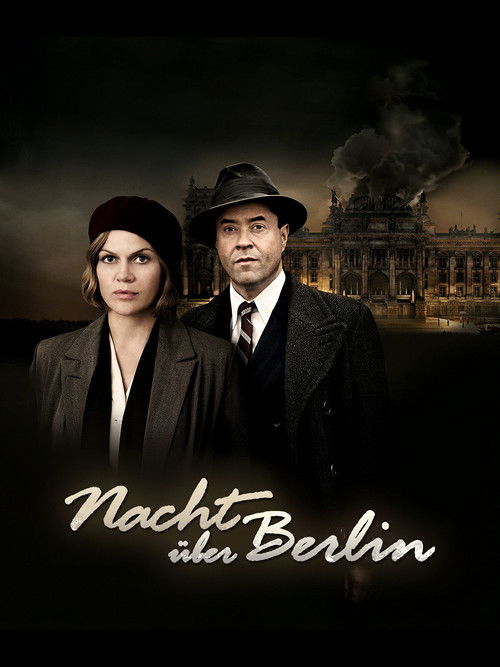
Berlin, 1932. The Weimar Republic is torn apart in the struggle between right- and left-wing extremists and Berlin is a powder keg. Nightclub singer Henny Dalgow get to know the Social Democratic congressman and Jewish doctor Albert Goldman, and the two become a slightly odd couple. Albert is a sworn pacifist after his experiences in the First World War. Contrary to his beliefs he agrees to act as courier for his brother Edwin, who belongs to a radical communist cell.
Lady Be Good reveals the lost stories of female jazz musicians from the early 1920s to the 1970s. Narrated by musician-composer Patrice Rushen, the film charts the influence of female players from the struggles and successes of early innovators (Sweet Emma Barrett, Lil Hardin-Armstrong), through the rise of the all-woman big bands (Ina Ray Hutton & Her Melodears, the Hollywood Redheads), to the female musicians that were instrumental players (Dorothy Donegan, Mary Osborne) and arrangers (Mary Lou Williams, Melba Liston) for more famous male band leaders, including Benny Goodman and Quincy Jones. Unfolding over nine parts, director Kay D. Ray's debut film weaves provocative and often humorous interviews with female musicians, big band leaders, jazz authors, and historians throughout a film stuffed end-to-end with archival photos, recordings, and performance footage to create a documentary that restores an essential part of our musical history.
A thriller with Jack Palance as a nazi doctor hiding after the war. While riding on a train, he is recognized by former prisoners.
The Roman Catholic Pope is planning a reconciliatory meeting with the head of the Ukrainian Orthodox Church, an event awaited for many generations. But suddenly, right while the Pope is addressing the crowds gathered in the Piazza Navone, a nun is assassinated by a Ukrainian, placing the upcoming talks between the two leaders in jeopardy. And the head of the American diplomatic corps (the nun was an American) assigns the investigation of the killing to one of his underlings, which leads the young man to investigate the Russicum, a center for the study of Russia within the Vatican city. And from there he finds himself caught up in an intrigue of international proportions, filled with agents and double agents, and ending with a revelation most unexpected.
The small swiss village of Mitholz got destroyed in 1947 after an Ammunition depots of the Swiss Army exploded. After decades of secrecy, the population learned in 2018 that the danger had not been averted yet and that the residents need to leave their homes. A story about the abuse of trust and the mistakes of a government whose citizens pay the price for.
One man's campaign for vengeance takes on national stakes after he is revealed to be a former operative of a powerful and clandestine organization known as Beekeepers.