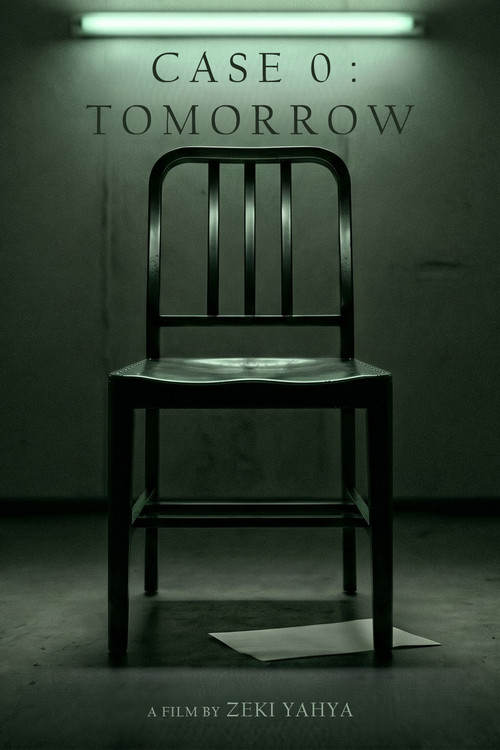
Six sequences about Fascism and its segments throughout history.
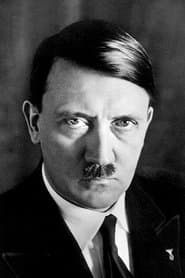
Adolf Hitler
as Self (archive footage)
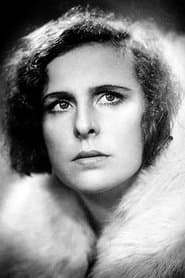
Leni Riefenstahl
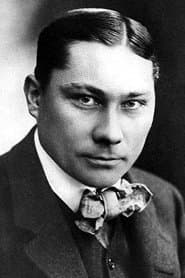
Paul Wegener
as The Golem (archive footage)
Veronica Serlui
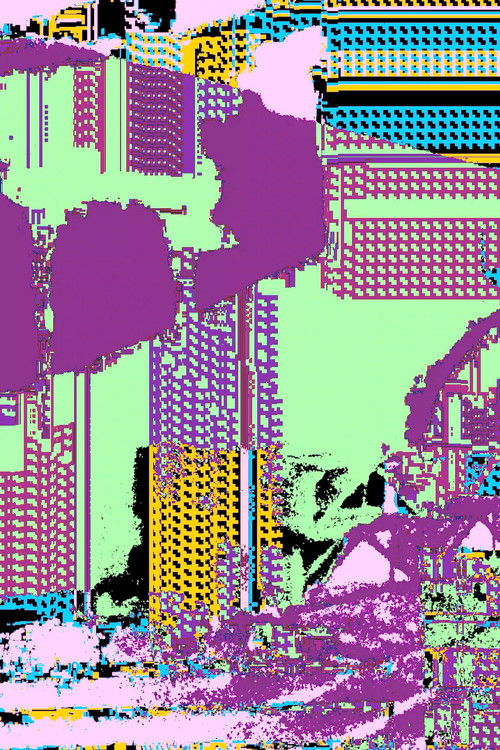
A short structural film that questions the reality we live in under capitalism through various images of Paris, Edinburgh, and Disneyland.
March 1945, on the frontlines of the Tatra Mountains, Romanian and German soldiers prepare for battle, bound by the same hidden fear. In the chaos of combat, beyond bullets and grenades, a harsh truth emerges: in war, they are all just humans.
An interconnected look at tradition, colonialism, property, faith, and science, as seen through labor practices that link an endangered salamander, mass-produced apples, and the evolving fields of genomics and machine learning.
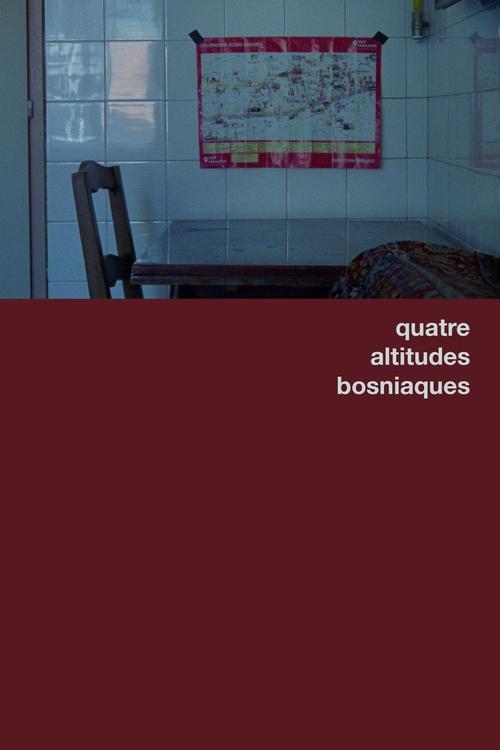
Quatre altitudes bosniaques is an exercise in topographic cinema shot in Bosnia-Herzegovina. The document draws on the geography of the city of Sarajevo, from which the filmmakers construct a visual ethnography fragmented into four levels of elevation.
An experimental film about having your great times from high school taken away by a pandemic, resulting in isolation and desperation.
An experimental half-documentary half-fiction about a young person’s routine of getting to sleep and waking up.
A psychological thriller that delves into the intricate struggles of a man haunted by entities that only he can see. As he confronts these manifestations during therapy, a gripping journey unfolds, blurring the lines between reality and the paranormal. His therapist attempts to guide him through the chaos of his own mind, uncovering a haunting truth about his and her mental health.
At the Wannsee Conference on January 20, 1942, senior Nazi officials meet to determine the manner in which the so-called "Final Solution to the Jewish Question" can be best implemented.
Drawing on a wealth of unseen archival material and unpublished notebooks, the film weaves a complex and personal portrait of Margaret’s life, from the perspective of a fellow artist sensitive to the potential Margaret envisaged for film as a poetic medium.
This story follows one man's quest to uncover the origins and reveal the mysteries of a possible Holocaust artifact some historians now say never existed: lampshades made of human skin. When the flood waters of Hurricane Katrina receded, they left behind a wrecked New Orleans and a strange looking lamp that an illicit dealer claimed was 'made from the skin of Jews.'
Lithuania, 1941, during World War II. Hundreds of thousands of texts on Jewish culture, stolen by the Germans, are gathered in Vilnius to be classified, either to be stored or to be destroyed. A group of Jewish scholars and writers, commissioned by the invaders to carry out the sorting operations, but reluctant to collaborate and determined to save their legacy, hide many books in the ghetto where they are confined. This is the epic story of the Paper Brigade.
Here is an actor, one who has been asked to dwell in the perilous gap between text and image. In the voids where traces of the past have been erased by an unknown error, she begins to assemble her own script.
An omnibus film based on Kim Oki's album Hip Hop Retreat. Twenty characters share the same table at different times, in different emotional states, each with their own story. Shot in one day, edited in one day.
Born from steel and glass Kino Kopf is created by two inventors. They are assembled by their mother, a nurturing artist, and their Father a greedy entrepreneur. Kino Kopf is the first of its kind a sentient humanoid VHS camera. They are given a life by their mother but presented to the world by their father. Kino Kopf is the next big sensation and spurs a technological revolution. They are soon forgotten and alone as new models surpass them. Kino Kopf is left alone to contemplate if they ever had a soul, as visions of an electric cowboy dance through their dreams.
In the most personal and unflinching film of his career, historian Simon Schama confronts the enormity of the Holocaust and the catastrophe experienced by its victims. In a journey that ends with his first visit to Auschwitz, Simon travels across the Continent to explore how the Holocaust was far more than a Nazi obsession that played out in gas chambers, but a European-wide crime of complicity. From bullets in the Lithuanian lands of his ancestors to bureaucracy in the Netherlands, he reveals how deep-rooted prejudice was weaponised to turn people against their Jewish neighbours. As a moving interview with a survivor reveals, the story of how ‘evil comes step by step’ remains powerfully relevant today.
To forget about the end of a relationship, a woman fantasizes about an ideal one. Fantasy and reality begin to melt into one another, but the past finds a way to rear its head again. Films used: Notorious (1946) Gaslight (1944)
Hoping to become a great singer in Germany, a young dreamer named Ernst Schrämli finds himself drawn into underhand dealings. Determined to escape a suffocating environment that annihilates any kind of creative or artistic impetus, Ernst sells information about the Swiss army to a Nazi spy by the name of August Schmid, who charms and manipulates him. When Ernst’s crime is uncovered, he is sentenced to death for espionage and treason, becoming the first Swiss citizen to be executed.