The film is an intimate record of a difficult period in the life of the creators. The main character, eight months pregnant, was diagnosed with aggressive breast cancer. The dramatic event disrupted the joy associated with the birth of her child.
Magda Hueckel
as Self
Tomasz Śliwiński
Leo Hueckel-Śliwiński
Teo Hueckel-Śliwiński
In today's climate debate, there is only one factor that cannot be calculated in climate models - humans. How can we nevertheless understand our role in the climate system and manage the crisis? Climate change is a complex global problem. Increasingly extreme weather events, rising sea levels, and more difficult living conditions - including for us humans - are already the order of the day. Global society has never faced such a complex challenge. For young people in particular, the frightening climate scenarios will be a reality in the future. For the global south, it is already today. To overcome this crisis, different perspectives are needed. "THE UNPREDICTABLE FACTOR" goes back to the origins of the German environmental movement, accompanies today's activists in the Rhineland in their fight against the coal industry and gives a voice to scientists from climate research, ethnology and psychology.
Through this documentary, Emmanuelle Béart aims to uncover the truth about incest. The actress, accompanied by director Anastasia Mikova, breaks her silence and confronts her reality with that of others, shedding light on a taboo subject.
A documentary exploring the history and growing dangers surrounding the seemingly innocuous Myers–Briggs personality test.
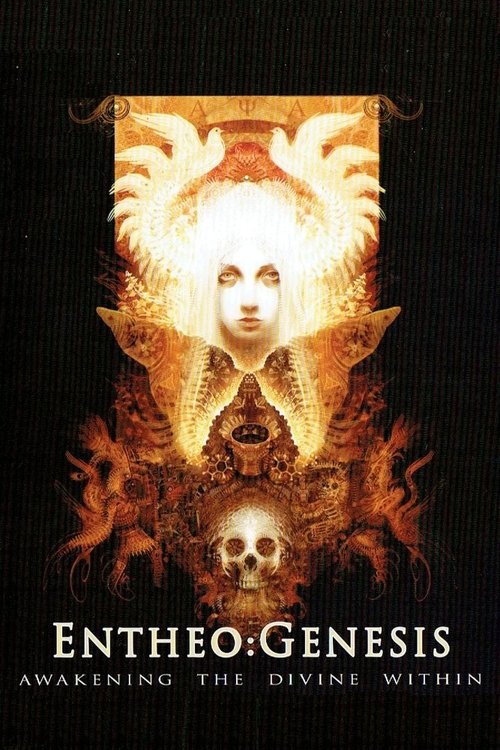
A feature length documentary which invites the viewer to rediscover an enchanted cosmos in the modern world by awakening to the divine within. The film examines the re-emergence of archaic techniques of ecstasy in the modern world by weaving a synthesis of ecological and evolutionary awareness,electronic dance culture, and the current pharmacological re-evaluation of entheogenic compounds.
The Stanford prison experiment was a landmark psychological study of the human response to captivity, in particular, to the real world circumstances of prison life, and the effects of imposed social roles on behaviour. It was conducted in 1971 by a team of researchers led by Philip Zimbardo of Stanford University.
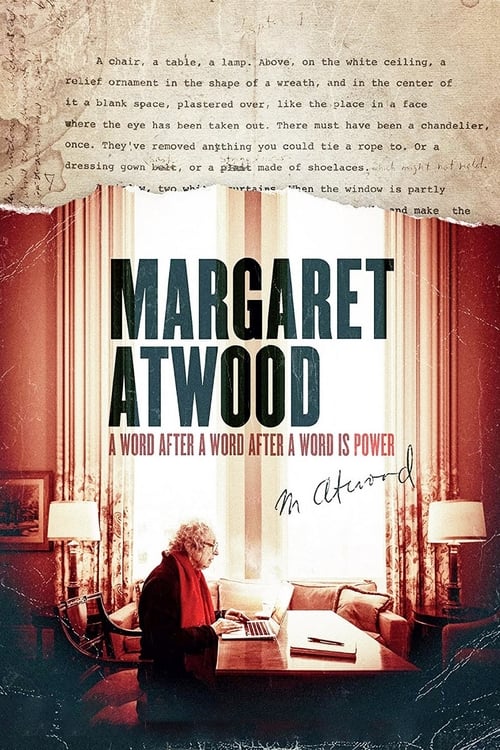
The views and thoughts of Canadian writer Margaret Atwood have never been more relevant than today. Readers turn to her work for answers as they confront the rise of authoritarian leaders, deal with increasingly intrusive technologies, and discuss climate change. Her books are useful as survival tools for hard times. But few know her private life. Who is the woman behind the stories? How does she always seem to know what is coming?
Explorer Bruce Parry visits nomadic tribes in Borneo and the Amazon in hope to better understand humanity's changing relationship with the world around us.
A short film about ties and gaps between a child and a parent. The author rediscovers letters her dad used to write her from prison. That love seems to be gone now. She decides to write back in hope to find the connection again. She puts in writing what could not be said: blaming him for family´s break-up but also trying to understand.
On November 13, 2015, the attacks in Paris and Saint-Denis, carried out by three Islamist commandos and claimed by ISIS, were the deadliest in France since the end of World War II. In the months that followed, the November 13 Program was launched by the CNRS and Inserm to study the construction of individual and collective memory around an event that profoundly marked French society. Today, the testimonies of 27 volunteers—among some 1,000 people—who participated in the study form a mosaic of experiences that shows how trauma extends beyond the immediate circle to permeate the national collective memory.
In his heartfelt documentary, co-director and subject Elad Cohen explores the meaning and experience of family. Growing up deaf and gay in a family of hearing people, Cohen never felt at home and always felt alone. That feeling of estrangement was exacerbated during his adolescence by the sudden death of his mother and the subsequent rift with his father as the family scattered in different directions. Cohen creates a sense of family with a small group of friends, including his best friend, Yaeli, a deaf woman. While he wants a child and a life partner, he fears that he won’t find the right man in the small deaf community in his “sweet little country.” Sharing a desire with Yaeli to be parents, the new “couple” decide to have a child in a shared parenting arrangement.
Three teenagers — Amelio, Blake and Kira — each begin their gender transition, supported in different ways by their families. This deeply sensitive documentary follows them between ages 15 and 17 as they navigate the emotional and physical challenges of being transgender. For them, puberty brings intense distress, as their developing bodies do not align with their true gender identity. The film explores the difficult questions faced by parents and doctors: whether to medically delay puberty, start hormonal treatment, or wait and risk worsening the teens’ suffering. Through moments of doubt, upheaval and hope, the documentary offers an intimate look at three young people who want only one thing — for the outside world to see them as they know themselves to be.
It is normal for 15-year-old Linn to have two mothers. But when she finds out that there are still numerous siblings, she realizes that she is part of an extraordinary extended family. Her father Eike not only had an appointment with Linn's mothers to donate sperm, Petra and Anny also have three children with him. A film crew followed this rainbow family for twelve years.
The documentary follows Annabel Chong, former record holder for the world's largest gang bang, which she set in 1995 by having sex with 70 men. It focuses on her reasons for working in porn, and her relationship with friends and family.
A family falls prey to the manipulative charms of a neighbor, who abducts their adolescent daughter. Twice.