Erol Ileri
as Self - Narrator (voice)
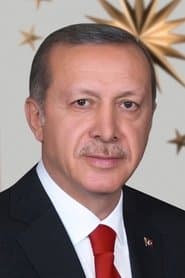
Recep Tayyip Erdoğan
as Self (archive footage)
Andrés Mourenza
as Self
Osman Cevdet
Esra Selvan
Umut Suvari
Yeşim Özsoy
Baris Tügrul
Ezgi Irgil
In Turkey far too many women are still unable to read and write, and all they see in their life span is being forced into early marriage and relegation to the home, where they look after extended families and more children than they can feed. The girls are portrayed in their homes, together with the strongest supporters of their emancipation through education: their mothers. Girls of Hope portrays five girls who struggle for their education and, despite all the difficulties, try to hold on to their hope for a better future.
Byzance uses a text by Stefan Zweig to describe the Ottoman conquest of the city in 1453. Before he turned to feature filmmaking in 1968 with Naked Childhood, Pialat worked on a series of short films, many of them financed by French television. Byzance is one of Pialat’s six Turkish shorts.
All of Pialat's Turkish films are uniquely interested in the country — especially Istanbul — as it was, not just as it is at the precise moment that Pialat is filming it. History informs these films in a big way, with the voiceover narration (which incorporates excerpts from various authors) introducing tension between the images of the modern-day city and the descriptions of incidents from its long and rich history. Istanbul is probably the most conventional documentary of Pialat's Turkish series, providing a general profile of the titular city, its different neighborhoods, and the different cultures and ways of living that coexist within its sprawling borders. As the other films in the series also suggest, Pialat sees Turkey, and Istanbul in particular, as a junction point between Europe and the East, between the old and the new, between history and modernity.
Maître Galip is the most poetic and powerful of Pialat's Turkish Chronicles, using the poems of Nazim Hikmet to accompany a series of evocative images of ordinary working class people in Istanbul. This was the film that Pialat himself claimed was the most complete realization of what he was aiming for with his Turkish documentaries. It's not difficult to see why this was his favorite: here he abandons the historical commentary and documentary observation of the other shorts in favor of an emotional emphasis on the lives of the poor and the unemployed.
La Corne d'or is mostly concerned with religious ritual, examining the mosque (and former cathedral) discussed in Byzance. As a contrast against Istanbul's status as a center of historical religious conflict, Pialat — drawing here on texts by the French poet Gérard de Nerval — also describes the city as a place of strange ethnic and religious harmony, with representatives of various cultures and religions living in close contact. He emphasizes the city's hybrid culture, its blend of Southern European and Arab influences, reflected in both its people and its very construction.
Short doc by Maurice Pialat. The first film in the series set at Turkey, Bosphore, is also the only one that was shot in color.
Ecumenopolis: City Without Limits" tells the story of Istanbul and other Mega-Cities on a neo-liberal course to destruction. It follows the story of a migrant family from the demolition of their neighborhood to their on-going struggle for housing rights. The film takes a look at the city on a macro level and through the eyes of experts, going from the tops of mushrooming skyscrapers to the depths of the railway tunnel under the Bosphorous strait; from the historic neighborhoods in the south to the forests in the north; from isolated islands of poverty to the villas of the rich. It's an Istanbul going from 15 million to 30 million. It's an Istanbul going from 2 million cars to 8 million. It's the Istanbul of the future that will soon engulf the entire region. It's an Istanbul nobody has ever seen before.
An overview of one of the greatest disasters of the first World War WWI - the Dardanelles Campaign at Gallipoli, Turkey.
On the 50th anniversary of the Cyprus Peace Operation, TRT World revisits the island's turbulent history and asks: Is there still hope for reconciliation?
While we were wandering through the pages of our democracy history, we saw right-left fights and experienced revolutions. Blood was shed, scaffolds were set up, but they could never change the country's path. When we came to the 1980s, a person came out and shook the system to its roots and changed the world of people. According to some, this was a great revolution, according to others, it was the wear and tear of some values. Regardless, this person left his mark on a period of Turkey.
In the 1990s many people in Kurdistan were taken into custody and interrogated under torture; their killers disposed of the bodies by throwing them out of helicopters, or burying them in acid-filled wells. Thousands were murdered/disappeared by paramilitary forces—such as Jitem and Hizbul-Kontra—that were financed and supported by the state, though they have always stuck to the line: “We didn’t do it.” The documentary looks at the case of seven people, including four children, who were disappeared from the town of Kerboran [Dargeçit] in 1995, and tells the story of their families’ tireless search for their bones
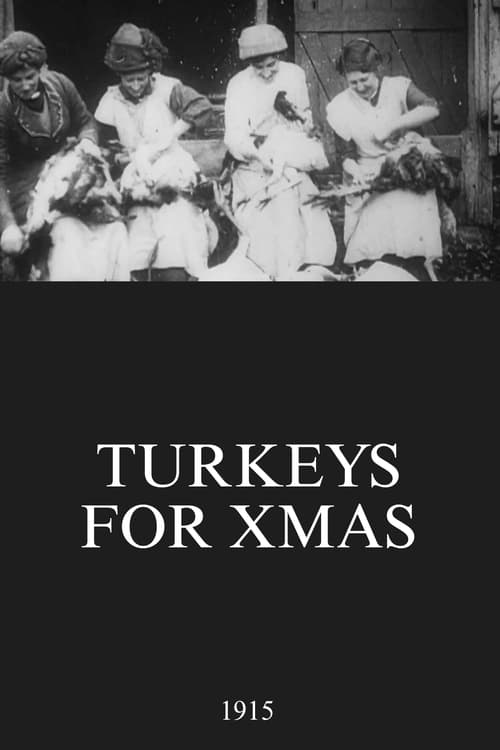
Feathered friends prepare to meet their fate in this seasonal newsreel outing to a Norfolk turkey farm.
An indictment of the protagonists in the Cypriot civil war.
At the heart of the Syrian civil war, a group of activists created an underground library in the besieged outskirts of Damascus. After years of blockade, they were forced to leave their city. But they managed to save their videos illustrating a unique experiment of cultural resistance under the bombs. This film, built between the past and the present, follows the story of three friends who met during the 2011 revolution and never gave up on their cultural resistance and peaceful struggle. Despite ceaseless bombing, they not only saved books from the rubble, but created a secret library, which quickly became a safe haven for peace, freedom and democracy: a special experience that they filmed and documented meticulously. Separated by war and exile, they are striving to reunite with each other. They reminisce on the past and tell us the extraordinary story of the library, based on dozens of hours of video archives. “A Library Under Bombs” is a story of hope and survival.
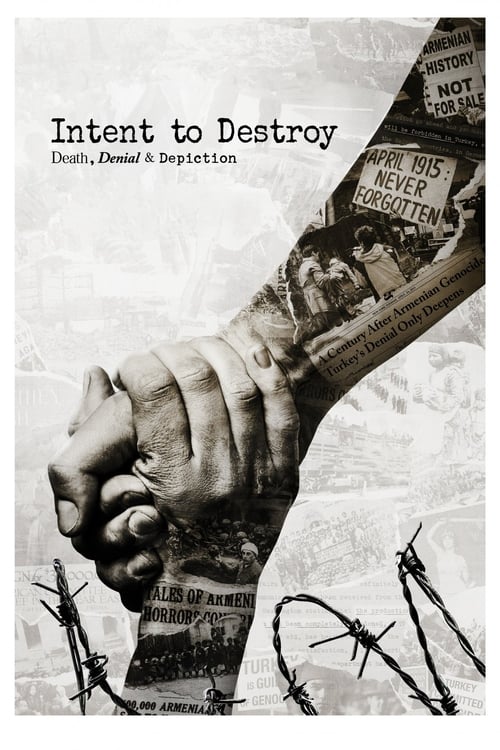
INTENT TO DESTROY embeds with a historic feature production as a springboard to explore the violent history of the Armenian Genocide and legacy of Turkish suppression and denial over the past century.
Turkey's history has been shaped by two major political figures: Mustafa Kemal (1881-1934), known as Atatürk, the Father of the Turks, founder of the modern state, and the current president Recep Tayyıp Erdoğan, who apparently wants Turkey to regain the political and military pre-eminence it had as an empire under the Ottoman dynasty.
Though both the historical and modern-day persecution of Armenians and other Christians is relatively uncovered in the mainstream media and not on the radar of many average Americans, it is a subject that has gotten far more attention in recent years.