The animated short film tells the moving story of the resistance and bravery of Alfreda Noncia Markowska, a young Roma woman from Poland who saved the lives of around fifty children and young adults during the Second World War.
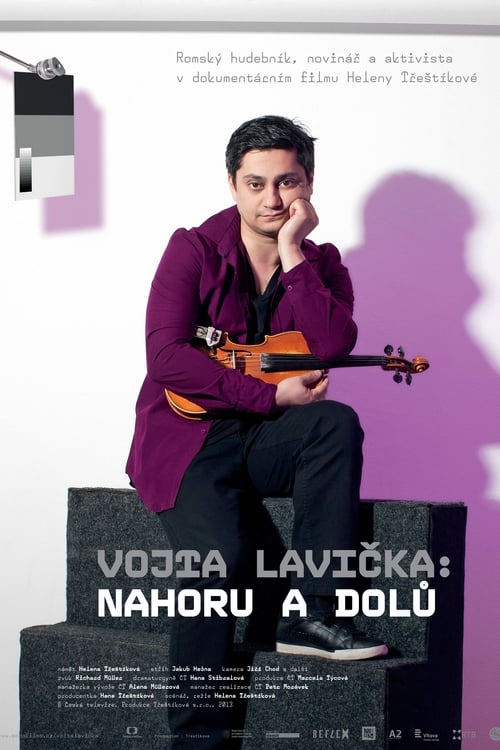
Longitudinal documentary film was shot for past 16 years and the main protagonist is Roman musician and activist Vojta Lavička. Vojta is a master in violin play, who focuses not only on music but also deals with problems of his origin Roman nationality. Vojta is very active in media - he worked in the national radio and television, he worked in the NGO that organize street work for Roman ghettos around the Czech republic, Vojta worked also as a social worker. All together we can watch him struggling with the main topic of his life - his national minority and problems that are caused by living next to Czech majority. Aside this topic films discovers Vojta's private life and his fight for being a good musician and a good man.
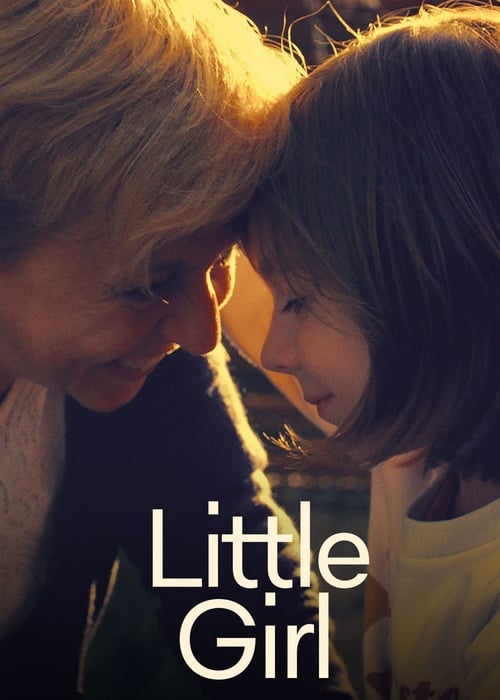
7-year-old Sasha has always known that she is a girl. Sasha’s family has recently accepted her gender identity, embracing their daughter for who she truly is while working to confront outdated norms and find affirmation in a small community of rural France.
The nephew of a Republican exiled during the Spanish Civil War is pushed to discover the fate of his uncle by a forgotten letter. Meanwhile, a researcher tries to discover what happened to another deportee after reading the novel "El impostor" by Javier Cercas. When the two coincide, they discover that the lives of their two ancestors are intertwined and end up unearthing the story of František Suchý and his son, who risked their lives and defied the Nazi regime from the Prague crematorium to save the ashes of more than 2,000 victims.
The intricate history of UFA, a film production company founded in 1917 that has survived the Weimar Republic, the Nazi regime, the Adenauer era and the many and tumultuous events of contemporary Germany, and has always been the epicenter of the German film industry.
A documentary about the portrayal of Adolf Hitler in popular culture.
A marching band of Germans, Italians, and Japanese march through the streets of swastika-motif Nutziland, serenading "Der Fuehrer's Face." Donald Duck, not living in the region by choice, struggles to make do with disgusting Nazi food rations and then with his day of toil at a Nazi artillery factory. After a nervous breakdown, Donald awakens to find that his experience was in fact a nightmare.
Between 1933 and 1945 roughly 1200 films were made in Germany, of which 300 were banned by the Allied forces. Today, around 40 films, called "Vorbehaltsfilme", are locked away from the public with an uncertain future. Should they be re-released, destroyed, or continue to be neglected? Verbotene Filme takes a closer look at some of these forbidden films.
September 1st, 1939. Nazi Germany invades Poland. The campaign is fast, cruel and ruthless. In these circumstances, how is it that ordinary German soldiers suddenly became vicious killers, terrorizing the local population? Did everyone turn into something worse than wild animals? The true story of the first World War II offensive that marks in the history of infamy the beginning of a carnage and a historical tragedy.
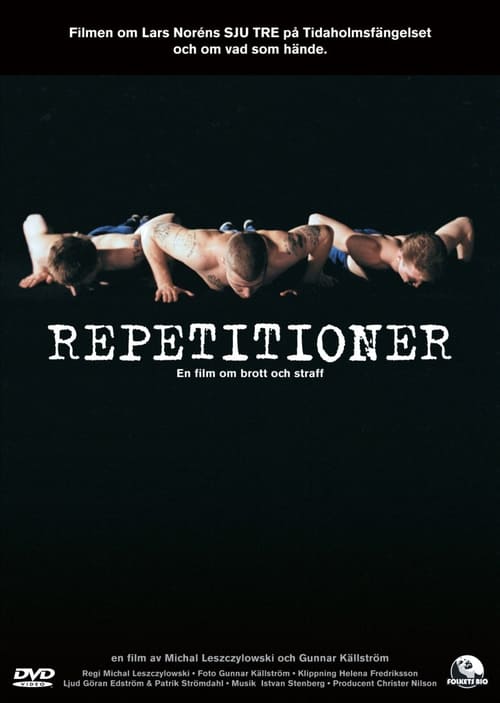
The theatre 7:3 project was conducted at the Tidaholm prison 1998-1999. What started as an artistic experiment, ended up in police killings at Malexander. The process in the prison were filmed during 6 months.
Hitler's biography told like never before. Besides brief historical localizations by a narrator, only contemporaries and Hitler himself speak: no interviews, no reenactment, no illustrative graphics and no technical gadgets. The testimonies from diaries, letters, speeches and autobiographies are assembled with new, often unpublished archive material. Hitler's life and work are thus reflected in a unique way in interaction with the image of the society in the years 1889 to 1945.
A musical, and also a reflection on watching, on trying to escape an anthropocentric gaze and also on watching itself in cinema. Featuring mares and horses: Triana, Víctor K, Bambi Sailor, San Special Solano, Buck Red Skin, Onkaia, Cool Boy, the donkey Agostino, the mule Guapa. And also Alfredo Lagos, Raül Refree, María Marín, Pepe Habichuela, Virgina García del Pino, María García Ruiz, Pilar Monsell, María Pérez Sanz.
For Chinese parents, finding out that their kid is gay usually presents a major tragedy, with the big majority utterly unable to accept the homosexuality of their son or daughter. However, during recent years a fresh rainbow wind has been blowing over the Chinese mainland: a pioneer generation of Chinese parents has been stepping up and speaking out on their love for their gay kids. This documentary features 6 mothers from all over China, who talk openly and freely about their experiences with their homosexual children. With their love, they are giving a whole new definition to Chinese-style family bonds.
The very first documentary about Jane Elliott's educational experiment about discrimination, which was originally produced for ABC News, in which she conducts an unforgettable lesson with her third-grade class in Riceville, Iowa.
In this true-life twist on a holiday fable, Jeremy Morris brings a whole new meaning to Christmas spirit when his extravagant seasonal display sparks a dispute with his neighbors that lands them all in court.
A propaganda film during World War II about a boy who grows up to become a Nazi soldier.