The rise of Latin music is explored through the lens of the groundbreaking Johnny Canales Show, a pioneering television program that showcased the genre and became a microcosm of the Latino experience in America.
Johnny Canales
as Self
Selena Quintanilla
Bobby Pulido
Fidel Martinez
The concert was recorded on February 26, 1995, at the “Houston Astrodome” and was televised live on Univision. The singer shared the concert with Tejano singer “Emilio Navaira” and performed to 66,994 people, which broke the previous attendance record held by Selena in the previous year. Selena's performance at the Astrodome became her final televised concert before she was shot and killed on March 31, 1995. The set list mostly included material from her "Amor Prohibido" (1994) album and a medley mashup of disco music songs.
Tribute to Selena Quintinilla-Perez, featuring musical performances and archive footage.
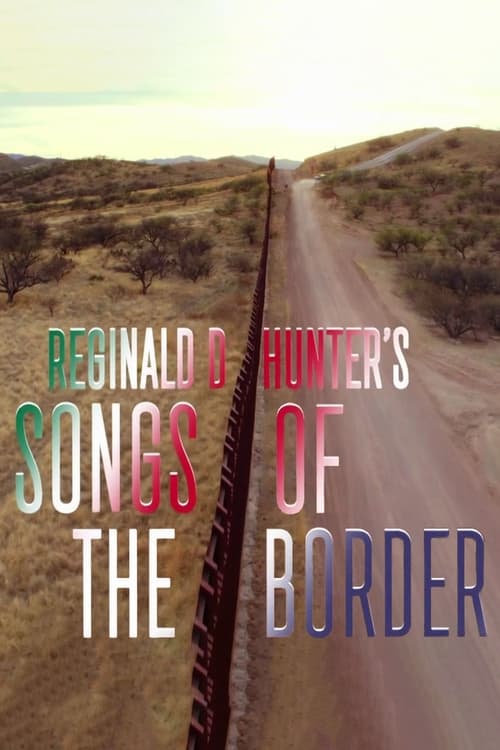
Against the backdrop of President Trump's much-trumpeted wall, Reginald D. Hunter takes a 2,000-mile road trip along the US-Mexico border to explore how romance and reality play out musically where third-world Mexico meets first-world USA on this broken road to the American dream. Classic American pop and country portray Mexico as a land of escape and romance, but also of danger; Hunter explores the border music as it is today, much of it created by musicians drawn from the 36 million Mexican-Americans who are US citizens.
"Live from Detroit: The Concert at Michigan Central" features the greatest assemblage of all-star musical talent in Detroit since the legendary Motown Showcases. The sold-out, 90-minute outdoor concert captures the spirit and soul of Detroit through short films and an incredible lineup of musical performances.
A curious title given that for 50 minutes, Januszczak snarls his way through a canine critique and it’s not clear which he despises more, dogs or their owners. He visits a dog show which he regards as incorrigibly eccentric and he considers breeding practices to be the canine equivalent of eugenics practised by the Nazis. “We breed them until their heads look like misshapen Halloween pumpkins (often to the detriment of their health), we cut their bollocks off, we send them to a doggy psychiatrist and still most of them won’t do what we want them to do. The message appears to be that we love dogs, but not for themselves, it’s for the prestige they can bestow upon their owners.
A woman narrates the thoughts of a world traveler, meditations on time and memory expressed in words and images from places as far-flung as Japan, Guinea-Bissau, Iceland, and San Francisco.
Set to a classic Duke Ellington recording "Daybreak Express", this is a five-minute short of the soon-to-be-demolished Third Avenue elevated subway station in New York City.
The beach meadows on Gotland's southeast coast have been artist Lars Jonsson's field of work for more than twenty years. Here he lives with his family and here he tries to capture on canvas every change in the landscape and the borderland between land and sea. In the film, we get to follow Lars Jonsson, one Sweden's most prominent bird painters, in his work from late winter to autumn.
The deep waters of the Southern and Pacific Oceans still hold many mysteries. Two international teams of scientists set out to explore the icy depths of Antarctica and the abysses of the Mariana Trench. Filmed for the first time, creatures seemingly from another galaxy cohabit with champions of survival in extreme conditions.
Fired from his band and hard up for cash, guitarist and vocalist Dewey Finn finagles his way into a job as a fifth-grade substitute teacher at a private school, where he secretly begins teaching his straight-A students the finer points of rock 'n' roll and the power of sticking it to the man. But as the school’s stern principal closes in and the Battle of the Bands looms, Dewey risks everything to prove that rock ’n’ roll can change lives.
In Ireland in the mid 1960s, two feuding brothers and their respective Ceilidh bands compete at a music festival.
The story begins in a bleak, post-apocalyptic setting with Ji-hye and Tae-jun, who are injured and on the run. They encounter a seemingly abandoned building filled with discarded clothing and, in the process, find a camcorder. By peeking into the camcorder, they enter a world of happy memories and a life where they are not burdened by their disabilities.
A witty and eye-opening tour through Borowczyk's own collection of vintage erotica. Originally intended as part of his 'Contes immoraux', it was released first as a separate short, and is therefore marks the turning-point between Borowczyk's career as a highly-regarded animator and surrealist filmmaker, and his subsequent career in the sexploitation field.