Patrick Garayt
as Ténor
Tatiana Probst
as Soprano
Jean Gabriel Saint Martin
as Baryton
Daïa Durimel
as Alto
Caroline Glory
as Violoncelle Solo
Jean-Pierre Lo Ré
as Conductor
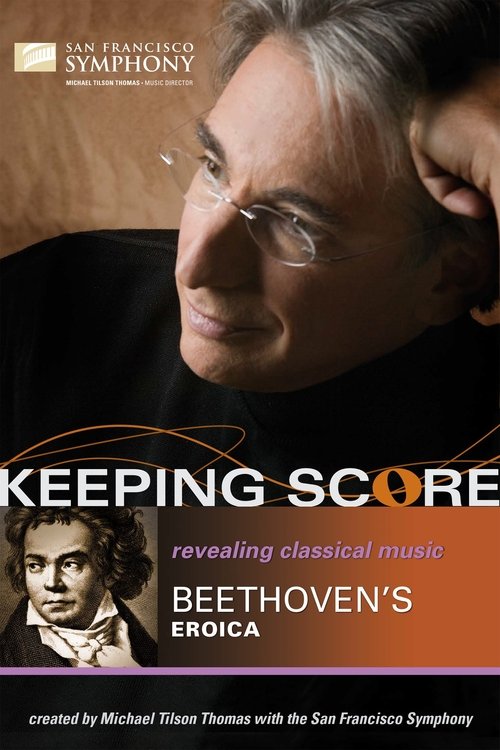
Beethoven spent three years composing the Eroica, an intimate journal of his emotional crises and his dramatic emergence as an original master. Michael Tilson Thomas and the musicians of the San Francisco Symphony help you make sense of this voyage into life as it really is.
A look back at the violent conflict between the two leading figures of musical modernity, Arnold Schönberg and Igor Stravinsky, in the first decades of the 20th century. Although Arnold Schönberg and Igor Stravinsky both had a decisive influence on the fourth art, their creations remained diametrically opposed. While the Austrian developed the dodecaphonic method, placing the twelve notes of the chromatic scale at the heart of the composition technique to the detriment of tonality, his Russian rival based his practice on stylistic eclecticism. Their supporters formed two opposing camps, and the two composers - one the father of the Second Viennese School, the other of Neoclassicism - became, in the wake of their successes, the figureheads of a conflict that marked the history of music by its duration and intensity.
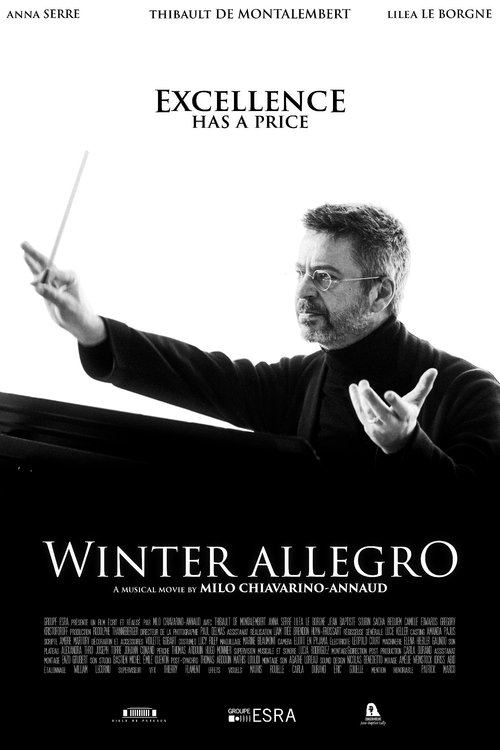
Winter Allegro portrays the fierce competition between two violin prodigies to win the solo part of an abusive conductor's new rendition of Vivaldi's Four Seasons. Camille, first chair violinist, faces Anya, a younger American virtuoso.
From the Styriarte Festival in Graz Austria, the acclaimed mezzo-soprano Cecilia Bartoli and Maestro Nikolaus Harnoncourt with his orchestra Concentus Musicu Wien, present a concert on Haydn arias and Symphony No.92, the "Oxford". The singing virtuosity of "Scena di Berenice" is sublime as is the performance of The "Oxford" Symphony from the ensemble renown for its specialty in early music and playing on period instruments. A unique concert.
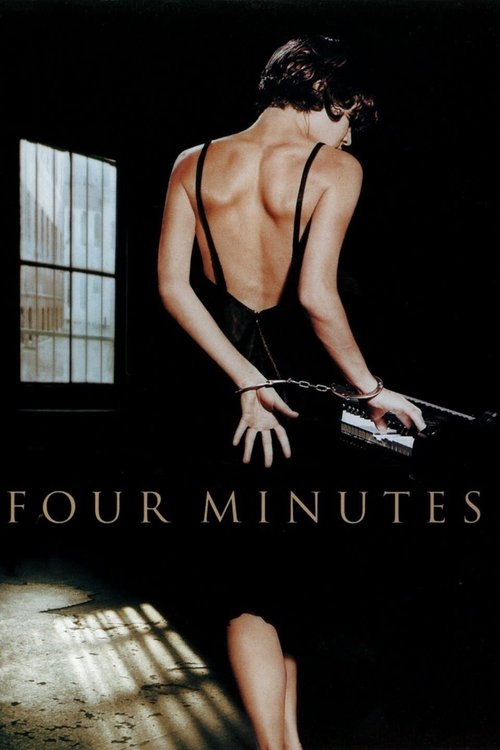
Jenny is young. Her life is over. She killed someone. And she would do it again. When an 80-year-old piano teacher discovers the girl’s secret, her brutality and her dreams, she decides to transform her pupil into the musical wunderkind she once was.
Elara, a young violinist, is madly in love with Lucio, a Sicilian student. Their love blossoms, but suddenly Lucio must return to Italy to care for his sick niece. Elara struggles with loneliness and sadness, until she finds new inspiration in a dream.
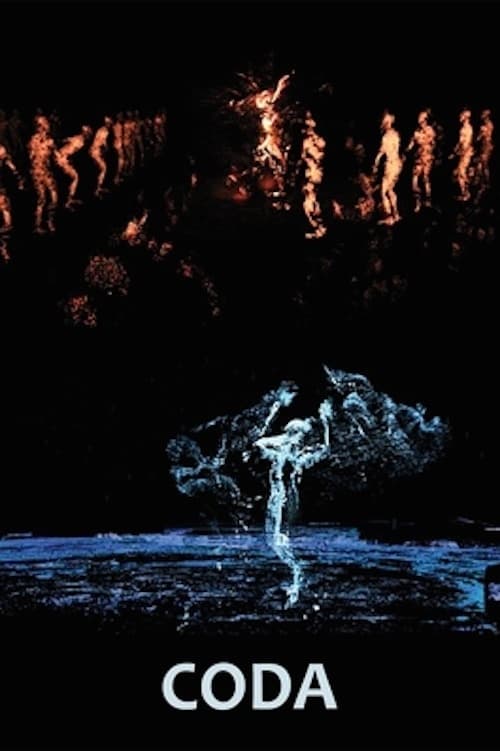
This short animation draws on advanced digital technologies to offer a new vision of dance in cinema. With motion capture (MoCap) and particle processing, designers Denis Poulin and Martine Époque create virtual dancers free of their morphological appearance. In this balletic and hypnotic film, dynamic traces carry the motion of the real dancers behind the on-screen movements. Addressing environmental themes by way of metaphor, CODA is a fused universe where space and time collide, deploy, and dissolve. In this technically and formally innovative film, luminous bodies in the infinite space of the cosmos transform and evolve to the rhythms of Stravinsky’s Rite of Spring.
Benjamin Britten's monumental anti-war oratorio from the Vladislav Hall of Prague Castle in memory of war veterans and victims. British composer Benjamin Britten wrote War Requiem in 1962 on the occasion of the restoration of the war-damaged cathedral in Coventry. He used the traditional, codified Latin text of the requiem – a mass for the dead – interspersed with verses by Wilfred Owen, a British officer who wrote his poems directly in the trenches of World War I. More than two hundred artists then joined their voices in the Vladislav Hall of Prague Castle as part of the Prague Sounds festival for a symbolic performance of the work, which is rarely performed due to its demanding nature and large cast.
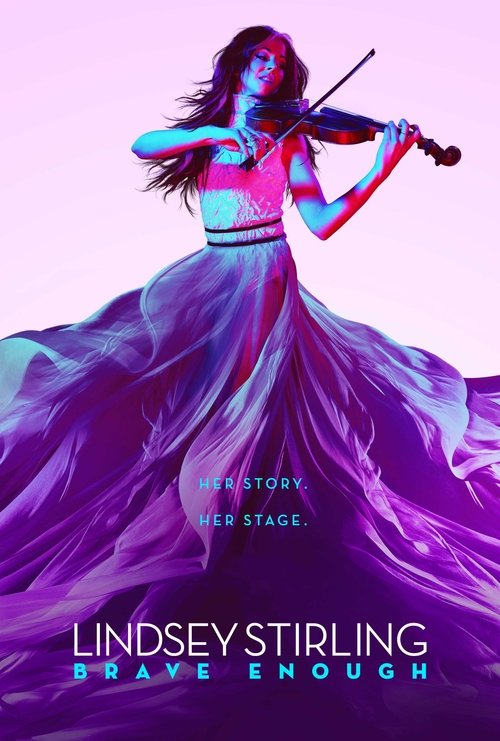
Beginning on the eve of her thirtieth birthday, “Brave Enough,” documents violinist Lindsey Stirling over the past year as she comes to terms with the most challenging & traumatic events of her life. Through her art, she seeks to share a message of hope and courage and yet she must ask herself the question, “Am I Brave Enough?” Capturing her personal obstacles and breakthrough moments during the “Brave Enough,” tour, the film presents an intimate look at this one-of- a-kind artist and her spectacular live performances inspired by real-life heartbreak, joy, and love.
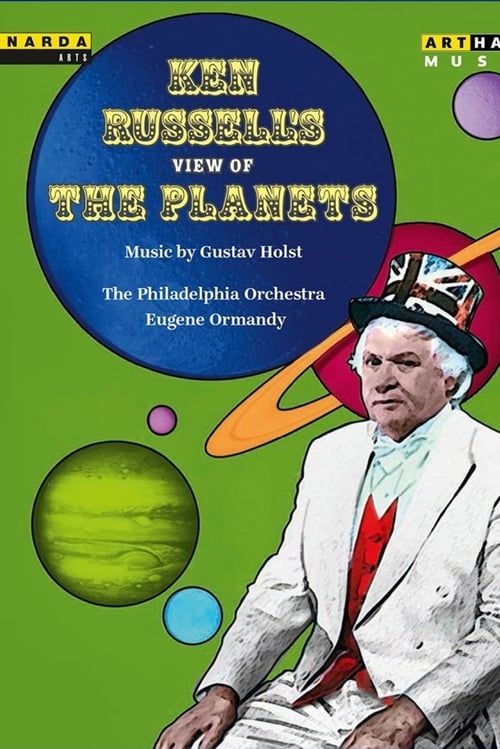
Based on the famous Gustav Holst musical suite, Ken Russell's musical delight takes viewers on a magnificent journey of the planets of the Solar System.
An enterprising producer believes he has hit upon a winning concept: a program of original animated shorts set to classical music. Undeterred by warnings that this has already been done by an American named 'Prisney,' he rallies an orchestra of geriatric women, a bullish conductor, and an animator that he keeps locked in the dungeon. What could go wrong?
In a special Christmas edition, violinist Daniel Hope and guests perform a varied and atmospheric repertoire including traditional Christmas songs in new arrangements, classical works and the hit song "Fields of Gold". Daniel Hope's guests are British musician, composer, and living-legend, Sting, Canadian pianist Bruce Liu, winner of the 18th International Chopin Piano Competition, South African soprano Golda Schultz, Argentinian-British guitarist Dominic Miller, Brazilian pianit Sylvia Thereza, the up-and-coming Leonkoro Quartet, cellist Nicola Mosca and percussionist Michael Metzler.
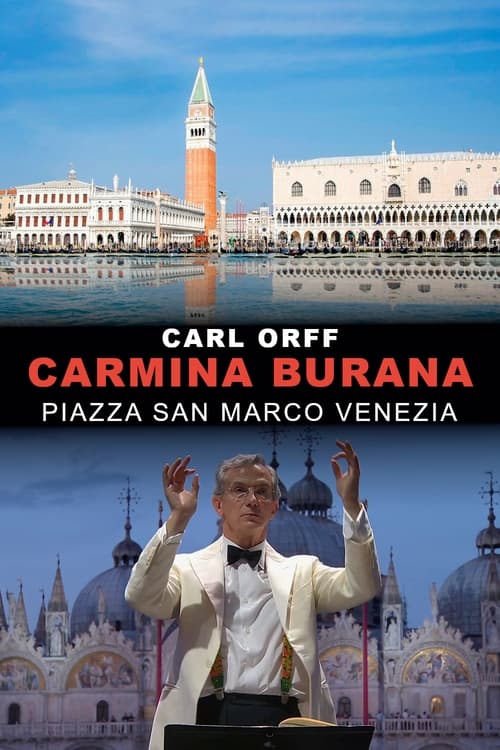
The Choir and Orchestra of the La Fenice Theatre, conducted by Fabio Luisi, take over Piazza San Marco in Venice for a grandiose concert. Facing the basilica, the musicians perform the famous cantata "Carmina burana", twenty-four medieval poems set to music by Carl Orff between 1935 and 1936.
A brilliant performance of Schönberg's monumental work at the Prague State Opera. Arnold Schönberg composed Gurre-Lieder to a text by J. P. Jacobsen about the tragic love of the Danish king Waldemar and his mistress Tove Lille, who was murdered out of jealousy by Queen Helviga. He orchestrated the composition for a monumental orchestral and vocal ensemble: five vocal solos, a narrator, a male and mixed choir, and a huge orchestra comprising 25 woodwind instruments, 25 brass instruments, four harps, a celesta, 16 different percussion instruments (including iron chains), and an exceptionally large string section. Every performance of this masterpiece, composed down to the last detail, is truly an overwhelming experience. SOČR chief conductor Petr Popelka seized this unique opportunity, as at the time of the performance of Songs he was also chief conductor of the Norwegian Radio Orchestra, and in this unique project he brought together the two ensembles entrusted to him.