Through a child's lens, The Honest Poet reveals a rarely seen side of Afghanistan, following 11-year-old Raheem on a journey through his country and into the homes and hearts of his people.
Rahim Haidari
as themselves
Telaa Mohammad
Through personal stories, the documentary approaches the issues of gender identity and legal gender recognition in Greece. The three main characters explain how society has treated them, by narrating their experiences from the past and the present.
On the border of Surinam and French Guyana, indigenous Wayana territory is overrun by intruders. Illegal gold miners poison the river, missionaries repress indigenous identity, and even doctors with the best intentions leave marks that are often silently violent. The Wayana call these intruders Parasisi.
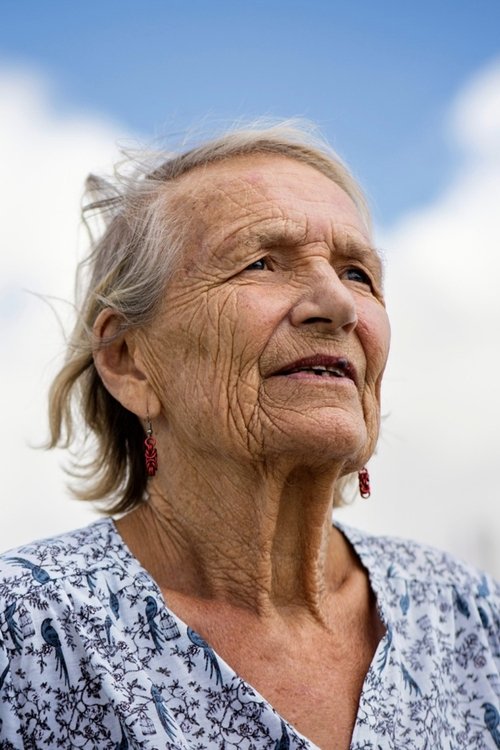
Lesley, in her 80s, and teenager Jay deliver spoken word poetry expressing their sense of belonging, home, and their vision for the future of the area where they live. One in a series of short films made in collaboration with residents of Ebbsfleet and its surrounding areas.
Cacaso, a Brazilian poet, lived in Rio de Janeiro. Born Antonio Carlos de Brito (1944-1987) he was one of the leaders of the marginal poetry movement. Cacaso filled notebooks not only with poems but reflections, drawings and collages. He also became a lyricist and partner of celebrated songwriters such as Tom Jobim, Edu Lobo, Toninho Horta, João Donato and Sivuca.
Valentina seeks refuge from the incessant waves of her mind in the pages of her upcoming poetry book Lapislazuli, trying to keep her life from slipping away like sand through her fingers. With words from her poem Citrino, we journey through a range of emotions and feel the ups and downs of her Borderline Personality Disorder.
Through testimonies and images, the crude reality of human rights in Argentina in democracy is portrayed and the role of the hegemonic means of communication to make causes and protests invisible ...
Through first person narration, Tari reveals personal stories related to her decision to work in Taiwan, her strained family relationships, the risks involved in working abroad and the traps she has fallen into.
A fascinating exploration of the literary — The Tragedy of Othello, the Moor of Venice, by English playwright William Shakespeare (1604) — and lyrical — Othello, by Italian opera composer Giuseppe Verdi (1887) — myth of Othello, the desperately tragic story of a Moorish general in the army of the Venetian Republic whose absurd jealousy poisons his love for his wife Desdemona.
Journalist Dermi Azevedo has never stopped fighting for human rights and now, three decades after the end of the military dictatorship in Brazil, he's witnessing the return of those same practices.
Britain's Special Operations Executive (SOE) provides trained agents, arms and other assistance to the European resistance groups fighting against Hitler. British agents, Captain Harry Rée DSO, OBE, Croix De Guerre, Médaille de la Résistance, aka "Felix", and Jacqueline Nearne, MBE, aka "Cat", recreate some of their adventures in France.
An urgent and powerful documentary, shot in a detention centre where asylum seekers trying to reach Australian shores are indefinitely detained. Secretly shot on a mobile phone by Iranian journalist Behrouz Boochani while detained on Manus, in Papua New Guinea, the film is a collaboration with Dutch-Iranian filmmaker Arash Kamali Sarvestani. Boochani recounts, via the testimonies of fellow inmates, the abuse and violence inflicted and the precarious state of limbo they find themselves in. Chauka, the name of the dreaded solitary confinement unit within the detention centre, was originally the name of a beautiful bird and symbol of the Manus Island. By interweaving dialogue with two Manusian men and shots of daily life on the island, the film gives a much-needed voice to Manus inhabitants, understandably distressed by the current situation. With marked restraint, the film exposes lives broken by shocking immigration policies.
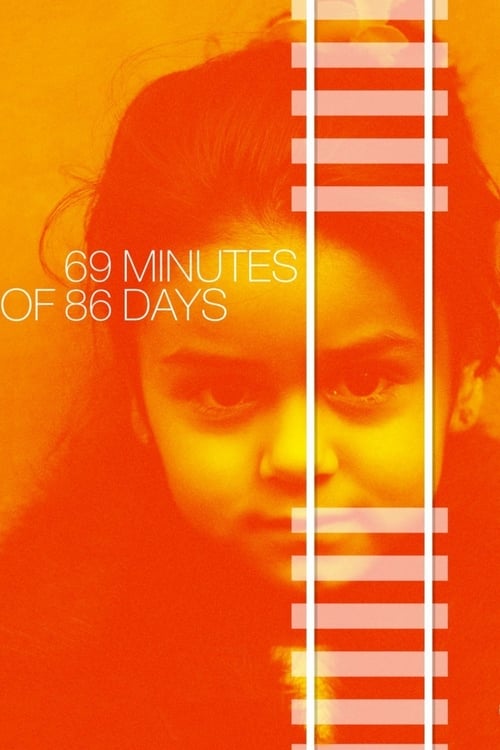
L, a student in India witness to the government's violent response to university protests, writes letters to her estranged lover while he is away.
Voices in Wartime is a 2004 documentary that explores the human experience of war through poetry. Combining interviews with soldiers, journalists, and historians, it reveals how war affects individuals and societies across time and place. The film features poets from around the world – from Homer and Wilfred Owen to Shoda Shinoe and modern writers in Iraq and Nigeria – showing how poetry expresses the pain, trauma, and truth of conflict. By linking verse with real-life accounts, Voices in Wartime highlights how poetry helps us understand the emotional and moral impact of war.
September 1st, 1939. Nazi Germany invades Poland. The campaign is fast, cruel and ruthless. In these circumstances, how is it that ordinary German soldiers suddenly became vicious killers, terrorizing the local population? Did everyone turn into something worse than wild animals? The true story of the first World War II offensive that marks in the history of infamy the beginning of a carnage and a historical tragedy.
"Kartli" refers both to Georgia’s medieval kingdom and a Tbilisi sanatorium sheltering refugees from the 1990s war in Abkhazia, meant as temporary but lasting 30 years. The crumbling building became a recreated “country”, with a farm, gardens, terraces and rooms where old VHS tapes revive memories of a lost paradise. Through Tamuna, Irma, and others, the film explores exile, trauma, and shared resilience, showing that nothing stays the same inside Kartli.