Thanks to affirmative action quotas, Black and Indigenous students are able to attend college and bring their ancestral knowledge with them, in a story of overcoming adversity and social transformation.
Taquari Pataxó
as Self
Tamiwere Pataxó
Marina Barbosa
Nadjane Cristina
Ana Paula Rosário
Citizens across Europe who used to belong to the lower middle class have fallen into poverty. An in-depth investigation into the precariat, a new social class of financially insecure citizens who, although they are employed, find it very difficult to make ends meet.
Deep Throat, a pornographic film directed by Gerard Damiano, a film-loving hairdresser, and starring Linda Lovelace, a shy girl manipulated by a controlling husband, was released in 1972 and divided audiences, who began to talk openly about sex, desire and female pleasure; but also about violence and abuse; and about pornography, until then an almost clandestine industry, as a revolutionary cultural phenomenon.
Phil Comeau shines a spotlight on the Ordre de Jacques-Cartier, a powerful secret society that operated from 1926 to 1965, infiltrating every sector of Canadian society and forging the fate of French-language communities. Through never-before-heard testimony from former members of the Order, along with historically accurate dramatic reconstructions, this film paints a gripping portrait of the social and political struggles of Canadian francophone-minority communities.
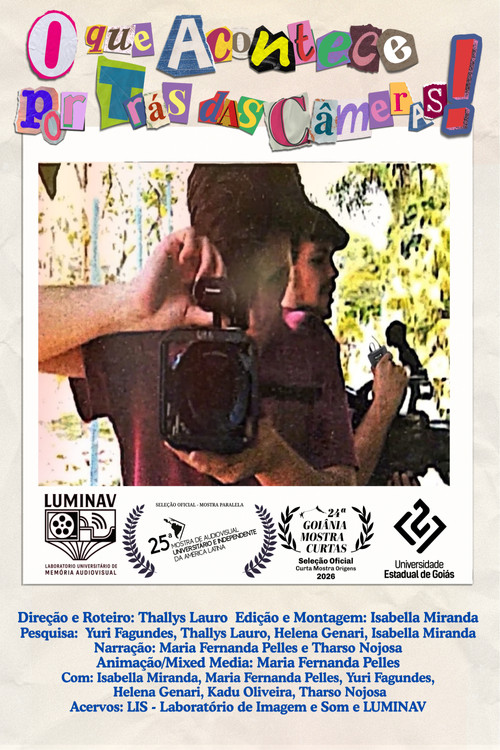
A collection of memories from a tumultuous time at University.
Pioneering the harsh landscape of Nebraska was difficult enough in 1869. Pioneering a new university was almost beyond reason. What was a university? Who should go? What should be taught? There were no guidebooks. No road maps. They were building a university out of little more than hopes and dreams.
A collection of home videos depicting the activities of a freshman in college and his friends
Konnie Huq celebrates the very best of British children’s television, with a dazzling array of clips from some of the most treasured programmes ever made and revealing chats with some of TV’s most beloved stars. But Konnie also tells a perhaps more surprising story: of how kids’ TV has frequently been at the forefront of social change, in terms of the stories it tells and the people who get to tell them.
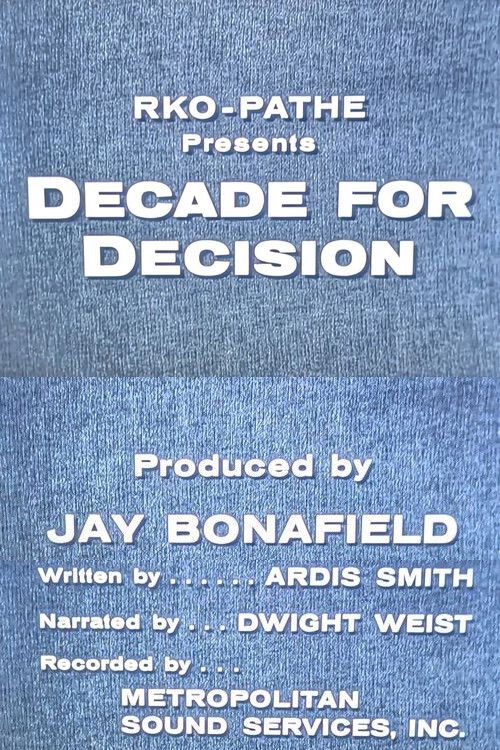
Short news featurette produced by Pathe-RKO after the Russians launched the first orbiting satellite, Sputnik. It is a patriotic 'call to arms' from the threat posed by this and the need for Americans to spend more on education in general and a college education in particular. A visit to the University of Buffalo highlights its science programs and the need for more graduates from all technical disciplines if America is to rise to the challenge. It bemoans the fact the PhDs earn less than a mechanic and the need to re-order priorities.
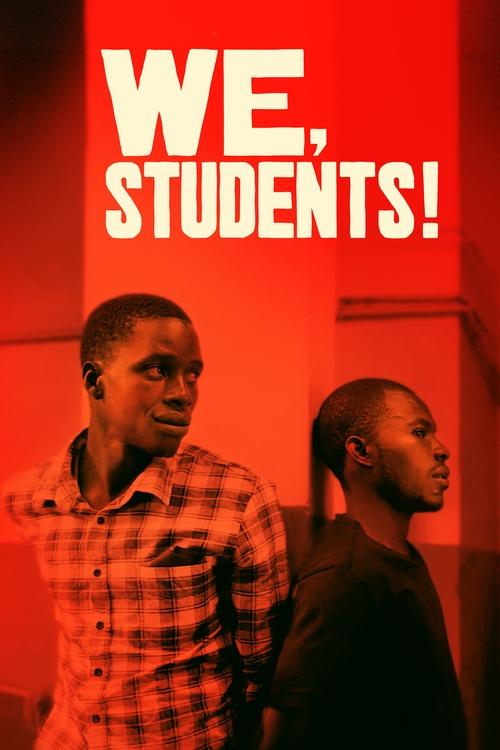
Nestor, Aaron, Benjamin and Rafiki are economics undergraduates at the University of Bangui. Navigating between the overcrowded classrooms, the petty trades that allow students to survive, bribery lurking everywhere, Rafiki shows us what students lives are like in the Central African Republic, a shattered society where the youth keeps dreaming for a brighter future for their country.
Students seeking greater control over the hiring of faculty occupy the offices of the Political Science Department at McGill University. The film crew lives with the students and follows their action through confusion, argument, dissent, and negotiations with faculty. The result is an intimate view of a student political action.
This documentary shows how “The Kinsey Reports” have been used to change the laws concerning sex crimes in America, resulting in the minimal sentences so often given to rapists and pedophiles. Further explained is how the Kinsey data laid the foundation for sex education — training teachers, psychologists and even Catholic priests in human sexuality. What has been the consequence? And what was Kinsey’s research really based upon?
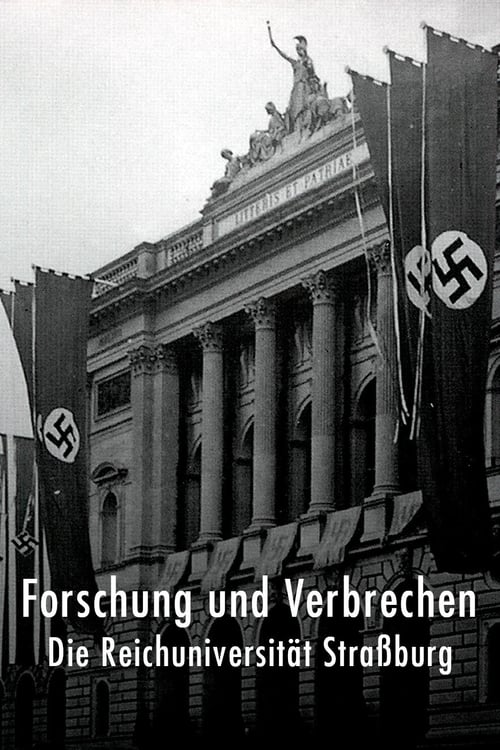
Strasbourg was home to one of three Reich Universities founded by the Nazis, known as a project close to Hitler's heart. The university, founded in 1941, is infamous for the human experiments performed on KZ prisoners by the professors of the medical faculty. What did its dean, Johannes Stein, grandfather of documentarian Kirsten Esch, know of these crimes?
Euller Miller is a young native Brazilian of kaiwá ethnicity who leaves his small village just outside of Dourados (MS) to study dentistry at a public university in the crowded capital city of the state of Paraná. The film follows the complex transition between two very different worlds and the search for new horizons without abandoning his indigenous roots.
The New Mother Earth is a documentary film by Michael Lanfield, based on his book of the same name. With forewords by Damien Mander, Freelee the Banana Girl, and Oberom, and an afterword by Aurora Ananda, the work offers a spiritual and philosophical call to awaken from cycles of fear, violence, and disconnection. Exploring humanity’s need to return to love, truth, and compassion, it presents a vision of healing and unity with animals, the Earth, and one another. Through its message of sovereignty, nonviolence, and higher consciousness, The New Mother Earth invites viewers and readers alike to imagine a more harmonious way of living, rooted in reverence for all life.
A fringe communist party struggles to entrench itself within a pro-Palestinian encampment at a British university. Meanwhile, in 1967, the New Left grapples with an unconvinced public.
Estado de Excepção is a documentary about CITAC (Coimbra Theater Initiation Circle), a university theater group, revealing history since it was constituted in 1956 until the aftermath of the 1974 revolution. It is the history of the theater group university and, through it, the history of theater in Portugal, revealing two remarkable decades of the History of Portugal. Through the Academy of Coimbra, the documentary reproduces student life, the position of women in society, and the change in mentalities of being and being in the world. It reproduces the existing censorship and the fight against the dictatorship, the resistance to an exhausted regime, as well as the emerging contradictions of the democratic revolution. CITAC has a heritage of 50 years of experience in Coimbra. It carries with it the possibility of the theatrical and civic formation of thinking bodies, constituting a proper ball of a possible model, generation by generation, between studies, theater, and social drama.
Thirty-seven diverse men and women confront the problem of saving their democracy from fascism.