What changed and what remained in border towns where the German presence was erased after World War II? Two young filmmakers delve into what we still find in the present-day Polish city of Kąty Wrocławskie, formerly Kanth.
Anna Lazar
as Self
Beata Jurcewicz
Czesława Matejo
Maciej Drab
Stanisław Cały
Jan Cisło
Grażyna Klag
Jacek Dwojacki
In an age of revolution, Marie Antoinette and her protector Oscar François de Jarjayes face tough choices as women growing into their distinct roles.
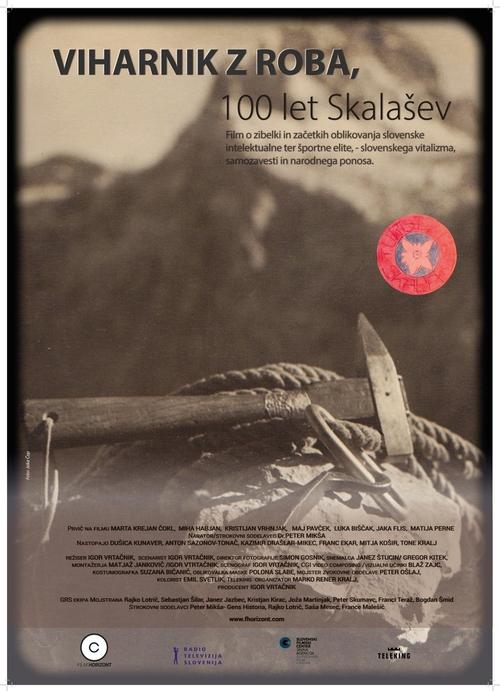
Joža Čop, an illiterate man of the people, earned great respect from his fellow compatriots. He once famously said: "I’ve never climbed for fame and newspapers, so that people could wipe their asses with me." The film is also a story of the cradle of Slovenia's intellectual and sporting elite, Slovenian vitality, confidence and national pride.
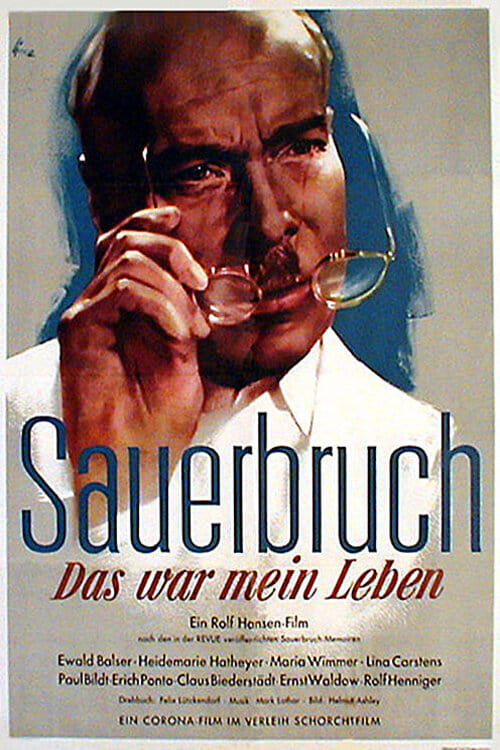
Young Olga Ahrendt almost succeeded in attempting suicide. She had thrown herself in front of a tram out of desperation about her miserable life, a desperation she shared with many in the post-war period. Fortunately, Privy Councillor Sauerbruch is at the scene of the incident, ordering her to be admitted to his clinic after a brief examination. Sauerbruch works both as a university lecturer and as a surgeon, a famous doctor who not only helps his patients physically but also gives them spiritual comfort. After he has taken Olga Ahrendt to his hospital, he discovers during an examination that her suicide attempt is due to a serious physical illness. He intensively takes care of her without forgetting about his other patients, to whom he can give a new will to live, even if only through a small story. And he will also treat Olga Ahrendt successfully...
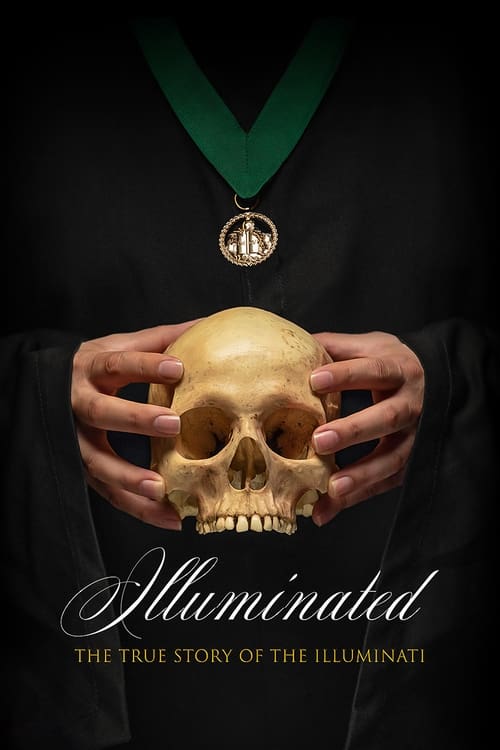
The true historical account of the Illuminati, exposing the actual rituals of the secret society, and answering the age-old question of whether or not the order still exists.
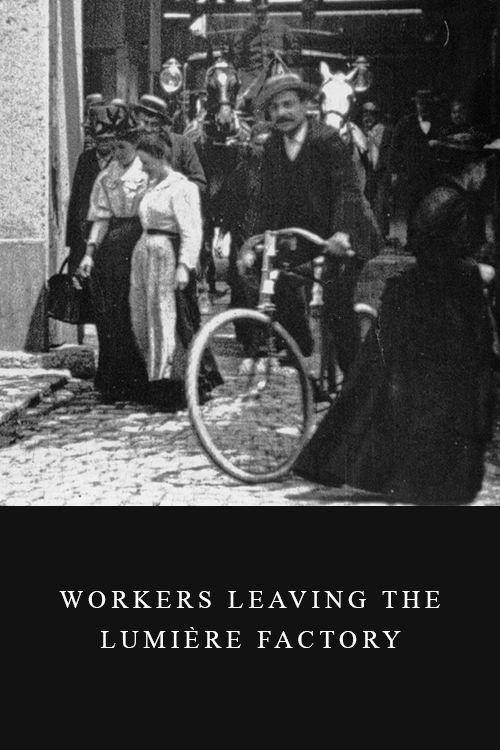
Working men and women leave through the main gate of the Lumière factory in Lyon, France. Filmed on 22 March 1895, it is often referred to as the first real motion picture ever made, although Louis Le Prince's 1888 Roundhay Garden Scene pre-dated it by seven years. Three separate versions of this film exist, which differ from one another in numerous ways. The first version features a carriage drawn by one horse, while in the second version the carriage is drawn by two horses, and there is no carriage at all in the third version. The clothing style is also different between the three versions, demonstrating the different seasons in which each was filmed. This film was made in the 35 mm format with an aspect ratio of 1.33:1, and at a speed of 16 frames per second. At that rate, the 17 meters of film length provided a duration of 46 seconds, holding a total of 800 frames.
The conflict over forestry operations on Lyell Island in 1985 was a major milestone in the history of the re-emergence of the Haida Nation. It was a turning point for the Haida and management of their natural resources.
Cree matriarch Aline Spears survives a childhood in Canada’s residential school system to continue her family’s generational fight in the face of systemic starvation, racism, and sexual abuse. She uses her uncanny ability to understand and translate codes into working for a special division of the Canadian Air Force as a Cree code talker in World War II. The story unfolds over 100 years with a cumulative force that propels us into the future.
Spurred by a white woman's lie, vigilantes destroy a black Florida town and slay inhabitants in 1923.
Two rival artists at Sivadas Swamigal's drama troupe compete in everything they do. While one of them goes on to become successful, the other fails in life.
The era when Samurai and Ninja existed in Japan. Rikka Isurugi was born and raised in a Ninja clan secluded from society. She soon meets Miya, a girl with a mysterious power, who is found lost in the mountains. As Rikka is concerned that someone is pursuing Miya, she also asks the head the of Isurugi Ninja Clan for permission to avenger her father's death. Soon Rikka faces danger with the attack of the Negoro group but…
What happened after Einstein fled Nazi Germany? Using archival footage and his own words, this docudrama dives into the mind of a tortured genius.
Young sailor Edmond Dantès is wrongfully imprisoned, escapes, finds treasure, and reinvents himself as the wealthy Count of Monte Cristo to exact revenge on those who betrayed him.
Looking for Angelina is based on one of the most important murder trials in Canada. Angelina Napolitano murdered her husband with an axe and was sentenced to be executed...
A phantom of the Bakumatsu must be taken down. All the answers you desire are in Kyoto! A special theatrical screening of Rurouni Kenshin -Kyoto Disturbance-.
A street sweeper, The messenger of the red-blooded letter to the soldier found out it was abused. Responsible for the extermination of neutralists during the Gestok/Gestapu era in Bali.
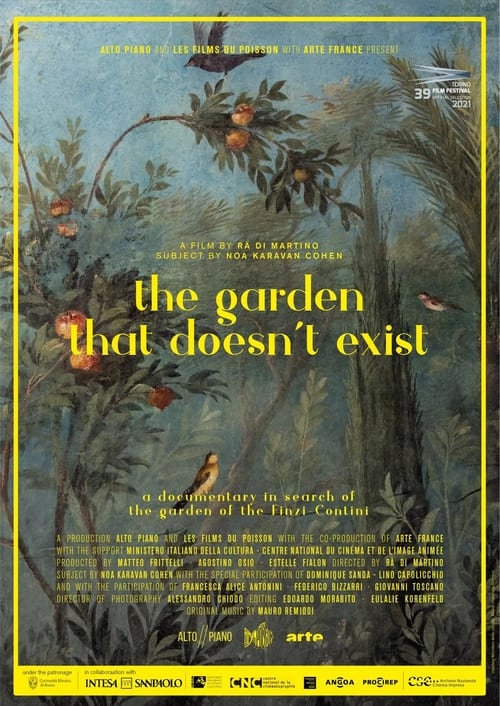
Once upon a time there was a garden, a refuge, a safe haven - 'The Garden of the Finzi Continis'. It came to life in Giorgio Bassani's 1962 semi-autobiographical novel recounting an unfulfilled love story between two young Jews in Ferrara, while fascism was raging in Italy in the late 1930's. In 1972, Vittorio De Sica's film adaptation of the book won the Oscar for Best Foreign Language Film. Since then, the fictional space of the garden became so tangible that people from all over the world come to Ferrara to look for it. Fifty years after winning the Oscar, reality and fiction come together once more, as we walk through an imaginary garden and bring to life the book, its author, its main protagonists, history, love, friendships and betrayals.
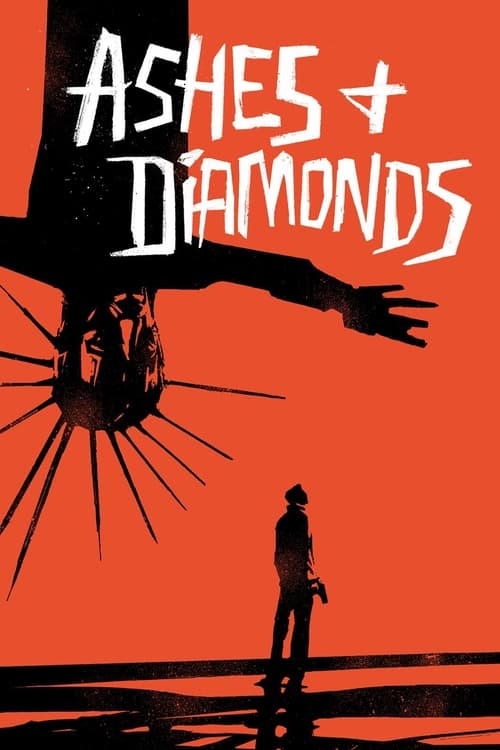
A young academy soldier, Maciek Chelmicki, is ordered to shoot the secretary of the KW PPR. A coincidence causes him to kill someone else. Meeting face to face with his victim, he gets a shock. He faces the necessity of repeating the assassination. He meets Krystyna, a girl working as a barmaid in the restaurant of the "Monopol" hotel. His affection for her makes him even more aware of the senselessness of killing at the end of the war. Loyalty to the oath he took, and thus the obligation to obey the order, tips the scales.
The earliest surviving motion-picture film, and believed to be one of the very first moving images ever created, was shot by Louis Aimé Augustin Le Prince using the LPCCP Type-1 MkII single-lens camera. It was taken on paper-based photographic film in the garden of Oakwood Grange, the Whitley family house in Roundhay, Leeds, West Riding of Yorkshire (UK), on 14 October 1888. The film shows Adolphe Le Prince (Le Prince’s son), Mrs. Sarah Whitley (Le Prince’s mother-in-law), Joseph Whitley, and Miss Harriet Hartley walking around in circles, laughing to themselves, and staying within the area framed by the camera. Roundhay Garden Scene is often associated with a recording speed of around 12 frames per second and runs for about 2 to 3 seconds.
197 AC. War between warlords Cao Cao and Zhang Xiu. Xiangyang prefect Xun Song was besieged by enemy army. His 13-year daughter Xun Guaning broke through the siege and moved troops without fear of danger and helped his father break the siege of Xiangyan.