Zaho de Sagazan
as Voice over & Storyteller of Arthur Rimbaud's poems
Félix Moati
as Voice over & Narrator
Johan van der Keuken went against the grain in 1980: from Amsterdam (on April 30 with the coronation riots and squatting actions) via Paris, southern France and Italy to Egypt. He made his personal travelogue in three parts for VPRO television. Later, he fused the three parts into one long movie.
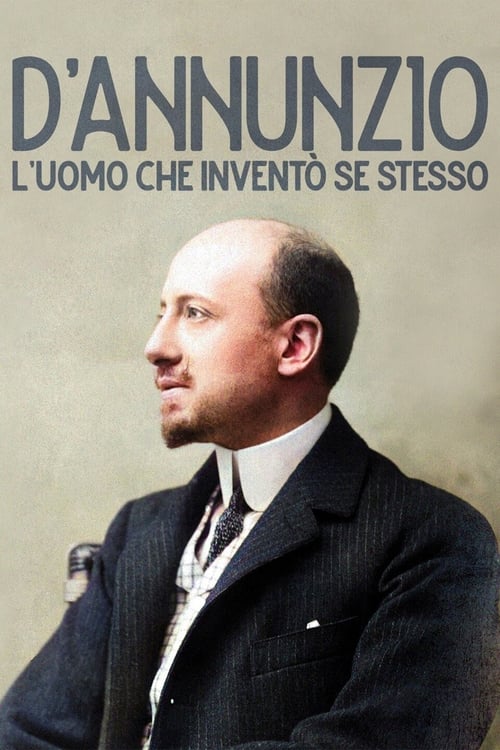
How the inventor of the detective story became his own greatest mystery.
A documentary short by Barbara Bingley-Verseman about the creation of a monumental outdoor mural by her twin sister, LA-based Kat Bing, and Parisian artist Kekli in the lead up to the Paris 2024 Olympics
This documentary about legendary French chanteuse Edith Piaf begins at her birth (which was helped along by a cop), travels through her turbulent romantic history, follows her to the pinnacle of her success and reports on her death. Piaf was queen of the torch song, her plaintive wail speaking volumes of the tragedy and joy she'd faced. Hers wasn't exactly, in the words of one of her famous songs, "La Vie En Rose," but it was quite a life.
A poem about mania written by Omar Zefier. His second film.
In May of 1982 Julio Cortázar, the Argentinean writer and his companion in life, Carol Dunlop set out in their VW bus on a journey along the highway from Paris to Marseille that, for each of them, was to be their final one. Twenty-five years later, Océane Madelaine and Jocelyn Bonnerave set out to undertake the journey again.
Eldar Ryazanov reads his poetry. An introspective movie on his multifaceted work.
Documentary video journey in search of the missing Tatar poet Rahim Sattar. The path from the present to the past runs through a polylogue of experts, folk music, works by contemporary artists, musical and creative interpretation of poems by Rahim Sattar and unique archival newsreels shot at the dawn of cinema.
A young woman of the Tarahumara, well-known for their extraordinary long distance running abilities, wins ultramarathons seemingly out of nowhere despite running in sandals.
A biography of the poet W. B. Yeats and his contribution to the Irish independence movement as a Protestant nationalist.
Paris, Rue Beautreillis, July 3, 1971. The corpse of rock star Jim Morrison is found in a bathtub, in the apartment of his girlfriend Pamela Courson. The chronicle of the last months of the life of the poet, singer and charismatic leader of the American band The Doors, one of the most influential in the history of rock.
When Danish filmmaker Lea Glob first portrayed Apolonia Sokol in 2009, she appeared to be leading a storybook life. The talented Apolonia was born in an underground theater in Paris and grew up in an artists’ community—the ultimate bohemian existence. In her 20s, she studied at the Beaux-Arts de Paris, one of the most prestigious art academies in Europe. Over the years, Lea Glob kept returning to film the charismatic Apolonia and a special bond developed between the two young women.
This illuminating documentary examines the aftermath of Princess Diana's tragic death and the tense, dramatic week leading up to her funeral
Stop for Bud is Jørgen Leth's first film and the first in his long collaboration with Ole John. […] they wanted to "blow up cinematic conventions and invent cinematic language from scratch". The jazz pianist Bud Powell moves around Copenhagen -- through King's Garden, along the quay at Kalkbrænderihavnen, across a waste dump. […] Bud is alone, accompanied only by his music. […] Image and sound are two different things -- that's Leth's and John's principle. Dexter Gordon, the narrator, tells stories about Powell's famous left hand. In an obituary for Powell, dated 3 August 1966, Leth wrote: "He quite willingly, or better still, unresistingly, mechanically, let himself be directed. The film attempts to depict his strange duality about his surroundings. His touch on the keys was like he was burning his fingers -- that's what it looked like, and that's how it sounded. But outside his playing, and often right in the middle of it, too, he was simply gone, not there."
The film approaches the work of the Greek artist Nikos Koniaris. The particular way in which the painter depicts human suffering is presented through a film - a hybrid of real recording and directed material. The grief, the sick body, is reflected in self portraits, portraits of dying strangers and paintings of dead models. The paintings, apart from his work, also express a different version of himself. All together contribute to the depiction of man as a "garment of pain".
Five gay Black men who are HIV-positive discuss how they are battling the double stigmas surrounding their infection and homosexuality.
A man tells the story of his three cats.