Puqui Llácer Cardona
as Camarera Extraterrestre

Demian Gallitelli
as Rama
Mora Escola
as Ramo
Cintia Martín
as Juli
Alejandro Ruíz Díaz
as Manuel
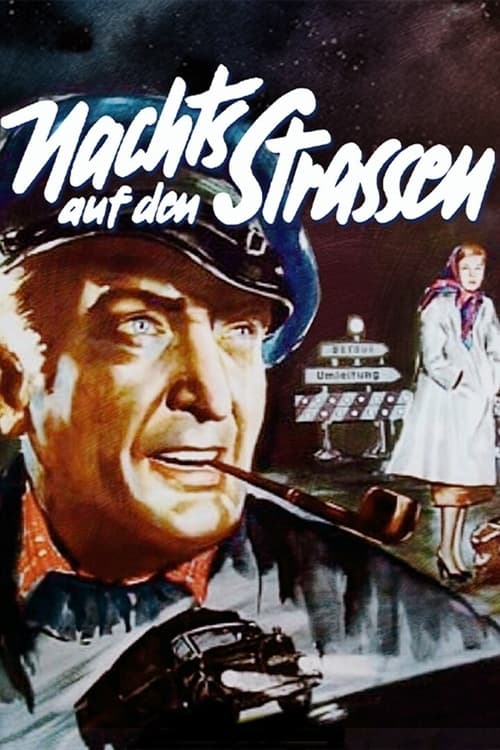
Hannes is a beer truck driver in Dortmund. His biggest dream is to win the first prize at the International Timetable Contest in Inari (Finland). When his new boss cancels his extra holidays to go there, Hans goes mad… On his journey to Finland by train, followed by the police, he meets lot of folks and the love of his life.
An emotional journey of a former school teacher, who writes letters for illiterate people, and a young boy, whose mother has just died, as they search for the father he never knew.
A road movie about three persons traveling in a campervan on their way to Tokyo, Hamamatsu, and Kyoto. The film is based on the story of the heroine, a young girl named Momo, who was a member of the "21 Faces of Kaijin" gang involved in the Glico Morinaga Incident, and the film's ideas are remarkable, including the use of a tape recording of the actual incident.
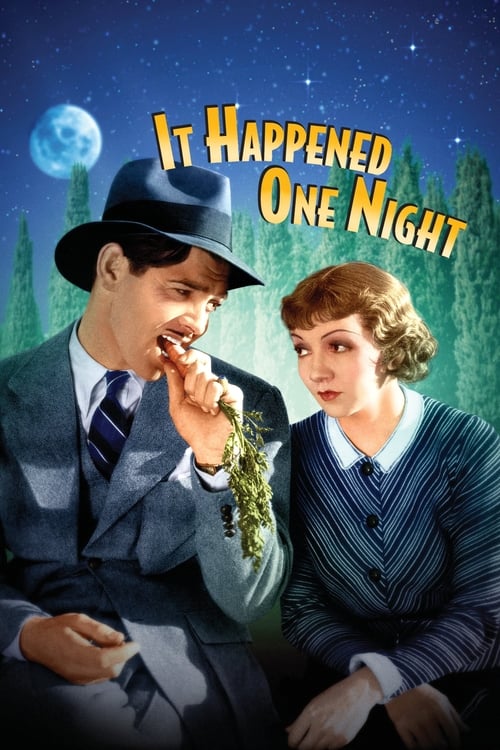
Roberto Bolle smuggles himself as a stowaway on an ocean liner that of Hamburg gen New York sets sail. On board is also his lover Barbara Shadwell, whom he wants to marry, but who, at the request of her mother, the syrup millionaire Ceila Shadwell, should marry the oatmeal millionaire David.
National Theatre Live’s 2010 broadcast of Alan Bennett’s acclaimed play The Habit of Art, with Richard Griffiths, Alex Jennings, and Frances de la Tour, returns to cinemas as part of the National Theatre's 50th anniversary celebrations. Benjamin Britten, sailing uncomfortably close to the wind with his new opera, Death in Venice, seeks advice from his former collaborator and friend, W H Auden. During this imagined meeting, their first for 25 years, they are observed and interrupted by, amongst others, their future biographer and a young man from the local bus station. Alan Bennett’s play is as much about the theatre as it is about poetry or music. It looks at the unsettling desires of two difficult men, and at the ethics of biography. It reflects on growing old, on creativity and inspiration, and on persisting when all passion’s spent: ultimately, on the habit of art. One of the first five episodes also released on terrestrial TV on a 2009 BBC TV series titled "National Theatre Live".
Two Brazilians meet by chance and embark on a peculiar journey.
Servais Mont, a freelance photographer who works taking compromising photos, gets fascinated by Nadine Chevalier, a tormented low-budget movie actress married to an eccentric film photo collector.
What if Konstantin Gavrilovich, from Anton Chekkov's famous play, did not commit suicide and was murdered instead? And who did it? Boris Akunin's take on The Seagull unfolds as a comedic murder mystery.
In the 1970s, groups of young Europeans ventured into the Sahara Desert with the intention of crossing it and experiencing “an adventure”. Unprepared, reckless and ignorant of the terrain they were crossing, they faced extreme situations with unexpected consequences. From the passion of these young people for adventure, the most famous rally in the world was born. “End of the Journey, Sahara” tells the story of one of these adventures.
A road movie starring a Muslim family, a checkpoint and a flock of sheep.
Grump's life follows the same familiar routines: spring is here and the early potato harvest is ripening. But Grump crashes his beloved Ford Escort and the car has to be scrapped. A new, modern vehicle is no match for quality and the nearest Escort, a 1972 model, can be found in Germany. When the Grumps's sons refuse to help, he must travel to Germany alone.
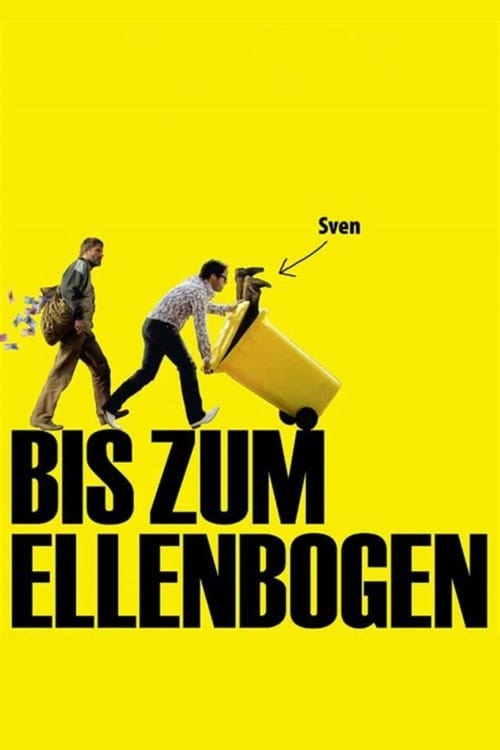
Sven, a private banker, is enjoying his holiday in Switzerland. Not far from his secluded mountain cabin, dodgy businessman Achim collides with Willi, a claimant on income support, whilst riding his mountain bike. The crash is minor, but both need some rest – in Sven’s mountain cabin.
A satirical Kuwaiti comedy play, focusing on young people, their needs and the problems they are going through in their daily lives, and sometimes their rebellion against society to pay attention to their problems and seek a solution to them.
Weller Martin and Fonsia Dorsey, two elderly residents at a nursing home for senior citizens, strike up an acquaintance. Neither seems to have any other friends, and they start to enjoy each other's company. Weller offers to teach Fonsia how to play gin rummy, and they begin playing a series of games that Fonsia always wins. Weller's inability to win a single hand becomes increasingly frustrating to him, while Fonsia becomes increasingly confident. While playing their games of gin, they engage in lengthy conversations about their families and their lives in the outside world. Gradually, each conversation becomes a battle, much like the ongoing gin games, as each player tries to expose the other's weaknesses, to belittle the other's life, and to humiliate the other thoroughly.
The capital's little thing Lana, in order to save her career, goes to the North instead of a hot vacation. There she gets involved in an adventure from which only the truck driver Grisha can save her - a rude lout who loves nothing except his Ural truck. In their joint journey-chase through the wild wilderness, Lana will find something completely different from what she was looking for: the beauty of the endless North, simple and sincere people, a real man and a woman's happiness.
When dishwasher Ingo, whose girl-friend has just left him, returns a borrowed bar stool to the Folkwang Acting School in Essen, he stumbles into the audition for next year's new students. He lets Johannes, the broke and unsuccessful applicant, stay with him. Ingo decides to go to Munich with Johannes, where he wants to try his luck once again. Hitchhiking, they get rides with very different drivers on the autobahn. They meet up with the smooth-talking Ali in the wayside dinner "Raststätte Spessart". Arriving in Munich, the trio tries to find cheap sleeping accommodation. They enter Ingo into the audition at Munich acting school. Moreover, Johannes falls in love with street artist Herta from Berlin. Written by emkarpf
Hungry is the first in a three-play cycle introducing us to the Gabriels of Rhinebeck, New York. These three plays unfold in real time and track the lives of the Gabriels throughout the coming presidential election year. To the rhythm of peeling, chopping and mixing, Hungry places us in the center of the Gabriel’s kitchen. The family discusses their lives and disappointments, and the world at large and nearby. As they struggle against the fear of being left behind, the family attempts to find resilience in the face of loss.
Back in the kitchen of the Gabriel family, the country is now in the midst of the general election for President. In the course of one evening in the house they grew up in, history (both theirs and our country's), money, politics, family, art, and culture are chopped up and mixed together, while a meal is made around the kitchen table.
Eight months after we first meet the Gabriels, Patricia, the family matriarch, joins her children and daughters-in-law as they prepare a meal from the past and consider the future of their country, town and home. Paying tribute to the difficult year behind them, the Gabriels compare notes on the search for empathy and authenticity at a time when the game seems rigged and the rules are forever changing.
During the trip back from their vacation, a young couple is stranded in the middle of the road and they lose all forms of communication, including each other.