Ken Wada
as Voiceover / Editor / Director
Bruno Teles
as Voiceover / Writer
Lucas Castro
Isabelle Ono
as Voiceover
Luísa Menin Franzini
as Producer
People in the future live in a totalitarian society. A technician named THX 1138 lives a mundane life between work and taking a controlled consumption of drugs that the government uses to make puppets out of people. As THX is without drugs for the first time he has feelings for a woman and they start a secret relationship.
When illegal card dealer and recovering heroin addict Frankie Machine gets out of prison, he decides to straighten up. Armed with nothing but an old drum set, Frankie tries to get honest work as a drummer. But when his former employer and his old drug dealer re-enter his life, Frankie finds it hard to stay clean and eventually finds himself succumbing to his old habits.
A bumbling tramp desires to build a home with a young woman, yet is thwarted time and time again by his lack of experience and habit of being in the wrong place at the wrong time..
The true story of João Guilherme Estrella ("Johnny"), a young middle-class bon vivant who became a big-time cocaine dealer in Rio de Janeiro in the early 1990s.
Billy Hayes is caught attempting to smuggle drugs out of Turkey. The Turkish courts decide to make an example of him, sentencing him to more than 30 years in prison. Hayes has two opportunities for release: the appeals made by his lawyer, his family, and the American government, or the "Midnight Express".
The restaurant opens. Customers eat. The restaurant closes. For one employee, this daily routine becomes his personal hell.
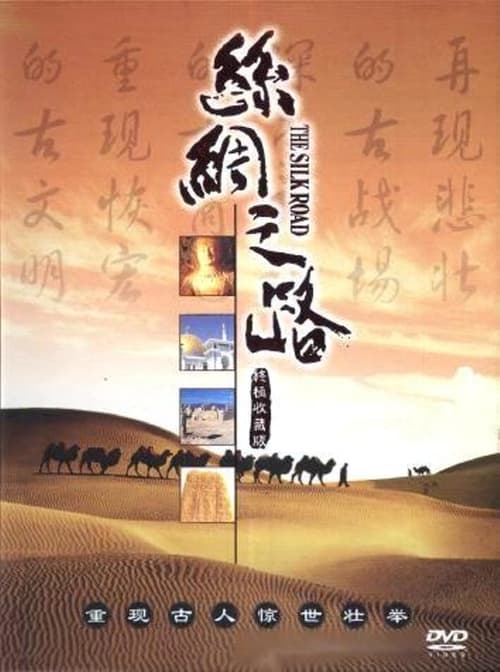
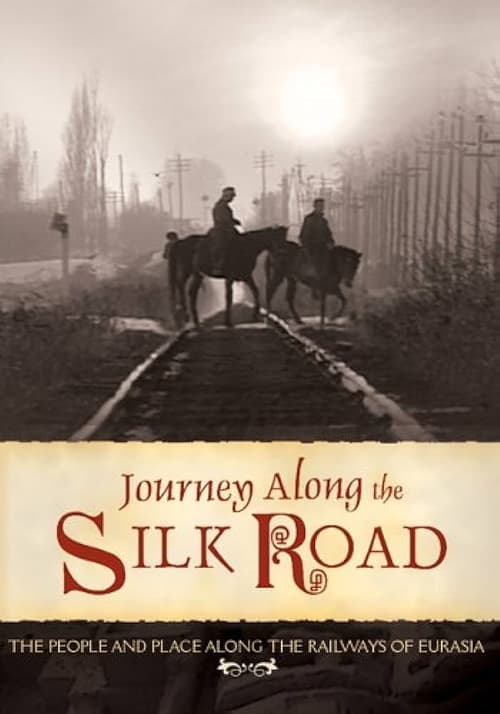
Actor Ken Ogata takes you on an archaeological journey down the legendary Silk Road, the ancient trading route between China and the West. Also explored are the controversial claims of French scholar Paul Pelloit, who posited the existence of another route for the Silk Road across great stretches of desert. This remarkable documentary provides a fascinating glimpse into a rarely explored region, opening a window onto the past.
A tale of outsized ambition and outrageous excess, tracing the rise and fall of multiple characters in an era of unbridled decadence and depravity during Hollywood's transition from silent films to sound films in the late 1920s.
Charlie Kaufman is a confused L.A. screenwriter overwhelmed by feelings of inadequacy, sexual frustration, self-loathing, and by the screenwriting ambitions of his freeloading twin brother Donald. While struggling to adapt "The Orchid Thief," by Susan Orlean, Kaufman's life spins from pathetic to bizarre. The lives of Kaufman, Orlean's book, become strangely intertwined as each one's search for passion collides with the others'.
In this belated sequel to 'The Decline of the American Empire', middle-aged Montreal college professor, Remy, learns that he is dying of liver cancer. His ex-wife, Louise, asks their estranged son, Sebastian, a successful businessman living in London, to come home. Sebastian makes the impossible happen, using his contacts and disrupting the Canadian healthcare system in every way possible to help his father fight his terminal illness to the bitter end, while reuniting some of Remy's old friends, including Pierre, Alain, Dominique, Diane, and Claude, who return to see their friend before he passes on.
The NHK Tokushu and China's CCTV documentary series The Silk Road began on April 7, 1980. The program started with the memorable scene of a camel caravan crossing the desert against the setting sun, with Kitaro's music and a sense of timelessness. It was the start of an epic televisual poem. The first journey described in the series began in Chang'an (now Xi'an), at the eastern end of the ancient route. On 450,000 feet of film, the NHK crew recorded the path westward to the Pamir Heights at the Pakistan border and this material was edited to make 12 monthly broadcasts. In response to viewers' requests that the series be extended to cover the Silk Road all the way to Rome, sequels were made over the next 10 years. Seventeen years after the program was conceived, the project was completed.
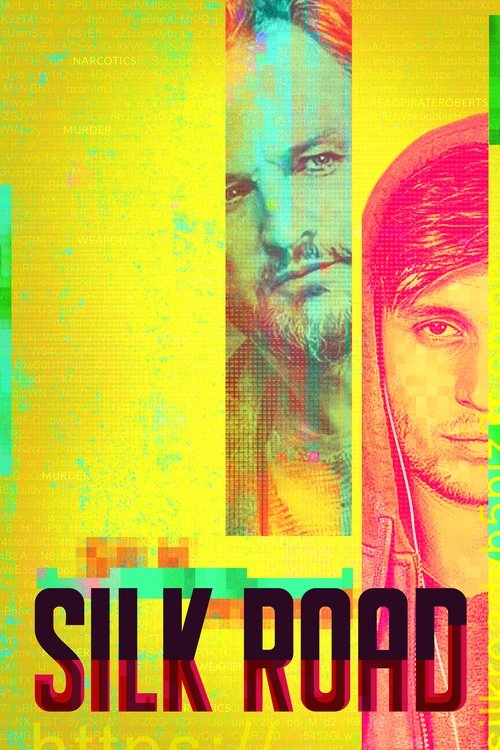
Philosophical twenty-something Ross Ulbricht creates Silk Road, a dark net website that sells drugs, while DEA agent Rick Bowden goes undercover to bring him down.
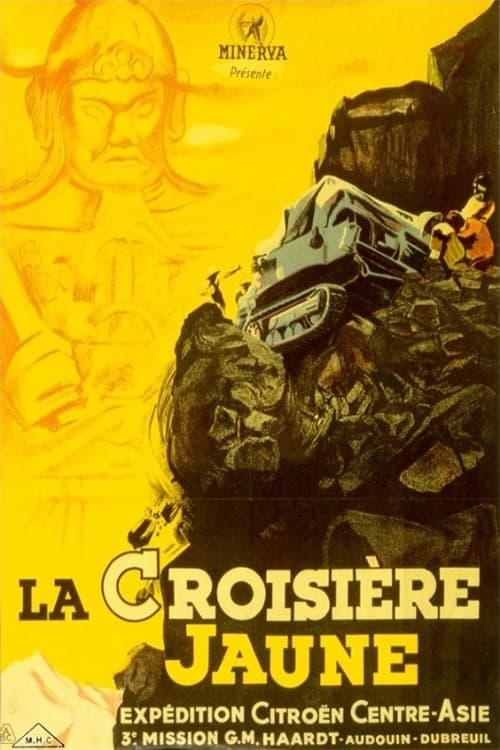
The Yellow Cruise is a French documentary film initially directed by André Sauvage and taken over by Léon Poirier following the intervention of André Citroën. The film was presented in Paris in 1934. André Sauvage was hired by the Pathé-Natan company to follow the yellow cruise through Asia. In 1931 and 1932, forty-two men, including Pierre Teilhard de Chardin, scholars and doctors traveled thirty thousand kilometers on the Silk Road through the Middle and Far East, in caterpillar propellants. Together, despite the bad weather, the difficulties of the terrain, the mechanical failures and the political conflicts, they reached Beijing on February 12, 1932. André Citroën who asked to see the film, dissatisfied with the result, bought it from Bernard Natan and entrusted the editing by Léon Poirier, who had filmed La Croisière Noire in Africa in 1926. This film will mark the break in the film career of André Sauvage.
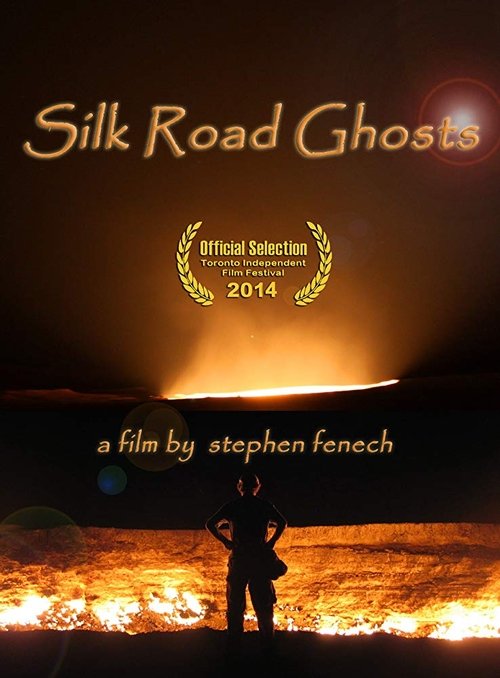
Silk Road Ghosts takes the viewer off the beaten path as I ply a circuit, following in the footsteps of the ancient conquerors, passing through some of the more remarkable parts of Central Asia's Silk Road. From Almaty in Kazakhstan, I set out towards a daunting rendezvous with the Darvasa Gas Crater in Turkmenistan. Along the way I dot many of the road's pivotal locations, bearing witness to its myriad ghosts which served to glorify the annals of our planet's history.
2050, Aqli Academy, Vancouver: Four gifted children—Abdullah, Aysha, Khalid and Layla—stumble upon the ability to time travel, they are thrust into an adventure along the historic Silk Road to protect the era's great scientists from the evil time travelling alchemist Fasid. Will the Time Hoppers be able to save the foundations of modern science and safely return home?
A collection of 11 various urban legends from the internet.