Monica Carpanese
as Silvia Roma
Giuseppe Ivan David Di Giorgio
as Eugenio
Lorenzo Buran
as Philip
Lorenzo Neri
as Claudio

Sabrina Nasti
as Elvira
David Pratelli
as Self
Toti Mancuso
as Marcello
Veruska Scollo
as Anja
Elena Elisa Miotto
as Paola Dini
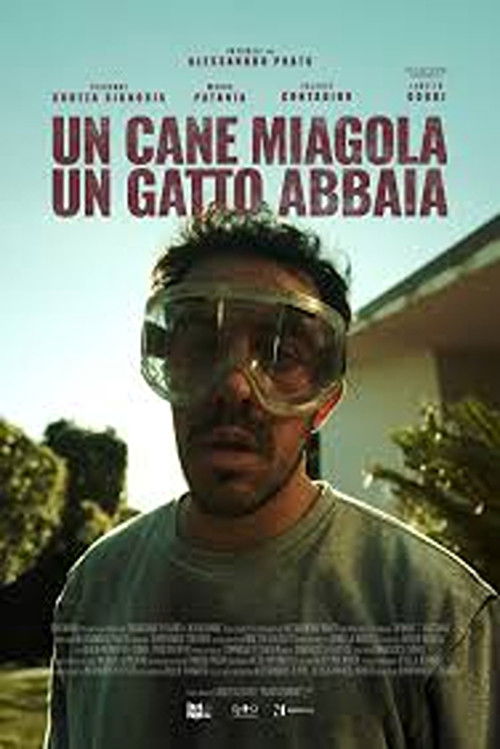
Marco, a thirty-year-old who dreams of becoming an ophthalmologist, seeks alternatives to survive in a society that is sicker than he is.
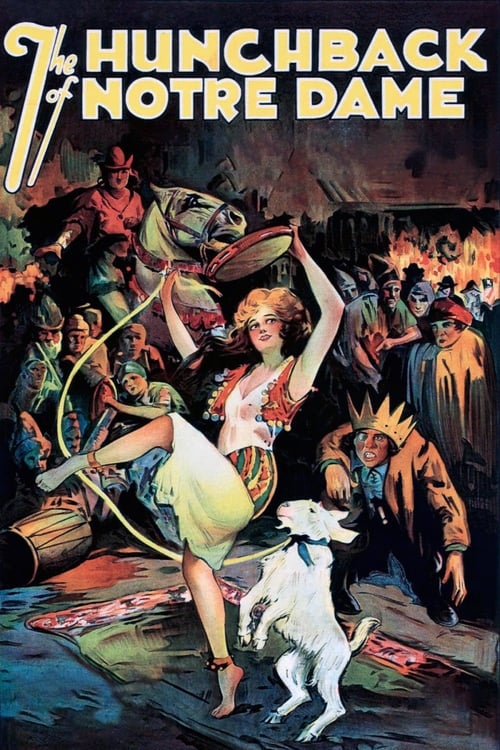
In 15th century France, a gypsy girl is framed for murder by the infatuated Chief Justice, and only the deformed bellringer of Notre Dame Cathedral can save her.
A young man, Pat, visits the clan of gypsy-like grifters (Irish Travellers) in rural North Carolina from whom he is descended. He is at first rejected, but cousin Bokky takes him on as an apprentice. Pat learns the game while Bokky falls in love and desires a different life.
Roma are an important part of Ukraine's population. There are quite a large number of them living in the country—between fifty and one hundred thousand. This documentary shows the peculiarities of the Gypsy people's life in modern society. You will see the stories of five Gypsy barons who will talk about the traditions of their people and reveal some secrets that were previously known only to the Roma.
Three women with Roma backgrounds each seek their own path to freedom and independence. Ruva was born deaf and fled Kosovo at a young age to escape the culture. Nadita was adopted as a baby and never knew her Serbian biological parents. Cillia lives according to the strict rules of traditional Sinti culture, which sometimes clash with her career as a dancer.
The film is separated into four chapters, each tracking a different group of protagonists who all have one thing in common – they were born deaf. Little Sandra likes to play football and admires Ronaldinho. Marián worships trains and wants to be an engine driver. Teenagers Alena and René are expecting a baby and long for it to be born healthy. The trio of Roman, Kristián and Karmen help their parents by collecting junk to be sold and dream of one day having a house with a flush toilet.
The city of Rome wakes up, and with it its inhabitants. Ale trains by running along the Tiber. Jane is about to enter a museum. Carla, a florist, is opening her shop. A delivery driver is making a delivery. Irene and Giulio are desperately looking for their keys in their apartment while their son Giacomo is playing with his tablet, ready to go out. In the simplicity of everyday life, a child's voice will make us think, reminding us that everyday life is an achievement for everyone, and for some even more so.
Longitudinal documentary film was shot for past 16 years and the main protagonist is Roman musician and activist Vojta Lavička. Vojta is a master in violin play, who focuses not only on music but also deals with problems of his origin Roman nationality. Vojta is very active in media - he worked in the national radio and television, he worked in the NGO that organize street work for Roman ghettos around the Czech republic, Vojta worked also as a social worker. All together we can watch him struggling with the main topic of his life - his national minority and problems that are caused by living next to Czech majority. Aside this topic films discovers Vojta's private life and his fight for being a good musician and a good man.
Watch the inspiring story of Paul Roma, a former WWF wrestler turned teacher, as he shares not only wrestling techniques but also valuable life lessons with his students…
13 years ago, director Bob Entrop made the film A piece of blue in the sky, the first film in the Netherlands that depicted the murder of almost 1 million Sinti and Roma during the Second World War. There is a taboo on what happened during the war, you don't talk about it with anyone and certainly not in front of a camera. Requiem for Auschwitz is a sequel, with the most valuable moments from the first film, supplemented with the grandchildren and the creation and performance of the 'Requiem for Auschwitz' by Sinti composer Roger Moreno Rathgeb by the Sinti and Roma Philharmonic from Frankfurt and a Jewish choir in the Berliner Dom in Berlin, during Holocaust Memorial Day. During his visit to Auschwitz in 2020 with four musicians from the Dutch Accompaniment Orchestra, Roger shows them the places that inspired him.
A musical, and also a reflection on watching, on trying to escape an anthropocentric gaze and also on watching itself in cinema. Featuring mares and horses: Triana, Víctor K, Bambi Sailor, San Special Solano, Buck Red Skin, Onkaia, Cool Boy, the donkey Agostino, the mule Guapa. And also Alfredo Lagos, Raül Refree, María Marín, Pepe Habichuela, Virgina García del Pino, María García Ruiz, Pilar Monsell, María Pérez Sanz.
A look at what happened after Borat: Cultural Learnings of America for Make Benefit Glorious Nation of Kazakhstan was filmed in the Romanian village of Glod. It follows the life of one girl who longs to escape the poverty as foreign lawyers arrive with the promise of suing 20th Century Fox for millions of dollars.
Marian Kuffa, a charismatic parish priest and a man of action, with his 'children', former convicts, the homeless, and drug addicts, has embarked on his most difficult mission. He has decided to help the poorest Roma to survive the cold and biting frost in their modest, hastily built dwellings in Roma slums in eastern Slovakia. Together with him, we get acquainted with the Roma ethnic group from a completely different angle.