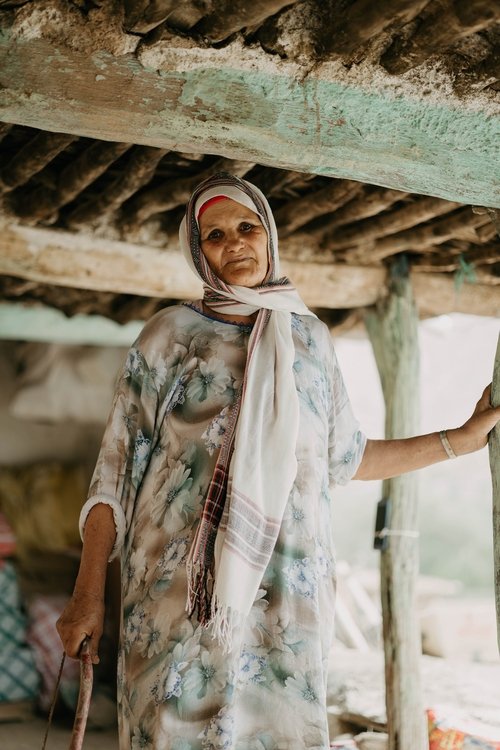
El-Ouali Moustapha Sayed
as El-Ouali Moustapha Sayed
An intimate conversation between Félix Guattari and psychiatrist Danielle Sivadon.
A film about a woman who doesn’t exist. Moroccan Hind was raped and consequently denied an official identity – she has no other choice but to work as a prostitute and traditional wedding dancer, but despite the odds of her situation, refuses to give up her dream of dignity, motherhood and love. This is a story of modern day outlaws, children of prostitutes, abandoned child brides and those who have had to escape to the fringes of patriarchal Moroccan society. Through the eyes of one young woman we see a life of constant struggle, but also a life free of the society’s norms and boundaries. The woman in the centre of the film, Hind, is both vulnerable and courageous as she tries to regain her life, her children and her mere right to live as an equal human being in the 21st century.
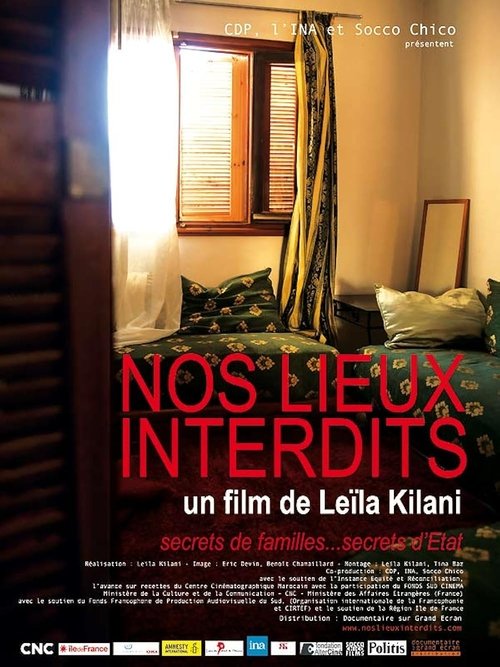
During the oppressive reign of Moroccan King Hassan II in the 70s and 80s (Years of Lead), many dissidents went missing. After the throning of a new king, a truth commission was formed in the 2000's. Families of the missing speak.
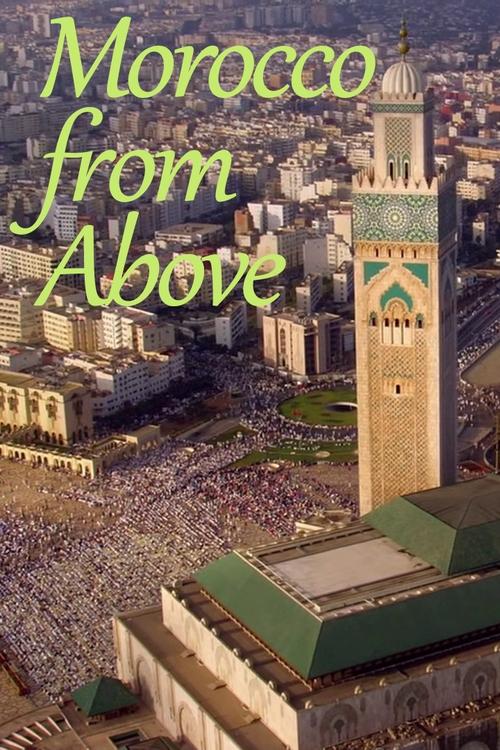
Yann Arthus-Bertrand flew over Morocco with his cameras and asked the journalist Ali Baddou to write and record the comment.
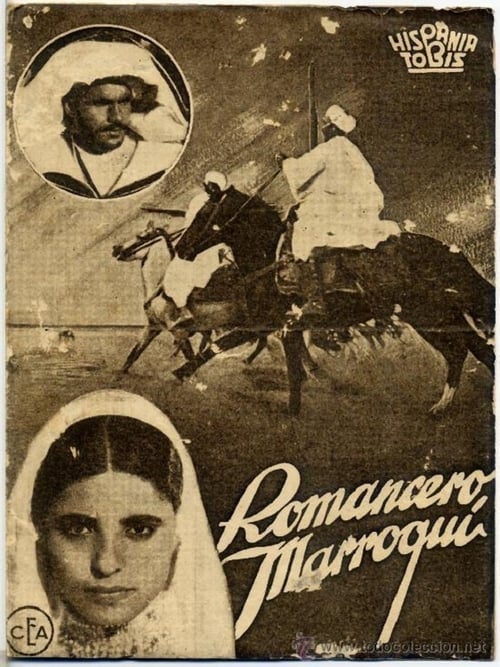
The young farmer Aalami leaves his family to find work elsewhere. He gets to know the country and its people, customs and traditions at Küste in North Africa: Market life in Tetuan, the art of craftsmanship, the life of the Moors, dances and festivities in honour of the caliph, white mosques, the call of the muezzin of the minaret and the music of the shepherd flutes. Aalami also follows Franco's call and flies from Morocco to Spain to fight at Bürgerkrieg. In the end Aalami comes back to his wife and children.
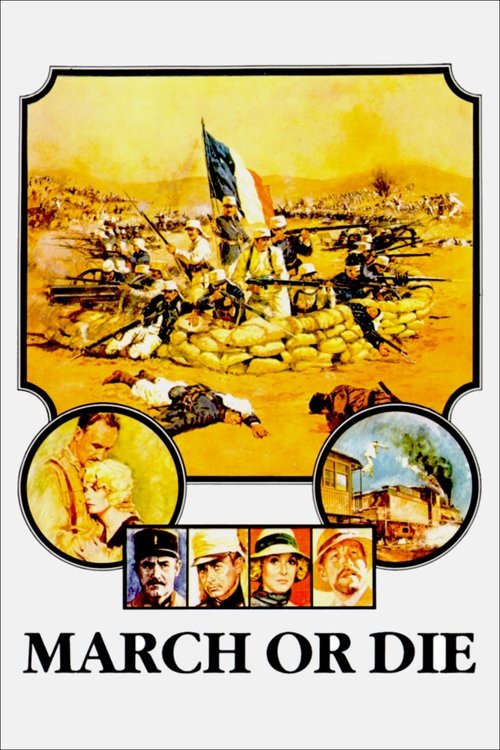
Just after World War I, Major Foster is incorporating new recruits into his French Foreign Legion platoon when he is sent to his former remote outpost located in the French Morocco to protect an archaeological excavation from El Krim, a Rifian leader who intends to unite all local tribes to fight the colonial government…
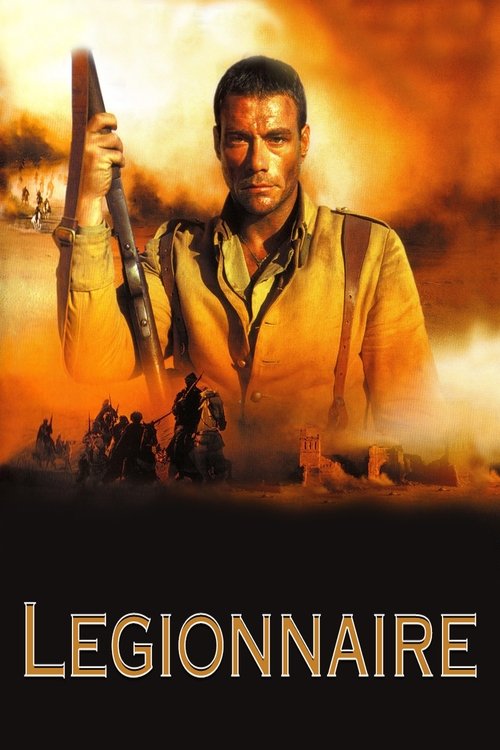
Alain Lefevre is a boxer paid by a Marseille mobster to take a dive. When he wins the fight he attempts to flee to America with the mobster's girlfriend Katrina. This plan fails and he seeks escape by joining the foreign legion. As part of the legion he tangles with abusive lieutenant Steinkampf and bonds with legionnaires Luther, Mackintosh and Rosetti.
Four women are on an existential journey in Morocco, connecting with local women from all walks of life bonding in sisterhood, and share their common quest for empowerment.
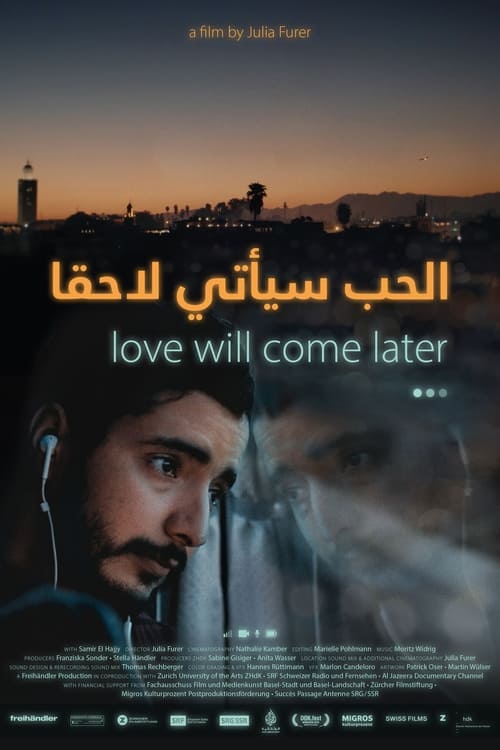
Samir longs for love and struggles to find prospects in a land of limited opportunities. He believes in a better future far away.
ECHOES OF THE HEART IS THE FIRST SHORT FILM OF ECHOES TRILOGY THAT FOLLOWS SOUHAIL'S MUSIC PASSION IN PLAYING OUD IN A SMALL CITY.
Road documentary that delves into the musical and religious expressions of sub-Saharan Africa. Through Mauritania and Mali, the film documents the lives of Dogon, griots, musicians and instrument makers who, through oral accounts, explain why music plays a fundamental role in the socio-religious organization of peoples. The film culminates its search with the recording of the performance of the traditional Dogon mask dance, in Begnematou, a small village lost in the desert.
Twenty-third sovereign of the Alawite dynasty established in Morocco since the seventeenth century, Mohammed VI took over from his father Hassan II in 1999, and from the moment of his coronation, he positioned himself as a "king of the poor", close to the people. Naturally shy, he prefers to act rather than speak, defining a modern style of governance that has earned him great popularity from the start. Married to a young computer engineer, he asserted a policy of liberalization of morals and even made a critical review of the period of repression led by his father during the years of lead. However, he faces opposition from conservatives, which leads to the election of the Islamist PJD (Party of Justice and Development) as head of government, following the Arab Spring of 2011.
Mircea Eliade was a traditionalist Romanian novelist and philosopher. Following the disaster of the Second World War, he moved to Paris and Chicago, becoming a respected and influential historian of religions. He acquired something of the status of a guru, as poignantly told in the 1987 documentary Mircea Eliade et la redécouverte du sacré. The film features interviews with Eliade at the end of his life, artfully spliced with cuts to religious imagery on a background of moving spiritual music. It was released in 1987, the year after his death.
At the heart of the Moroccan High Atlas mountains, water is a resource in short supply. The village of Tizi N'Oucheg has undergone a transformation thanks to Rachid Mandili, who is well-aware that the development of his village depends on access to clean water and on his strong leadership of this project. Mandili rallies all the villagers together and calls upon the knowledge of French and Moroccan scientists to tap water sources, to purify, and reuse waste water for irrigation. The documentary highlights the Berbers' community ties and ingenuity in their dream of independently managing their village water resources. It equally paints a portrait of a man whose initiative and resourcefulness has opened Tizi N'Oucheg up to modernity while still conserving its cultural heritage. Tizi's example presents some of the problems of water access in semi-arid regions and puts forward concrete solutions to these problems.
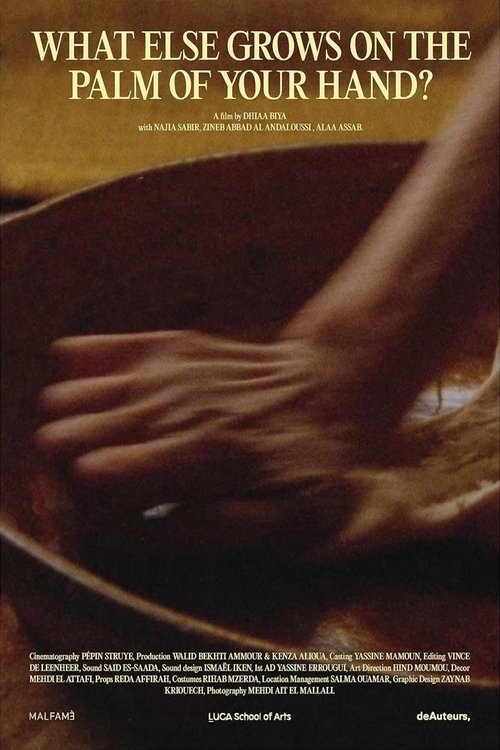
The routines of two women fuse together as their similar gestures get repeated over time. Their hands intersect through their shared memory one movement at a time. The daily routine of Hayat in her absolute loneliness builds as she tries to recollect memories of her grandmother. We observe both their lives separately, the gestures of both women seem to be in an ongoing, subtle dialogue. The rhythm of the events slowly forms itself as their days go by. Eventually, the bond between them unravels the motherly love that unites them.
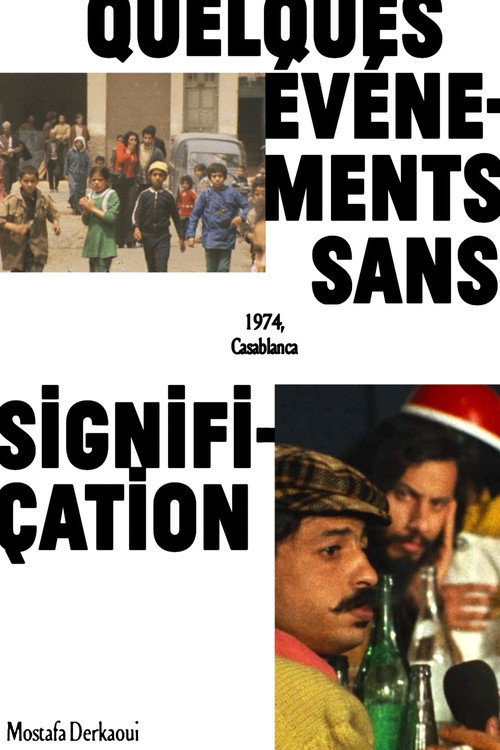
In Casablanca, a group of filmmakers conduct discussions with people about their expectations of, and aspirations for, the emerging Moroccan national cinema. When a disgruntled worker kills his superior accidentally, their inquest shifts focus, and they begin to probe the motives of the killing.