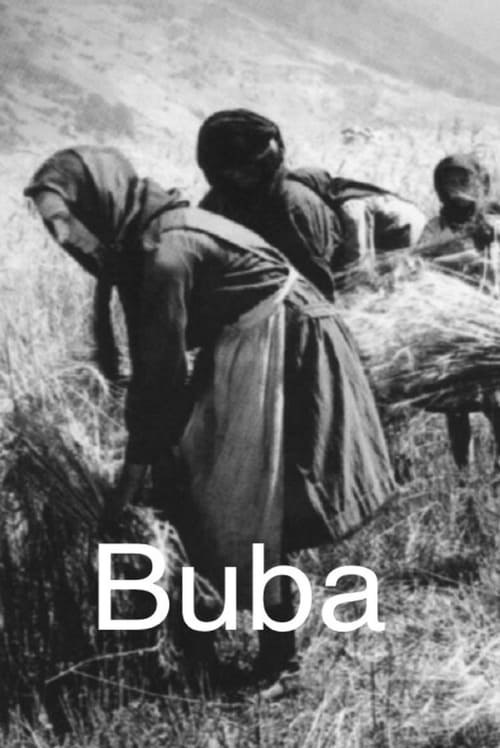
A documentary short detailing the life of Italians living on the Po River in the 1940s.
Rina Morelli
as Narrator (voice) (uncredited)
A fascinating insight into the life and works of photographer Imogen Cunningham. Coming into public attention around 1910, she was celebrated in the late sixties through awards, honorary degrees and exhibitions. Her photos are looked at from three focal points: nature, portraits and figure studies.
A 16 year old girl recalls the last moments of her summer vacation, spent with friends in the Laurentians north of Montreal. She reminisces about their talks on life, death, love, and God. Shot in direct cinema style, working from a script that left room for the teenagers to improvise and express their own thoughts, the film sought to capture the immediacy of the youths presence their bodies, their language, their environment.
For 18-year-old Finnish–Kosovan Fatu, a simple visit to the grocery store feels as nerve-racking as a lunar expedition: for the first time in his life, he’s wearing makeup in public. Luckily his best friend Rai, a young woman on the spectrum of autism, is there to ferociously support him through the voyage.
Unlike our dream of becoming a great filmmaker, the movie boards that adults talk about are tough. We are looking for our idol, Bong Joon-ho...
The Bokelberg photographic collection brings to life the Paris of the Belle Époque (1871-1914), an exhibition of workshops and stores with extremely beautiful shop windows before which the owners and their employees proudly pose, hiding behind their eyes the secret history of a great era.
Aspects of a London day, including prostitutes on street corners, a striptease show and the 2i's Coffee Bar.
“Let’s describe it as a desire to be outward followed by a fear of being seen,” The 1975’s Matty Healy tells Apple Music. “I think that is the conversation that happens in this record.” This short film finds Healy reflecting on his motivations and complexities as he and his bandmates reveal the ideas that fuelled their fourth album, Notes on a Conditional Form. It’s a unique and unguarded look at one of Britain’s most venturous bands.
Filmmaker Alain Resnais documents the atrocities behind the walls of Hitler's concentration camps.
Flubs and bloopers that occurred on the set of some of the major Warner Bros. pictures of 1938.
Twenty-one-year-old Julia had to leave her daughters under the care of a children's shelter house. Five years later, Julia keeps fighting to rebuild her life and get reunited with her daughters.
Upon realising her generation won’t have a future unless the world’s politicians act now on climate change, 15-year-old Greta Thunberg skipped school in August 2018 to protest outside the Swedish parliament. What started as a one person strike soon gained global momentum. We follow Greta and the organisers of the school strikes for climate as they are cementing a worldwide movement ahead of their first global protest that took place on March 15th, 2019. It was the biggest climate strike in history with up to 1.6 million students in more than 125 countries.
Displaying the faces and voices of transgender youth, the documentary short shows the authenticity of queer and trans people living in Toronto, while simultaneously discussing the struggles for self-acceptance that people who do not conform to cisgender and heteronormative ideals of gender face. Andy Nguyen, trans director and film student, captures his trans friends in their natural state on 16mm film shot on a Bolex h16 camera. Accompanied by narration written and recited by Salem Rao, this film represents that trans people exist and this is what we look like. Regardless of the obvious everyday transphobia, trans people find community and uniqueness within each other and themselves.
Working men and women leave through the main gate of the Lumière factory in Lyon, France. Filmed on 22 March 1895, it is often referred to as the first real motion picture ever made, although Louis Le Prince's 1888 Roundhay Garden Scene pre-dated it by seven years. Three separate versions of this film exist, which differ from one another in numerous ways. The first version features a carriage drawn by one horse, while in the second version the carriage is drawn by two horses, and there is no carriage at all in the third version. The clothing style is also different between the three versions, demonstrating the different seasons in which each was filmed. This film was made in the 35 mm format with an aspect ratio of 1.33:1, and at a speed of 16 frames per second. At that rate, the 17 meters of film length provided a duration of 46 seconds, holding a total of 800 frames.
Alcoholism and its Ill-Effects was considered to be one of the most popular science propaganda (or educational) films produced in Russia before the revolution of 1917. Alexander Khanzhonkov, the most prominent Russian film producer of that era, financed a special department dedicated to non-fictional cinema, despite the fact that such films were not commercially successful. Unfortunately, not a single copy of the film has survived to the present day. All that remains are 12 frames, which were used by Izvolov to create this reconstruction. He also used extracts from critical reviews, published at the time of the film’s release, to produce a soundtrack.
Yolanda has a special relationship with objects, she obtains them, knows them and accumulates them. The protagonist bears witness to the bond she has with the objects she treasures and gives a glimpse of its origin: the loss and love; as we enter her living space, her home.
A trip that the author makes to a distant beach trying to find the place where his grandfather made a painting years ago.
Paparazzi explores the relationship between Brigitte Bardot and groups of invasive photographers attempting to photograph her while she works on the set of Jean-Luc Godard's film Le Mépris (Contempt). Through video footage of Bardot, interviews with the paparazzi, and still photos of Bardot from magazine covers and elsewhere, director Rozier investigates some of the ramifications of international movie stardom, specifically the loss of privacy to the paparazzi. The film explains the shooting of the film on the island of Capri, and the photographers' valiant, even foolishly dangerous, attempts to get a photograph of Bardot.