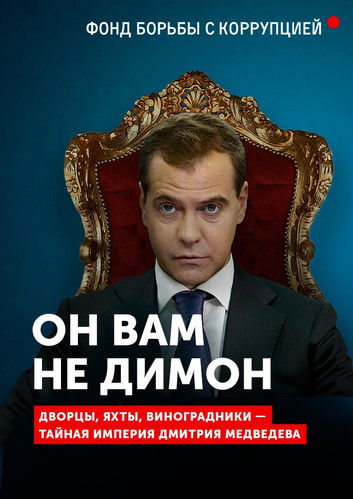
This documentary investigates the financial fraud of persons close to the Prosecutor General of the Russian Federation Yuri Chaika.
Alexei Navalny
as Narrator
Yuri Chaika
as Self
Two immigrant filmmakers journey across the US, exploring American identity through raw encounters on politics, race, immigration, and gun control. The film offers an unflinching portrait of America, unveiling hope for our common humanity.
At underground film of the 1st Popular Festival of Catalan Poetry filmed in the Proce Theater in Barcelona on May 25, 1970, in solidarity with political prisoners. The participating poets were: Agustí Bartra, Joan Oliver (Pere IV), Salvador Espriu, Joan Brossa, Francesc Vallverdú and Gabriel Ferrater.
A state of secrets and a ruthless hunt for whistleblowers – this is the story of 25-year-old Reality Winner who disclosed a document about Russian election interference to the media and became the number one leak target of the Trump administration.
In a behind-the-scenes look at the biggest political upset in recent history, Mark Halperin, John Heilemann and Mark McKinnon offer unprecedented access and never-before-seen footage of candidate Trump, from the primaries through the debates to the dawning realization that the controversial businessman will become the 45th President of the United States.
Undercover journalist James O'Keefe goes to the front lines of the migrant industrial complex using hidden cameras and raw testimonials. O'Keefe reveals the shocking reality of the U.S. border crisis like never before: Mexican freight trains, cartel tunnels, and U.S. funded child detention camps. Watch this gripping exposé of a corrupted system that demands change.
From his days of testifying at the Watergate hearings to advising recent presidential candidate Donald Trump, Roger Stone has long offended people on both sides of the political fence as a force in conservative America. Outspoken author, pundit, ahead of his time election strategist, this is his story.
Amid the civil-military dictatorship implanted with the 1964 coup, Sergio Muniz had the idea of making a documentary about the action of the Death Squad. At the time, the press still had some freedom to disseminate the work of these death squads formed by police officers of various ranks, and that he acted on the outskirts of cities like Sao Paulo and Rio de Janeiro. The victims of police repression (as today) were men, poor and black, and this condition is supposed criminals.
Different experts make a stand against today's putatively criminal and harmful health system, focusing on Anthony Fauci and his role in the shaping of the AIDS and COVID-19 epidemics.
Michael Moore's view on how the Bush administration allegedly used the tragic events on 9/11 to push forward its agenda for unjust wars in Afghanistan and Iraq.
A documentary on Al Gore's campaign to make the issue of global warming a recognized problem worldwide.
At DIFAJE, the Family and Youth Affairs Division of the Bobigny Court, the duties of young prosecutors are the same, with one exception: they deal with minors who are either victims or perpetrators of crimes. For the latter, the prosecutor is the first person they deal with in the legal system, their first point of contact. He or she is the one who gives society's initial response to a young person whose future is already uncertain. Between prevention and punishment, the magistrate's role is a delicate one. He or she must combine authority with education. He or she must deal with the reality of a complex environment and with the differences and vulnerabilities of each individual.
In the spring of 1974, a camera team from Studio H&S succeeded against the explicit orders of the Junta’s Chancellery, entered into two large concentration camps in the north of the country - Chacabuco and Pisagua - leaving with filmed sequences and sound recordings.