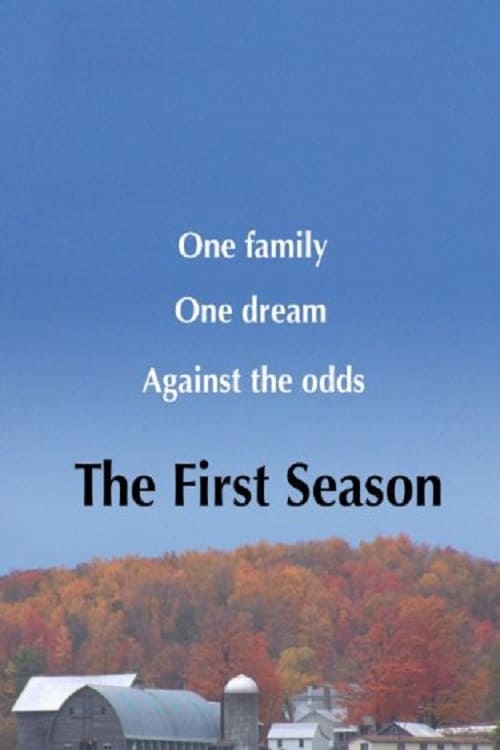
Mariana and Xevi work the land from opposite ends of the world. Rooted in agroecology, their projects trace a quiet dialogue between territory, nature and family.
Luciano Candisani, award-winning Brazilian photographer, returns to the Pantanal, the world’s largest floodplain, to document its biodiversity and raise awareness about severe environmental threats. The region faces drastic water flow changes and unprecedented fires, yet Candisani finds hope and resilience amidst the challenges.
For generations, fishermen have made their home on Tangier Island, in the heart of the Chesapeake Bay on the east coast of the US. Two-thirds of the island has disappeared over the last 150 years, and local people are concerned about rising sea levels—and the lack of progress on reinforcing the sea wall—but the church remains the bedrock of this small, close-knit community.
A teaching film for social studies, which was developed as a new educational subject in 1947. At an elementary school in Hokkaido, children have started a fly extermination campaign to improve school hygiene. In order to eliminate the causes of flies, the entire town is working to improve the sanitary environment. The short was filmed with the cooperation of Mizukaido Elementary School in Joso City and is the first film in the "Social Studies Teaching Film System" by Iwanami Film Productions.
This documentary captures a deeply personal journey by Argentinian actor and musician, Nicolás Pauls, to the Uruguayan coast. This area hosts two of the world's foremost sea lion colonies. Isla de lobos and Cabo Polonio. A famed sanctuary for hundreds of thousands of sea lions. Pauls presents the two sides of the complex conflict between the local artisanal fisherman, struggling to earn their living and the sea lions who risk their survival in leaving the boundaries of the island.
Marie-Thérèse and Christian have turned their town into a ZUT—a Urgent Zones to Transform. They want pesticides gone. Completely. Immediately. And forever. The radical stance of these 'zutists' echoes a growing thirst for change across Belgium. From tiny garden plots to European institutions, from farm to farm, from laboratories to grassroots struggles, ZUT keep popping up—each one revealing just how dependent we’ve become on chemical inputs, and how deeply we long to break free.
A look at the state of the global environment including visionary and practical solutions for restoring the planet's ecosystems. Featuring ongoing dialogues of experts from all over the world, including former Soviet Prime Minister Mikhail Gorbachev, renowned scientist Stephen Hawking, former head of the CIA R. James Woolse
From the Los Angeles Times and Pulitzer Prize-finalist Rosanna Xia, OUT OF PLAIN SIGHT is a cinematic exposé of an environmental disaster lurking just off the coast of Southern California. Not far from Catalina Island, aboard one of the most-advanced research ships in the world, David Valentine discovered a corroded barrel on the seafloor that gave him chills. The full environmental horror sharpens into greater clarity once he calls Xia, who pieces together a shocking revelation: In the years after World War II, as many as half a million barrels of toxic waste had been quietly dumped into the ocean – and the consequences continue to haunt the world today.
As more and more of us use and replace electronic devices, manufacturers have failed to offer solutions for how to deal with the resulting waste. Much of it is exported to a toxic dump in Ghana, where scavengers do their best to salvage what they can.
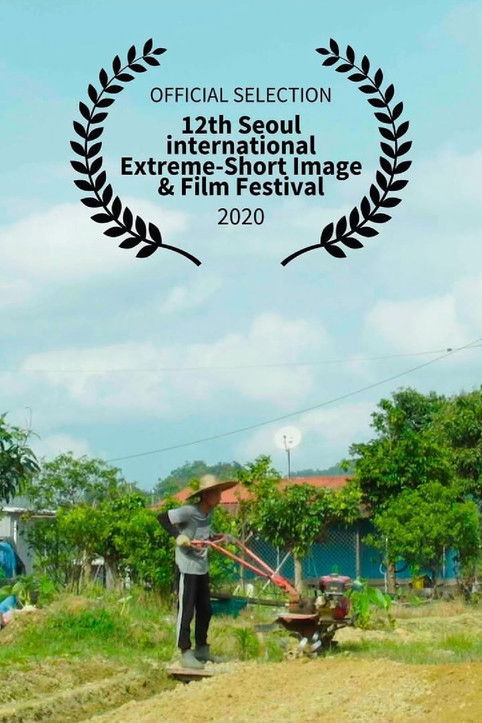
The film tells the story of how Hong Kong rice farmers use their crops to pour time and strength into connecting Hong Kong people and their land. To stand up to the challenges Hong Kong nature offered, the farmers put effort into farming their own rice and spread their contribution in agriculture in order to enable Hongkongers to taste the rice from the very soil they stand on. The countless stories behind a bowl of local rice, which embeds the inseparable relationship between the land and its people, are told through this film.
During the rice sowing season, Jun, a young Catalan of Chinese origin, works as a seasonal worker in the Ebro Delta. This ancient labour will make him confront his own roots and the distance that separates him from his family.
Twelve students from Istanbul Özyegin University's Bicycle Club embark on a cycling journey around seven lakes in the Mediterranean region to raise awareness about the severe droughts affecting the area.
Five scientists and a hairdresser, tackling climate change, one stick at a time.
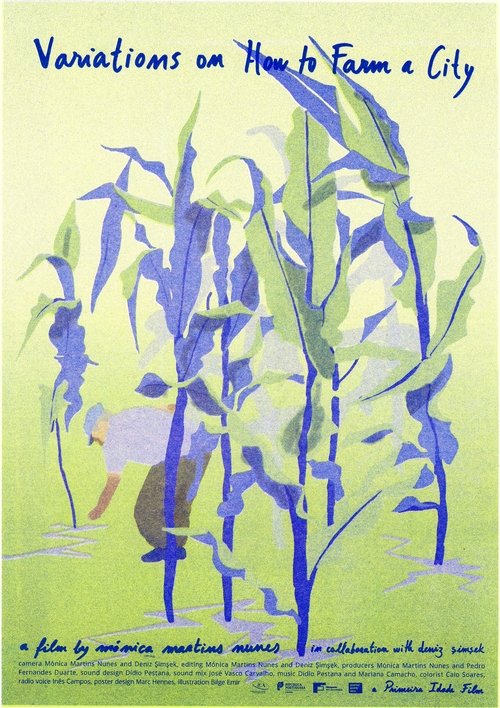
Beneath the harvest sun and the cicada song, Mónica Martins Nunes builds a touching portrait of Serra de Serpa, an arid region in the south of Portugal affected by rural exodus. The poems sung by the shepherds and market traders resonate like the last gesture of a human landscape which resists sinking into oblivion.
Directed by Nicholas Gelakis, ‘Florida Boys’ emerges from a close creative collaboration between the director and Miami-based photographer Josh Aronson, who worked together to blend cinematic storytelling with the raw energy and spirit of the photo series that has earned Aronson’s work critical acclaim.
When a devastating famine descended on Soviet Russia in 1921, it was the worst natural disaster in Europe since the Black Plague in the Middle Ages. Examine Herbert Hoover’s American Relief Administration—an operation hailed for its efficiency, grit and generosity. By the summer of 1922, American kitchens were feeding nearly 11 million Soviet citizens a day.