ITER is an international attempt to meet humanity's energy needs by harnessing nuclear fusion. We take you within the ITER project to see how close the technology is to becoming a reality.
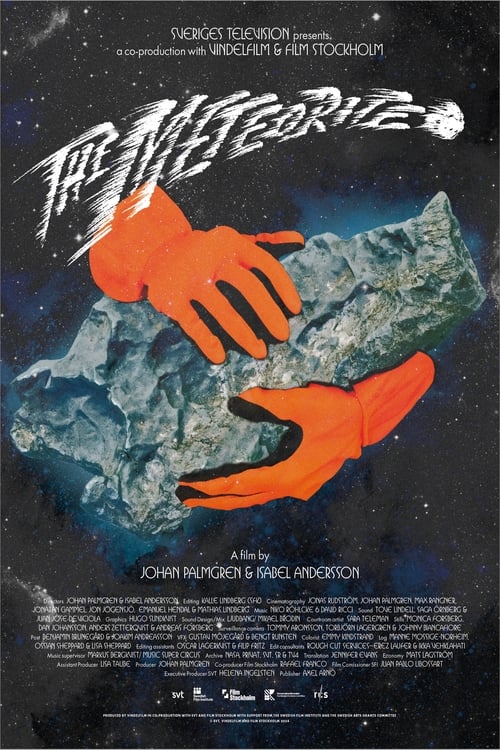
A large iron meteorite is found by two enthusiasts. But who owns it? A subtle film about property rights that develops into a philosophical and slightly absurd story.
Filmmaker Jean Chabot looks at the use of nuclear energy in Quebec. Do we need this expensive and dangerous energy?
Farmers and parents of young children, who live in the Harrisburg, Pa., area, discuss their fears of radioactive contamination from the Three Mile Island nuclear reactor accident in 1979. Scientists and physicians also expound on the lethal dangers of nuclear power and the risks in containment processes.
A crash course in the professional and scientific work related to the field of venomous herpetology. The film covers diverse topics, including biochemistry, biology, law and public policy, conservation, venom collection, animal husbandry, antivenom production, emergency medicine, veterinary medicine, toxicology and toxinology. The film follows the personal and working lives of prominent experts in the field, beginning with their childhood interest through their professional careers, with particular emphasis on the sciences related to their work.
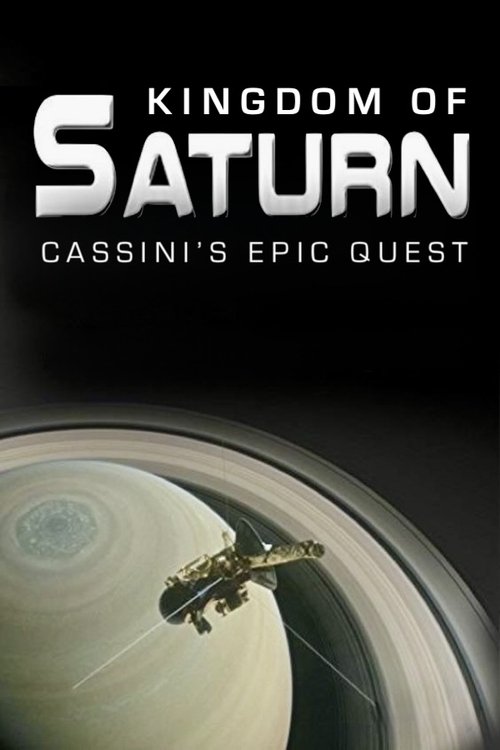
Before the joint NASA/ESA Cassini-Huygens mission, humanity only knew what had been learned, decades earlier, with the previous limited, rapid "fly-by" Pioneer and Voyager missions. Cassini-Huygens spent more than 13 years in wildly varied orbits around Saturn, allowing the spacecraft to pass near many of its moons, as well as execute a soft-landing of its Huygens lander on the moon Titan. By mission end, it accumulated a mountain of imagery and scientific data that will continue to be studied for years to come. This film is a testament to the amazing efforts of the scientists who planned and executed the mission. It combines breathtaking images, movies, and a variety of animations to take the viewer into Saturn's complex system of rings and moons, as well as stepping viewers through some of the more exciting scientific discoveries made over the course of the elaborately complex mission.
Who is Kim Yo-jong? In a context of maximum tensions between North Korea and the United States, Pierre Haski paints an unprecedented portrait of the little sister of Kim Jong-un, whose influence in Pyongyang is growing stronger day by day.
At only twelve inches long, the menhaden are a keystone species in the East Coast's marine ecosystem, yet their numbers are threatened by industrial-scale fishing operations in the Chesapeake Bay.
In this two-part Channel 4 series, Professor Richard Dawkins challenges what he describes as 'a process of non-thinking called faith'. He describes his astonishment that, at the start of the 21st century, religious faith is gaining ground in the face of rational, scientific truth. Science, based on scepticism, investigation and evidence, must continuously test its own concepts and claims. Faith, by definition, defies evidence: it is untested and unshakeable, and is therefore in direct contradiction with science. In addition, though religions preach morality, peace and hope, in fact, says Dawkins, they bring intolerance, violence and destruction. The growth of extreme fundamentalism in so many religions across the world not only endangers humanity but, he argues, is in conflict with the trend over thousands of years of history for humanity to progress to become more enlightened and more tolerant.
Before the internet. Before social media. Before breaking news. The victims of Thalidomide had to rely on something even more extraordinary to fight their corner: Investigative journalism. This is the story of how Harold Evans fought and won the battle of his and many other lives.
CERN and the University of California-Santa Barbara are collaborating in the search for the elusive substance that physicists and astronomers believe holds the universe together -- dark matter. Where is this search now in the realm of particle physics and what comes next?
A team of scientists search for the lost island of Testerep in front of the Belgian coast, venturing into artificial landscapes and virtual realities.
The discovery of neuroplasticity, the fact that thoughts can change the structure and function of our brains, even into old age, is one of the most important breakthroughs in our understanding of the brain in recent times. In The Brain That Changes Itself, Dr Norman Doidge explores the profound implications of the changing brain in a way that will permanently alter the way we look at human possibility and human nature. The documentary examines a blind man who sinks a basketball; a woman with half a brain who leads a normal life; learning disorders, strokes and brain traumas that are improved and cured; and chronic pain that is alleviated. The vast expanse of the brain's possibility is still unrealized.
About the question of whether we should proceed in developing and using nuclear power and the breakdown at Three Mile Island, Harrisburg, Pennsylvania, in March 28, 1979.
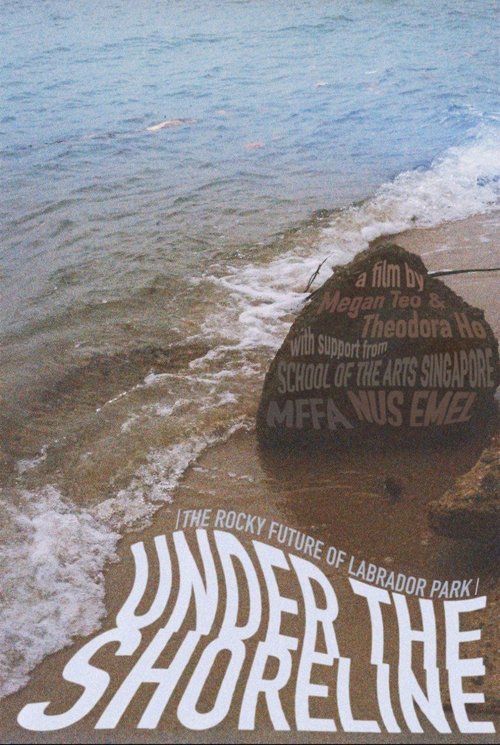
With rising sea levels, land reclamation runs rampant in Singapore. Labrador Park is one such waterfront facing this change, and both the ecosystem and frequent fishermen have often been overlooked. This documentary seeks to explore the park's development from a scientific, economic and sociological perspective, produced in collaboration with SOTA and NUS.
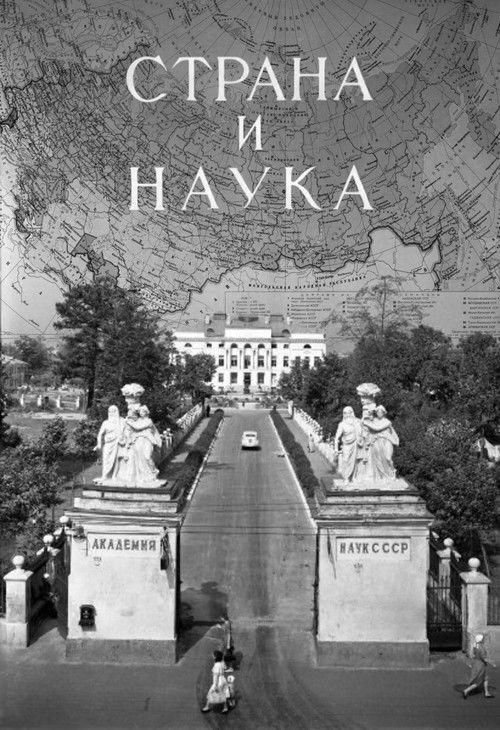
The Voronezh Nuclear Power Plant reactor; Novgorod’s archaeological excavations. Archaeologist Boris Rybakov on importance of historical science. Lenin’s Materialism & Empirio-Criticism. The first university dept of natural compound chemistry in the Soviet Union, located in Tashkent, Uzbek SSR. Agriculturalist Pavel Lukyanenko develops winter wheat varieties at Krasnodar Research Institute of Agriculture. French physicist Hubert Curien on USSR–France collaboration in nuclear physics. Foreign members of the USSR Academy of Sciences: Albert Einstein, Max Planck, Niels Bohr; theoretical physicist Igor Tamm on nuclear transformations in planetary & meteoritic matter, study of the Moon in relation to the Earth’s evolution. Dedicated to the 250th anniversary of the founding of the Academy of Sciences. Archival film, photographs, manuscripts, books, interviews from Academy members, explore its role in the development of science, economics, and its prominent figures throughout its history…