"Everest Dreams" is a documentary about alpinism that takes place on Everest. It was directed by Michael Brown in 2000 and produced by NBC. It features Robert Link, Kim Gattone, Michael Brown, Dave Hahn, Greg Wilson, Mike Dunnahoo and others.
Robert Link
as Self
Kim Gattone
Michael Brown
Dave Hahn
Greg Wilson
Mike Dunnahoo
Eric Simonson
Ang Pasang Sherpa
Dan Morrison
Dawa Sonam
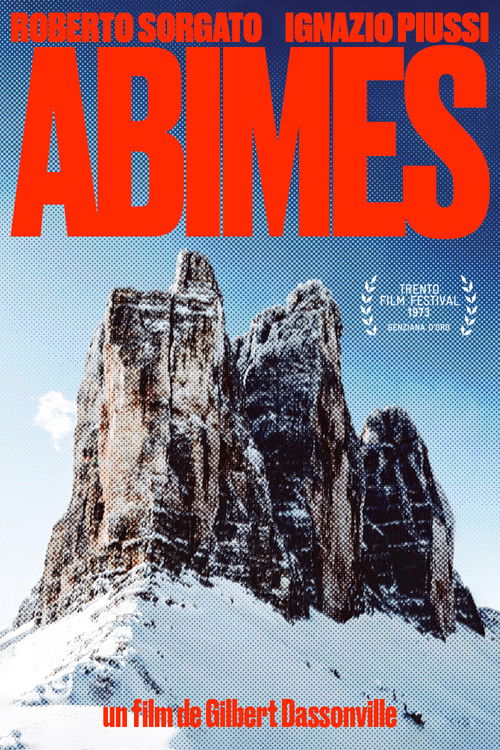
Mountaineers Roberto Sorgato and Ignazio Piussi relive their 1961 adventure: the first winter ascent of the north face of Cima Ovest di Lavaredo, a formidable Dolomite wall reaching 2,973 meters. During this expedition, Sorgato accidentally fell 60 meters while the climbers were preparing their third bivouac and found himself suspended in mid-air by a rope. Through sheer perseverance, ingenuity, and courage, he managed to pull himself back to his partner. The film, shot eleven years later, is a reenactment with the protagonists playing themselves. The difficulties this climb presents, even for the most experienced climbers, are irrefutably highlighted. The film received the Genziana d'Oro award at the Trento Film Festival in 1973.
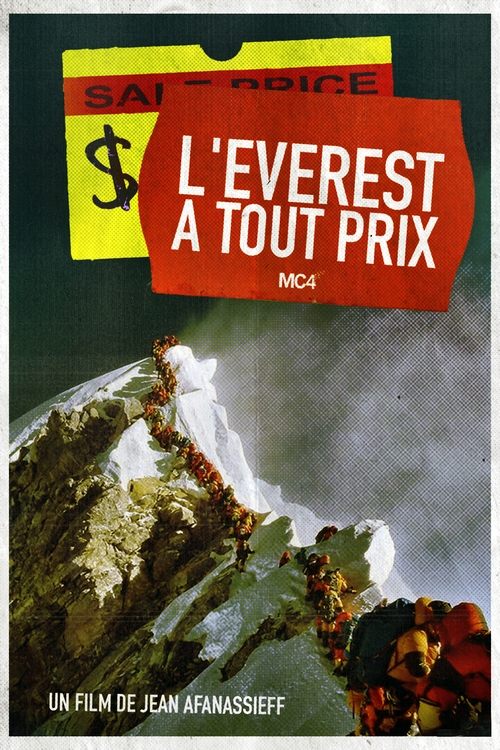
In 1983, three climbers became the first French people to reach the summit of Everest. Among them were expedition leader Pierre Mazeaud and a promising 25-year-old climber, Jean Afanassieff. Twenty years later, the two legends, accompanied by mountain guide Michel Pellé, retrace the steps of their exploit and make the trek from Kathmandu to the foot of the roof of the world. This is an opportunity to retrace the history of the successive assaults on Everest and to assess the current situation of a mountain that has become a victim of its own success: while Sherpas have been able to take advantage of Western enthusiasm and thus enrich themselves and equip the summit to make it more accessible, the site's attendance poses numerous problems, both human and ecological.
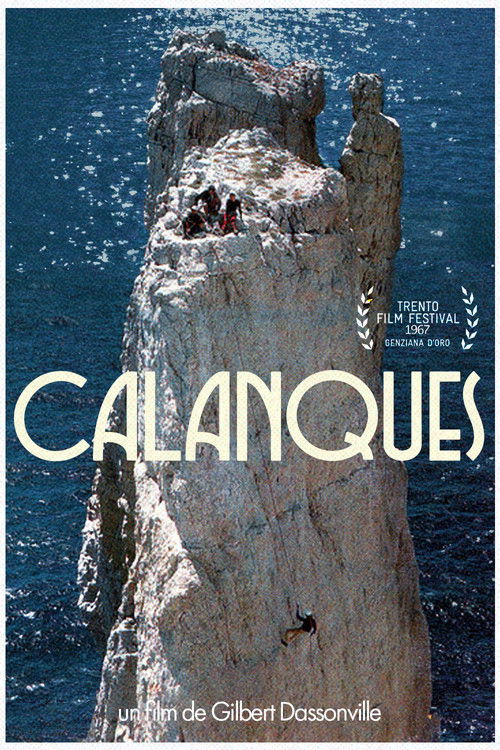
Two climbers, Dany Badier and Françoise Dassonville, swim to explore an underground cave in the Calanques, near Marseille, then equip themselves with climbing gear to scale the spectacular cliffs of the Calanques. Their ascent culminates at the summit of the Grande Candelle. Directed by Gilbert Dassonville in 1970 and produced by Cérès Films, this film won first prize at the Trento Mountain Film Festival in 1967.
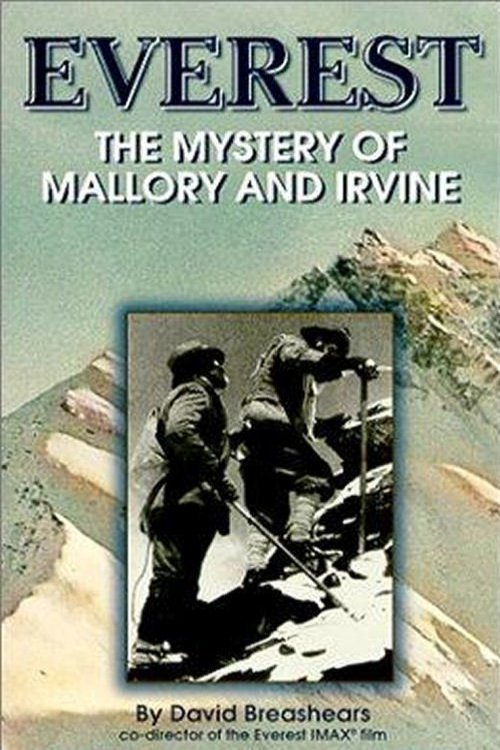
NOVA documentary inquiring into the fate of early Everest explorers George Mallory and Sandy Irvine
Nicolas Jaeger, a French physician specializing in sports and high-altitude physiology, conducted an experiment by spending two months on the highest peak in the Peruvian Andes, Huascarán. From July to September 1979, Nicolas Jaeger lived alone for 60 days at an altitude of 6,700 meters and studied the effects of hypoxia on his body. He documented his experience on film and later in his book, "Carnet De Solitude," published in 1979.
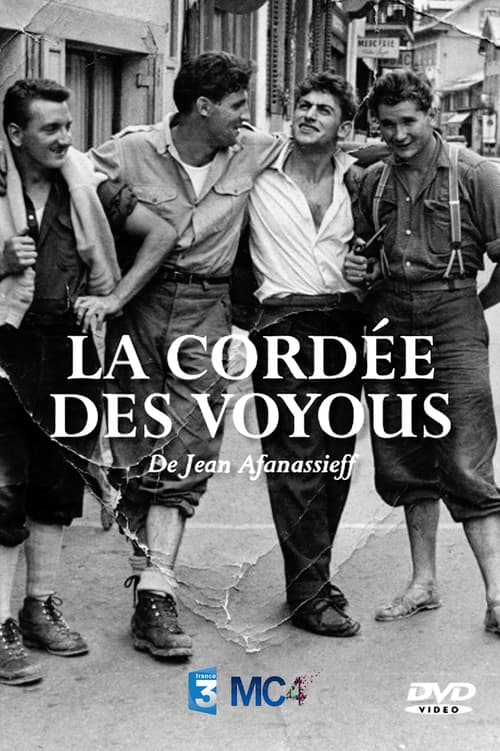
Paragot and Bérardini: two climbers who fill all climbing enthusiasts with admiration. In Fontainebleau, Saussois, the Alps, the Andes, the Himalayas, and all over the world, they have left their names attached to the most difficult routes and the most prestigious peaks. Here, they recount only the climbs they completed together: famous expeditions to Aconcagua and Huascarán, firsts in the Alps and the Dolomites. An unwavering friendship, comical and tragic adventures—this is what they share with us in the warm atmosphere of their memories. "La Cordée des Voyous" will be included in Jean Afanassieff's film "La Grande Cordée," which deals with post-war proletarian mountaineering.
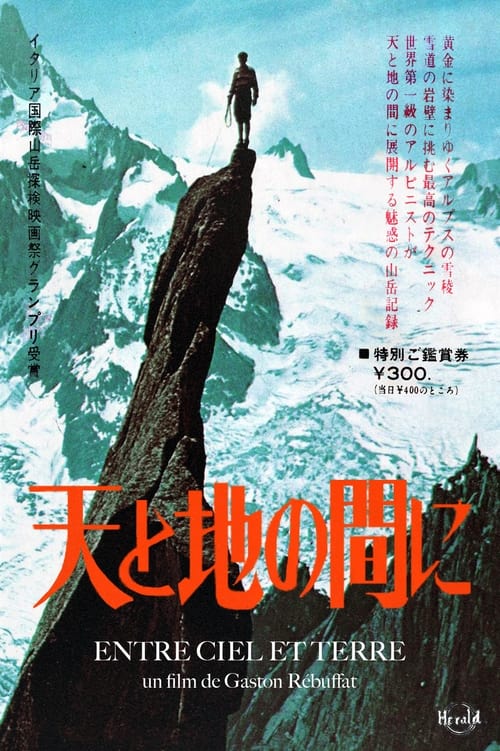
This is Gaston Rebuffat's fourth film, in which, with several close friends, he discovers the sublime landscapes of the Alps. “Mont-Blanc is beautiful. I climbed it several times depending on the time, the color of the sky and the shape of the cornices and ridges. Because of the weather and also because of this feeling of altitude, Mont-Blanc provides great pleasure. For the guide, Mont Blanc is his garden, but the garden becomes more beautiful when shown to a friend. Personally, I really like the bivouacs; only there one penetrates a little the mystery of the altitude. That's why I immediately accepted when Tazieff expressed the desire to spend the night at the top of Mont Blanc in an igloo. The film won the Grand Prix at the Trento Film Festival in 1961.
Maurice Barrard and Liliane Bontemps met in 1973 in Peru. Four years later, they are married and start their life together in the Loire Valley. She is a physiotherapist, he is an educator. For them, although settled not far from Chartres, the mountains are never far away. Whenever the opportunity presents itself, they embark on high-altitude expeditions. First individually, then together. In 1982, they were at the top of Gasherbrum 2, an ascent filmed in this documentary prelude to other future ascents including the Nanga Parbat in 1984, after an aborted attempt a year earlier, which made Liliane Barrardi the first woman to climb this mountain. of Karakoram. The "tallest couple in the world" will not stop there. After the Makalu in 1985, in the spring of 1986 they will attempt the ascent of K2 and its 8,611 meters... Un Homme, Une Femme, Un 8000 was broadcast in the program Les Carnets de L'Aventure in 1983.
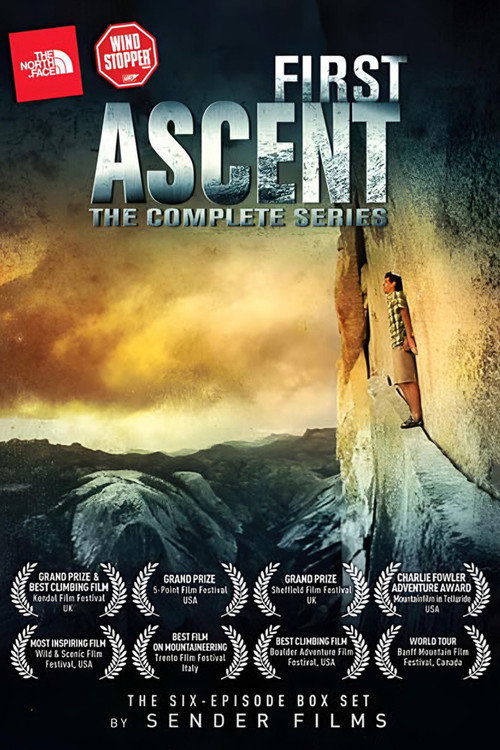
The classic film that inspired the National Geographic Series. Join a global quest with world-class climbers in pursuit of the ultimate goal: the first ascent. Featuring Dean Potter, Timmy O'Neill, Sonnie Trotter, and the amazing Didier Berthod on his quest for the first ascent of the Cobra Crack.
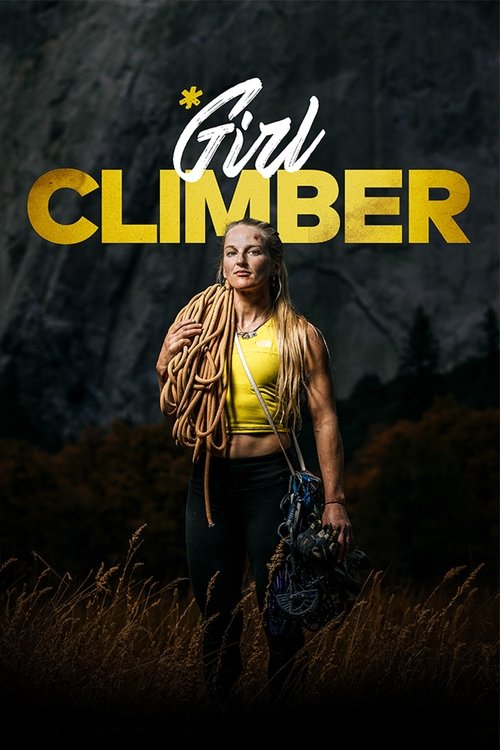
Professional climber Emily Harrington has summited Everest, 8000-meter peaks, and dominated the competition circuit but, her greatest challenge extends beyond the physical. To cement her legacy in the male dominated world of elite rock climbing, she sets her sights on a career-defining 24-hour ascent of Yosemite's El Capitan. Caught between the pursuit of personal ambition and the ticking biological clock of life, a near-fatal fall forces Emily to reckon with what she's willing to risk. Equal parts gripping survival story and intimate portrait, Girl Climber isn't just about breaking records, it's about breaking barriers. Amongst Yosemite's legendary boy's club, Emily isn't just proving she's the best *Girl Climber-- she's proving she is one of the best. Period.
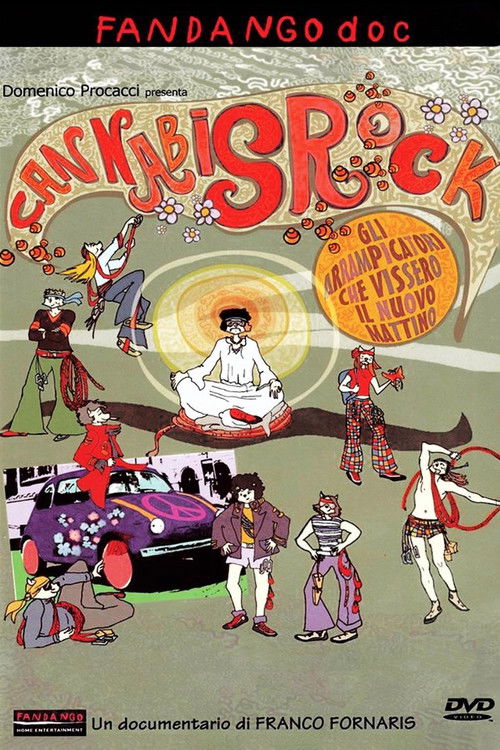
The documentary recounts the brief yet intense "beat" epic of a group of young climbers who, from 1973 to 1975, brought the restless and creative climate of '68 to the rocks and revolutionized the traditionalism of the Piedmontese and Italian mountaineering world. It's an initiatory journey for a tribe of young rebels who, inspired by the theories of Gian Piero Motti, experienced their mountaineering season as an inner torment, some discovering yoga and some marijuana, some rapt with ecstasy and others with rage. A season lived to the sound of Bob Dylan and Popol Vuh, with a profound recklessness towards life. The climbs became true explorations charged with symbolic and visionary meaning, along routes baptized with evocative names: Cannabis, Fessura della Disperazione, Strapiombi delle Visioni, Diedro Sanchez.
1984. In the shadow of the Iron Curtain, a nation dares to challenge the gods. On the occasion of the 40th anniversary of the socialist revolution, Bulgaria faces its best mountaineers in the greatest test on the planet - the deadly Mount Chomolungma, also known as Everest. But this is not just a climb.
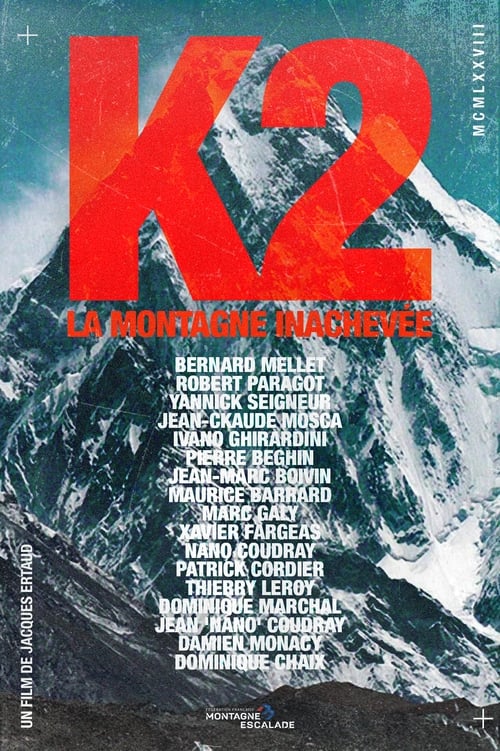
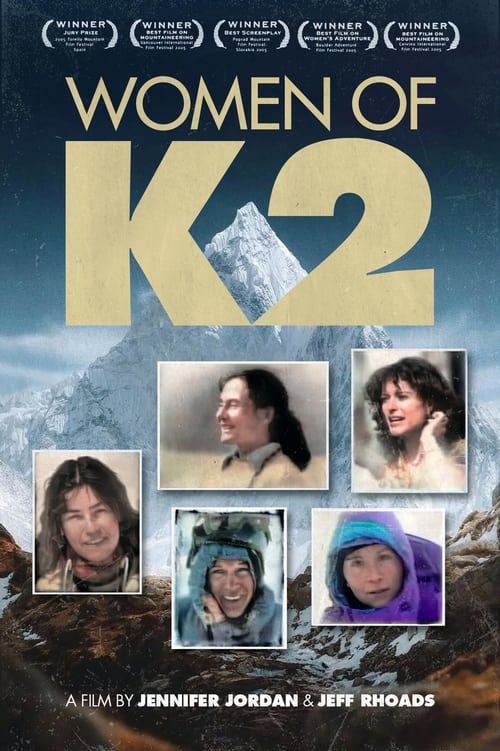
On some peaks in 2003, the statistics are impressive. For the K2 dubbed "wild mountain" or "ruthless mountain", only 240 reached the summit and more than 60 perished in the ascent. An unimaginable rate of one death in four to survive. And these statistics are even worse At the start of the 2004 climbing season, only five talented and determined women had reached the 8,616-meter summit of K2, but only two made it out alive. , they too perished while climbing other peaks of 8000 meters, these five women all disappeared in the mountains.
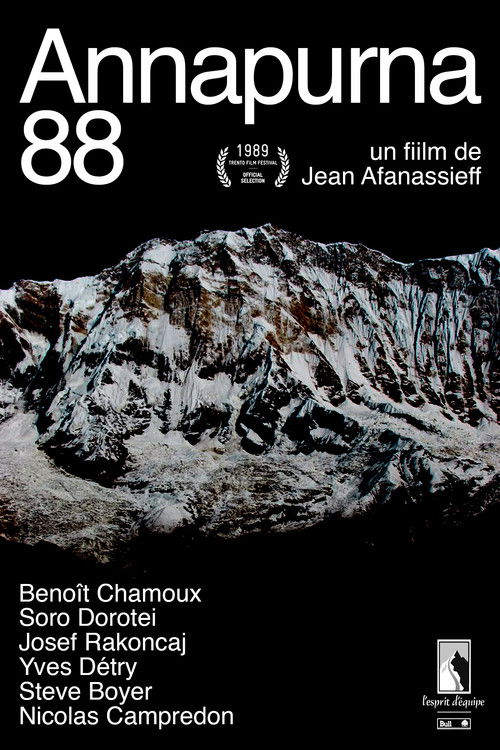
An international expedition led by French mountaineer Benoit Chamoux reached the summit of Annapurna (8091 m) on Tuesday, May 10, 1988, via its south face, one of the most difficult routes in the Himalayas. The expedition, named "L'Esprit d'Equipe" (The Spirit of Team), financed by the computer company Bull (Chamoux thus secured one of the largest contracts in the history of mountaineering: twenty million francs to carry out his project), aimed to reach six peaks over 8,000 meters, as a full team, within three years: Annapurna, Everest, Manaslu, Cho Oyu, Makalu, and Kangchenjunga. The challenge results: in 1988: Annapurna (8091 m) - 5 out of 6 men reached the summit, 1988: failed on Everest, 200 m below the summit, 1989: Manaslu (8183 m) - 8 out of 8 men reached the summit in 4 teams of 2, 1990: Cho Oyu (8201 m) - 7 out of 7 men reached the summit, 1990: Shisha Pangma (8013 m) - 7 out of 7 men reached the summit.
Dive into the mind of French mountaineer Charles Dubouloz as he achieves Rolling Stones (5.10 A3, or M8, 1100m) a rarely repeated route on the fabled north face of the Grandes Jorasses above Chamonix, France. He spent six days with five bivouacs on the wall, pressing on through strong winds and low temperatures of -30°C (-22°F), sustaining some frostbites to achieve one of the most acclaimed winter solo ascent in the Alps. « I'm scared, I quiver, I'm cold...but I have this intense drive to set foot on the summit. »
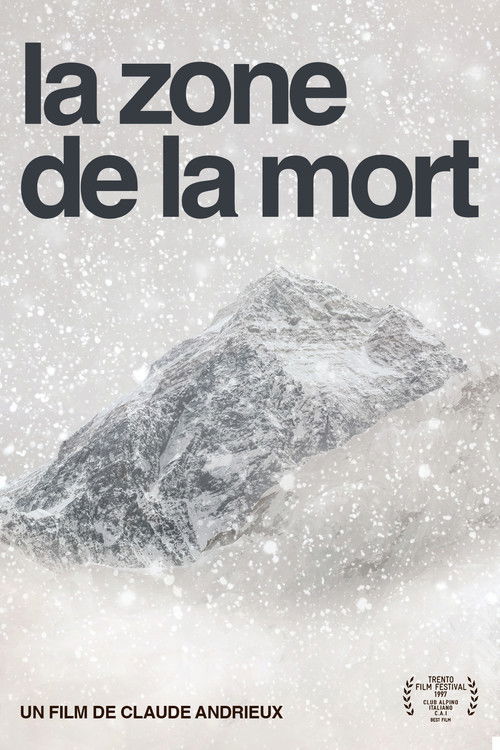
To understand the difficulties of an ascent to over eight thousand metres, it is enough to remember the almost 300 victims these peaks have claimed. The Swiss alpinist Ehrart Loretan, the third alpinist in the world to have climbed all 14 8,000, and the Austrian alpinist Kurt Diemgerger cover the whole history of the conquest of the world’s 8,000, from the fifties to the present day, together with other alpinists and film directors who have climbed them. They talk about their experienced when they ventured into the death zone.