3D printing is changing the world – from printing guns and human organs to dismantling the world’s industrial infrastructure by enabling home manufacturing. The 3D Printing revolution has begun. Who will make it?
Chris Anderson
as
Bruce Bradshaw
Craig Broady
Bill Buell
Michael Calore
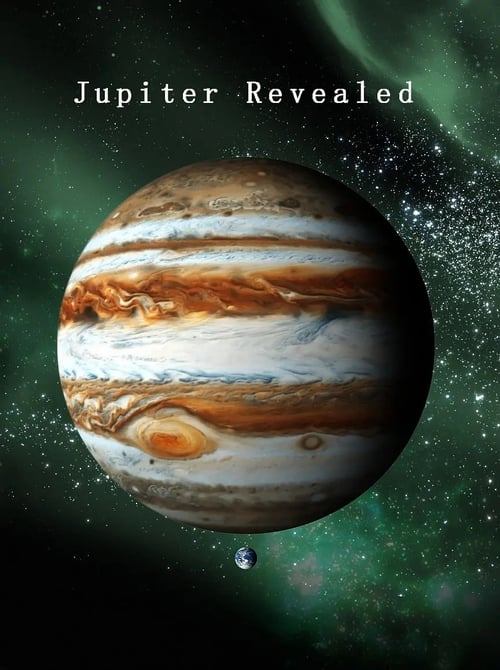
BBC Horizon Documentary. Jupiter, the largest and fastest rotating planet among the eight major planets in the solar system, is the fifth planet from the inside out. This film tells the latest information from NASA's Juno Jupiter probe, unveiling the wonders of Jupiter.
NASA launches its most ambitious hunt for traces of life on Mars, landing a car-sized rover in a rocky, ancient river delta. The rover will stow samples for possible return to Earth and test technology that may pave the way for human travel to Mars.
From space, 400 kilometers above our heads, one man has won the hearts of the French: Thomas Pesquet. Traveling to the stars is an almost impossible dream, but for Thomas Pesquet it is a reality that he recounts in detail in an exclusive interview. You will discover the magic of living in space, the wonder of our planet, but also the reality of everyday life in zero gravity: how they sleep, how they wash, what happens to their bodies. Why do they have to exercise for two hours a day? How do they communicate with their families? With Thomas Pesquet and the help of specialists, scientists, doctors, instructors, directors, and computer-generated images, you will discover what goes on behind the scenes of a mission and understand how the International Space Station works.
From: Symposium sur la sécurité des technologies de l'information et des communications. French conference on information security. It took place in à Rennes from the 7th to the 9th of June 2017.
Today, hundreds of kilometers above our heads, millions of pieces of trash are orbiting randomly at breakneck speed. Scientists are now warning that, if nothing is done, the exploration outside our planet, and communications systems within, will be almost impossible within 30 years. How can we collect the space trash and avoid future disasters?
Close and daily, sometimes comical but often tragic, sleepiness takes an important place in our lives. Suddenly falling asleep, sometimes with their eyes still open, affects more than 10% of the population. The leading cause of fatal accidents on motorways, drowsiness is also prevalent in the world of work. A silent, irrepressible phenomenon... a flaw in a system of performance, speed, reactivity. So what is happening in our brain? Can we control the conditions of sleepiness? By working on sleep and especially on the functioning of wakefulness, researchers are trying to understand the biological and environmental mechanisms that keep humans at the peak of their abilities. After a clear technological improvement, it turns out that man, having become an expert and process controller, finds it very difficult to focus his attention over time.
The sun is the miracle that makes everything possible - but also the greatest danger. For the first time, a feature-length documentary is dedicated to the search for the significance of our home star for mankind, science and nature. Thanks to the researchers from the American space agency NASA, who work at the Canary Islands observatories in the hottest and coldest places on the planet.
At the edge of our solar system supposedly lies an immense planet. Five to ten times the size of the Earth. Several international teams of scientists have been competing in a frantic race to detect it, in uncharted territories, far beyond Neptune. The recent discovery of several dwarf planets, with intriguing trajectories, have put astronomers on the trail of this mysterious planet. Why is this enigmatic planet so difficult to detect? What would a ninth planet teach us about our corner of the universe? Could it help us unlock some of the mysteries of our solar system?
A scientific expedition travels to an alternative Earth in hope of finding a new home for humanity, which has destroyed its own planet. But is it even possible to escape old patterns?
NASA's James Webb Space Telescope, from its conception to completion.
„The Fabulous Insects – Beetles“ presents colourful and bizarrely shaped species as well as the largest beetle in the world, in its habitat in the South American rainforest. The film also shows that the colourful diversity and beauty of beetles and their exciting natural history can be experienced right on our doorstep, in Central Europe. In aesthetic and never-before-seen macro slow-motion and time-lapse shots, the viewer experiences the world of beetles, which is more beautiful, colourful and surprising than many of us realise. No other group of animals on earth is so diverse: beetles come in a wide variety of ‘models’, from miniature versions a quarter of a millimetre in size to large versions twenty centimetres long. Some beetles flaunt jewel-like iridescent colours, while others wear plain black. Some come in eye-catching warning colours, while many wear an astonishing camouflage.
Bora Bora is the most popular destination in French Polynesia, certainly because of its lagoon, considered the most beautiful lagoon in the world. In this context, the islet could have sunk under concrete and pollution, and the reef could have been irreparably impacted. However, thanks to the will of a handful of inhabitants including the mayor of the island, Bora Bora is today a model of sustainable development, with water treatment technologies that are 15 years ahead of France, programs to rebuild corals and protect wildlife, educational actions and the rehabilitation of Polynesian traditions such as “rahui” and the establishment of a monitoring network using new technologies. All of this makes the island a veritable open-air laboratory that shows the way for all tropical coastal environments around the world.
"What's on your mind?" It's the friendly Facebook question which lets you share how you're feeling. It's also the question that unlocks the details of your life and helps turn your thoughts into profits.
Tardigrades, also known as water bears, are microscopic animals famous for their incredible ability to survive extreme conditions. Despite their funny appearance and slow, bear-like movements, they are among the most resilient creatures on Earth. They can withstand extremely high and low temperatures, enormous pressure, toxic substances, and even high levels of radiation. This documentary explores the secrets behind their remarkable survival abilities and explains how these tiny creatures have developed such extraordinary “superpowers.” Combining scientific information with humor, the documentary also looks at what we might learn from tardigrades and how their unique abilities could have potential applications in the future.
More and more bacteria are becoming insensitive to antibiotics, not least due to excessive drug consumption. According to the EU, this problem could soon become as explosive as the environmental issue - and antibiotic resistance threatens to become one of the main causes of death worldwide. Research must therefore find alternatives - not miracle cures, but permanently effective drugs. There has already been one in the past: One hundred years ago, the French biologist Félix d'Hérelle discovered mysterious "bacteria-eating" viruses, known as bacteriophages or phages for short. He used these to successfully treat bacterial infections before the development of antibiotics, but his method was forgotten again. Is bacteriophage therapy the miracle medicine of the future?
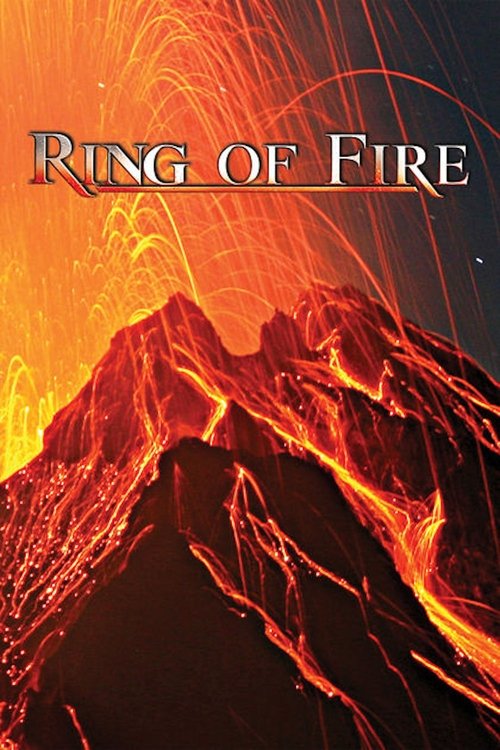
Ring of Fire is about the immense natural force of the great circle of volcanoes and seismic activity that rings the Pacific Ocean and the varied people and cultures who coexist with them. Spectacular volcanic eruptions are featured, including Mount St. Helens, Navidad in Chile, Sakurajima in Japan, and Mount Merapi in Indonesia.