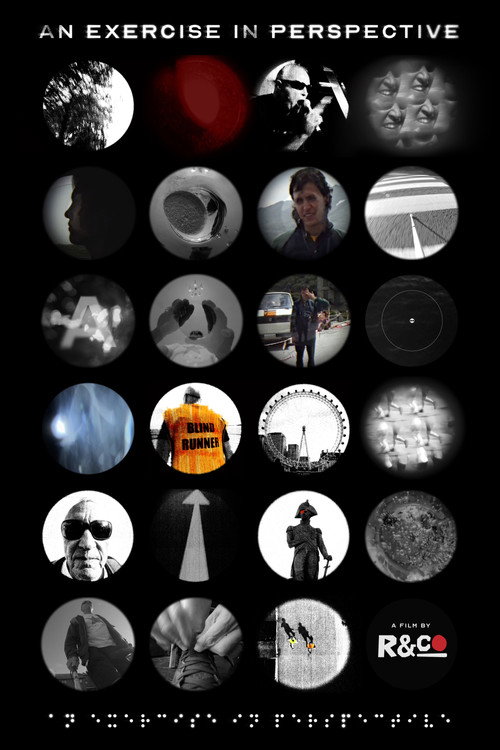
With the use of montage sequences, voiced over with the observations of the children, van der Keuken was able to use artistic expression to portray the sightless children’s unique perspective of the world.
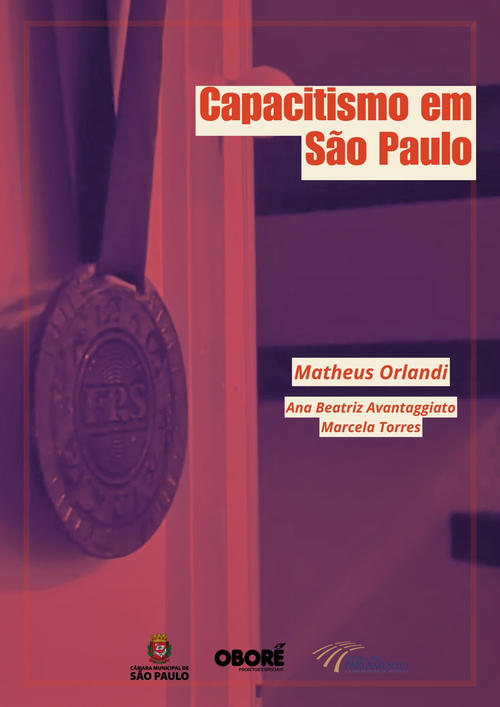
Through intimate stories and day-to-day routines we get a naturalistic glimpse into the lives of individuals with disabilities in the bustling urban landscape of São Paulo. The film captures personal moments and how modern societies confront (or fail to confront) ableism and inclusion.
The film follows five people who lost their sight in armed conflicts, gathering fragments of their present-day lives. Through an enveloping sound composition, veiled archival material, footage shot by the protagonists themselves, and a sensitive visual approach, the film explores memory, perception, and our relationship to the visible. Steering away from spectacle, it invites us to hear what often goes unheard, and to feel differently. In an age saturated with images, this documentary offers a sensory experience where listening becomes a gesture of resistance and human reconnection.
Musicians, producers, family, colleagues and the artist himself look back on the making of Stevie Wonders's classic album "Song In the Key of Life".
Nathan Quinell is a fully trained chef… he also happens to be legally deaf and blind. That’s never stopped him from chasing his dreams to become a full-time cook, but now Nathan must prove himself to his peers, his students and potential employers.
Confessions of people who have lost their sight during their lives. What are their feelings and how do they view their apparent handicap?
Young scholars get busy for Newcastle-on-Tyne's 'Education Week' in the tour of Tyneside classrooms.
Lotte (18) and Roos (16) are sisters and both have Usher syndrome. That means they will soon become deaf and blind. It is not known how fast that will go, but they already see and hear a lot worse than their peers. How do these two high-spirited girls deal with their development into adulthood, while the time bomb of deafness and blindness ticks inexorably? They are not deterred from getting the most out of life: Lotte is studying to become a photographer and Roos is passing her final exams. At the same time, they also want to do a few things before it is too late, such as seeing the Northern Lights with their own eyes. Director Kim Smeekes followed Lotte and Roos for the film for two years.
After losing sight in 1983, John Hull began keeping an audio diary, a unique testimony of loss, rebirth and renewal, excavating the interior world of blindness. Following on from the Emmy Award-winning short film of the same name, Notes on Blindness is an ambitious and groundbreaking work, both affecting and innovative.
The documentary follows the remarkable journey in America's heartland of automotive pioneer and visionary, Ralph R. Teetor.
My name is Ion. Who could have imagined the fate that awaited me: my birth under the Romanian dictatorship, the loss of my eyesight through an accident, my sudden escape from my homeland to seek a future that was a little too idyllic? One thing is certain: fate is like all the criminals that I listen to today for the Belgian federal police. With a little willpower, there is always a way to dodge its tricks. The person who taught me that is a close and loyal childhood friend. That friend is literature. Without her, I probably would not be what I am now, here, among you.
A poetic portrait of a blind father with a bright perspective on life, who is strongly determined to deliver his message to the world.
Jan calls himself Buffalo. He loves cowboys, he’s blind, and may lose his hearing. The documentary follows his journey to America to visit the chief of the Navajo tribe, who wants to perform a ritual to help his hearing. The film is full of unpretentious humor thanks to Jan’s charisma. In the USA, he’s like the Don Quixote of the Wild West - a naive adventurer in a world that is much more ordinary than his imagination. This observational, but not standoffish, film is also an example of how the medium of film can relate to blind people by constantly showing the difference between what Jan perceives and what we actually see.
Traces the lives of the Hartings, a blind Montreal family of three who make their living singing in the city's subway stations. The Hartings lost their only sighted child Hassan in a tragic drowning accident, and have since turned to the teachings of Russian mystic Grigori Grabovoi, hoping to resurrect their son. Resurrecting Hassan is an exploration of this family's legacy of grief, tragedy and abuse; the film will follow them on their path to redemption.
The film springs from at least three ideas connected to each other in an irrational way: the story of a cow being taken to the butcher, the description of simple pleasures, how to ascend to the top of a hill and descend in a wheelbarrow, and the portraiture of a several blind people. The great, big eyes of the cows are seen in contrast to the unseeing eyes of the blind people.