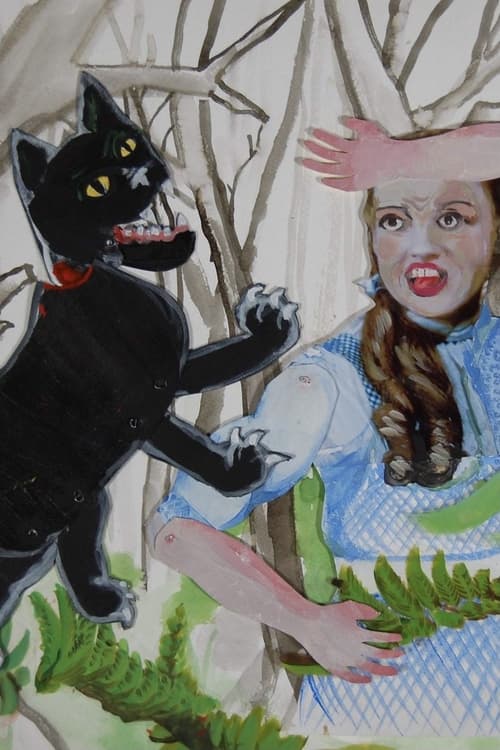
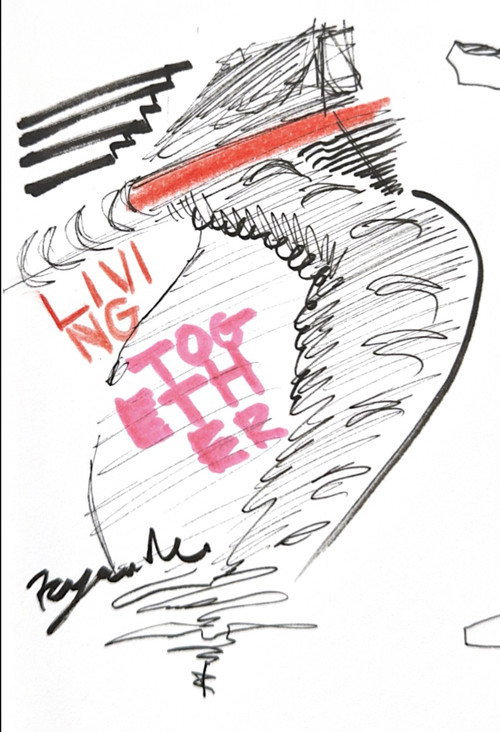
Viet Flakes was composed from an obsessive collection of Vietnam atrocity images, compiled over five years, from foreign magazines and newspapers. Schneemann uses the 8mm camera to “travel” within the photographs, producing a volatile animation.
A group of people are imprisoned in a rail car bound from Berlin to a concentration camp in 1945.
The story revolves around 3 soldiers who are on the outskirts of a war torn city. They are patrolling an area when a bomb is accidentally set off and they have to wait for help.
This winner of the 1993 Academy Award for Best Documentary Feature details the case that the 1989 invasion of Panama by the US was motivated not by the need to protect American soldiers, restore democracy or even capture Noriega. It was to force Panama to submit the will of the United States after Noriega had exhausted his usefulness.
In 1942 in occupied France, a Jewish refugee marries a soldier to escape deportation to Germany. Meanwhile a wealthy art student loses her first husband to a stray Resistance bullet; at the Liberation she meets an actor, gets pregnant, and marries him. Lena and Madeleine meet at their children's school in Lyon in 1952 and the intensity of their relationship strains both their marriages to the breaking point.
Vietnam War, 1966. Australia and New Zealand send troops to support the United States and South Vietnamese in their fight against the communist North. Soldiers are very young men, recruits and volunteers who have never been involved in a combat. On August 18th, members of Delta Company will face the true horror of a ruthless battle among the trees of a rubber plantation called Long Tân. They are barely a hundred. The enemy is a human wave ready to destroy them.
Many times during his presidency, Lyndon B. Johnson said that ultimate victory in the Vietnam War depended upon the U.S. military winning the "hearts and minds" of the Vietnamese people. Filmmaker Peter Davis uses Johnson's phrase in an ironic context in this anti-war documentary, filmed and released while the Vietnam War was still under way, juxtaposing interviews with military figures like U.S. Army Chief of Staff William C. Westmoreland with shocking scenes of violence and brutality.
A Navy surgeon and a nurse fall in love while serving in Vietnam during the war. Their affection for one another provides a striking contrast to the violence of warfare.
An Army cameraman is embedded with a reconnaissance patrol and charts their mission across territory controlled by the North Vietnamese.
A story about a few days during the defense of Kiev at the beginning of WWII.
The Japanese attack on Midway in June 1942, filmed as it happened. Preserved by the Academy Film Archive, in partnership with Twentieth Century Fox Film Corporation, in 2006.
Sir! No Sir! is a documentary film about the anti-war movement within the ranks of the United States Military during the Vietnam War. It consists in part of interviews with Vietnam veterans explaining the reasons they protested the war or even defected. The film tells the story of how, from the very start of the war, there was resentment within the ranks over the difference between the conflict in Vietnam and the "good wars" that their fathers had fought. Over time, it became apparent that so many were opposed to the war that they could speak of a movement.
After a hasty retreat near La Fere, Matthew Villeneuve is found Missing In Action. However he survived, and now has to find his way back to friendly lines.
A U.S. Marine Corps pilot is shot down over the Vietnamese jungle. In his endeavor to get to safety, he meets a female guerrilla fighter and a nationalist named Hong.
Based on real life events, Summer of '67 brings to life the turbulent times of the sixties and the struggles faced by the men and women impacted by the Vietnam War. Young wife and mother Milly (Rachel Schrey) is forced to live with her mother-in-law while her husband Gerald (Cameron Gilliam) is away on the USS Forrestal. Kate (Bethany Davenport) must choose between Peter (Christopher Dalton) her high school sweetheart and Van (Sam Brooks) her new hippie boyfriend. Ruby Mae (Sharonne Lanier) finally finds true love with Reggie (Jerrold Edwards) only to have him whisked away by the draft. Each woman faces the question of whether or not their man will return, and even if he does, will life as they know it ever be the same?
The Driver is drafted by the UN to rescue a wounded war photographer named Harvey Jacobs from out of hostile territory. While they are leaving Jacobs tells the Driver about the horrors he saw as a photographer, but he regrets his inability to help war victims. Jacobs answers the driver curiosity about why he is a photographer by saying how his mother taught him to see. He gives the Driver the film needed for a New York Times story and also his dog tags to give to his mother. When they reach the border, they are confronted by a guard who begins to draw arms as Jacobs begins taking pictures, trying to get himself killed. The Driver drives through a hail of gunfire to the border, but finds Jacobs killed by a bullet through the seat. The Driver arrives in America to visit Jacobs' mother and share the news of him winning the Pulitzer prize and hand over the dog tags, only to discover that she is blind.
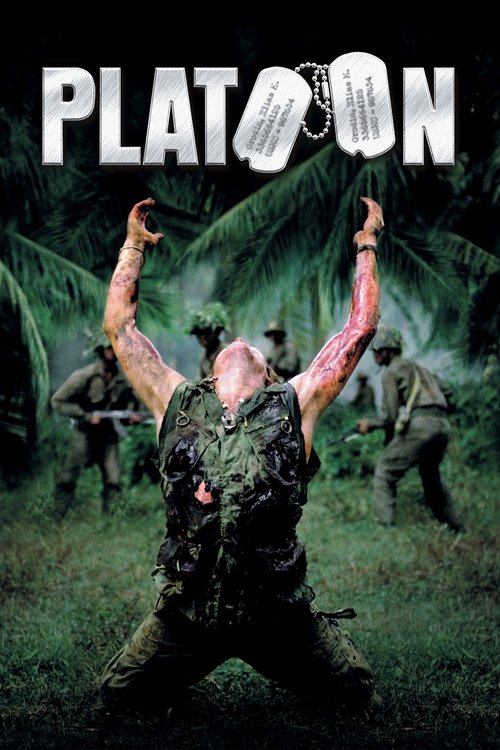
West Point graduate lieutenant Jeff Knight meets cynicism when taking command of sergeant Michael McNamara's tour veterans platoon in a Vietnamese trench camp. Unlike his predecessor, who hid till the end of his tour, Jeff takes charge, experiences the manual doesn't allow coping with all realities and gets wounded. He returns, now fully respect by men and superiors. Besides the Vietcong, the platoon wrestles with the inscrutable villagers, which the G.I.'s officially protect, but also fear as some collaborate with them, other covertly with the Cong, either way subject to bloody reprisals.
A remarkable memoir of resilience, determination and love.Based on filmmaker Gaylene Preston's interviews with her father about his World War II experiences, reconstructed with actor Tony Barry as Ed Preston. Weaving strands of poetic imagined drama, and archival footage into the interview, Preston presents both sides of her parents' wartime marriage: the horror and hardship of battlefield and prison camp juxtaposed with the loneliness and grief of a young wife struggling with a newborn baby and a husband declared missing.Ed Preston, on his way home from rugby practice in 1940, joins the New Zealand Army to go to World War II. His new wife, Tui, is pregnant and distraught, but he tells her not to worry, he'll be home by Christmas. And so he is - four years later - after escaping from a prison camp in Italy. But while Ed is away, Tui has fallen in love with another man.
How do Europeans deal with their recent dark history (the wars, dictatorships and occupations)? What traces are etched?
An American doughboy, stationed in France during the Great War, goes on a daring mission behind enemy lines and becomes a hero.
Punctuated with stories from the Bible, the film’s purpose was to reinforce Christian values in the atomic age by condemning the consequences of human conflict with scenes of the crucifixion, lynching and Nazi fascism.