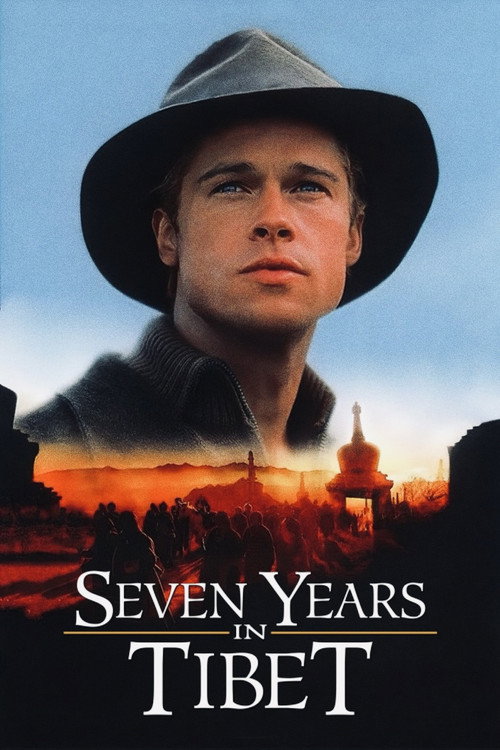
The documentary that captures the compelling story and eyewitness account of six survivors in war-torn Netherlands during World War II.
In 1943, as Hitler continues to wage war across Europe, a group of college students mount an underground resistance movement in Munich. Dedicated expressly to the downfall of the monolithic Third Reich war machine, they call themselves the White Rose. One of its few female members, Sophie Scholl is captured during a dangerous mission to distribute pamphlets on campus with her brother Hans. Unwavering in her convictions and loyalty to the White Rose, her cross-examination by the Gestapo quickly escalates into a searing test of wills as Scholl delivers a passionate call to freedom and personal responsibility.
The epic tale of a class struggle in twentieth century Italy, as seen through the eyes of two childhood friends on opposing sides.
March 1945, on the frontlines of the Tatra Mountains, Romanian and German soldiers prepare for battle, bound by the same hidden fear. In the chaos of combat, beyond bullets and grenades, a harsh truth emerges: in war, they are all just humans.
Many members of the Dutch Underground were gay and lesbian. This film pays homage to them and recounts their story.
It is the winter of 1943. Somewhere in central Greece. A captain and a sergeant of the Greek army are the only survivors of a failed sabotage attempt against a German target during World War II. The two men are forced to flee to a village. They are pursued by a platoon of unwanted German army soldiers led by a tough German lieutenant. In the midst of war, a love is born that will change everyone's lives.
Meet the real-life airmen who inspired Masters of the Air as they share the harrowing and transformative events of the 100th Bomb Group.
In 1911, a willful and determined man from peasant stock named Charles Saganne enlists in the military and is assigned to the Sahara Desert under the aristocratic Colonel Dubreuilh.
Joseph Vilsmaier Two-part TV movie focuses on the tragic events surrounding the sinking of the Wilhelm Gustloff, a German passenger ship, at the end of World War II. On 30 January 1945, Captain Hellmuth Kehding was in charge of the ship, evacuating wounded soldiers and civilians trapped by the Red Army. Soon after leaving the harbor of Danzig, it was hit by three torpedoes from the Soviet submarine and sank in less than an hour.
It is 1943, and the German army—ravaged and demoralised—is hastily retreating from the Russian front. In the midst of the madness, conflict brews between the aristocratic yet ultimately pusillanimous Captain Stransky and the courageous Corporal Steiner. Stransky is the only man who believes that the Third Reich is still vastly superior to the Russian army. However, within his pompous persona lies a quivering coward who longs for the Iron Cross so that he can return to Berlin a hero. Steiner, on the other hand is cynical, defiantly non-conformist and more concerned with the safety of his own men rather than the horde of military decorations offered to him by his superiors.
Starting in late May 1944, during the German retreat on the Eastern Front, Captain Stransky (Helmut Griem) orders Sergeant Steiner (Richard Burton) to blow up a railway tunnel to prevent Russian forces from using it. Steiner's platoon fails in its mission by coming up against a Russian tank. Steiner then takes a furlough to Paris just as the Allies launch their invasion of Normandy.
The film looks at men and women of color in the U.S. Merchant Marine from 1938-1975. Through chronicling the lives of these men and women who, with a median age of 82, are beset with a host of life-threatening illnesses, the movie tells how they navigated issues of racism, disparities in the workplace, gender and familial relations.
Recy Taylor, a 24-year-old black mother and sharecropper, was gang raped by six white boys in 1944 Alabama. Common in Jim Crow South, few women spoke up in fear for their lives. Not Recy Taylor, who bravely identified her rapists. The NAACP sent its chief rape investigator Rosa Parks, who rallied support and triggered an unprecedented outcry for justice. The film exposes a legacy of physical abuse of black women and reveals Rosa Parks’ intimate role in Recy Taylor’s story.
Young Tom and his misfit friends fight to save 'Buster' the baby elephant during the German air raid bombings of Belfast in 1941.
Paris, June 1940. The de Gaulle couple is confronted with the military and political collapse of France. Charles de Gaulle joins London while Yvonne, his wife, finds herself with her three children on the road of the exodus.
In this documentary about the exile of two famous French actors in Argentina during and after World War II, the director Cozarinsky returns to Argentina after many years in France and recalls places and events from his childhood, particularly the celebration of the liberation of Paris on in August of 1944, in Buenos Aires's Plaza Francia. Featuring testimony from various authors and acquaintances of Maria (Renee) Falconetti and Robert Le Vigan, the film explores their lives and final years in Argentina.
The story of the conception of a new British weapon for smashing the German dams in the Ruhr industrial complex and the execution of the raid by 617 Squadron 'The Dam Busters'.