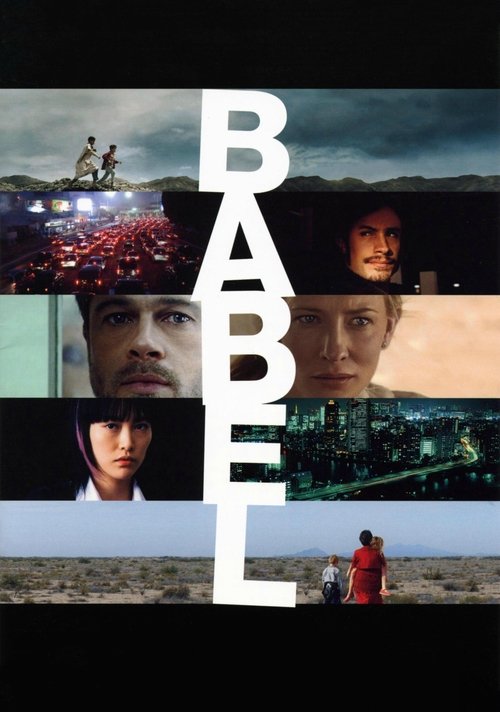
Two deaf and dumb children. She is the daughter of an American Oil engineer. He is the son of an Algerian farmer. They meet and manage to communicate, transcending all the cultural barriers that separate them.
Mohamed Arbouz
as
Boumediene Belasri
Carine Mattys
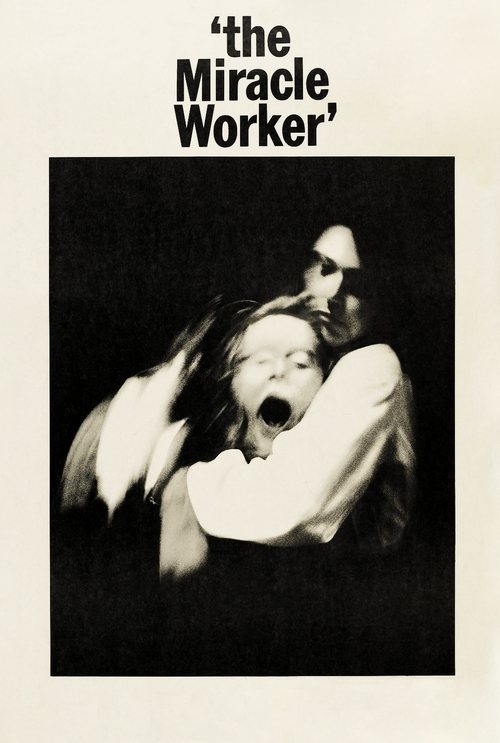
After a series of traumatic childhood events, a psychosomatically deaf, dumb and blind boy becomes a master pinball player and the object of a religious cult.
A legend that begins with the magic words: "Once upon a time." Once upon a time, there was a little girl nicknamed Mimezrane for her beauty and especially for her beautiful braids. She was beautiful but had strangely sad eyes. She was orphaned at a very young age. Her boyfriend and confidant was Hennouche, a mischievous little boy with big black eyes. They lived together a carefree childhood. Time passed. They grew up. Hennouche became a goat herder with a melodious voice; Mimezrane, for her part, became a washerwoman and, on occasion, a water carrier. Both accepted their fate without ever complaining. Yet, even in her poverty, Mimezrane was the most beautiful of all.
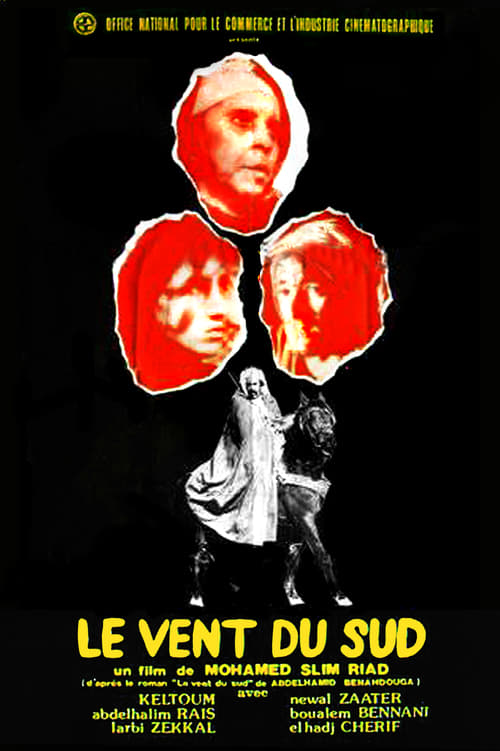
Néfissa, a student in Algiers, returns to her village in the south in the summer. Her father wants her to marry the mayor but she wants to continue her studies. Confronting her father and the opinion of the villagers who do not understand her, she decides to flee to Algiers. The shepherd Rabah discovering her wounded and lost in the mountains, has her treated by her mother. In contact with Nefissa, Rabat becomes aware of his exploited condition and discovers the possibilities offered to him by the cooperatives of the agrarian revolution. The two young people will go through the decisive stage together which will allow them to escape obscurantism and exploitation. Based on the novel "Le vent du sud" by Abdelhamid Benahouga
As a boy, Raoul is reared by an Arab tribe in Algerian Sahara. Years later, as a refined Europeanized gentleman, he falls in love with Barbara, an officer's daughter, who rejects him when she discovers his background. Affecting a raid, he captures her and then secretly buys her at a slave auction. When she is rescued by French troops, however, his ancestry is established and they find happiness together.
Directed by Kamal Dehane
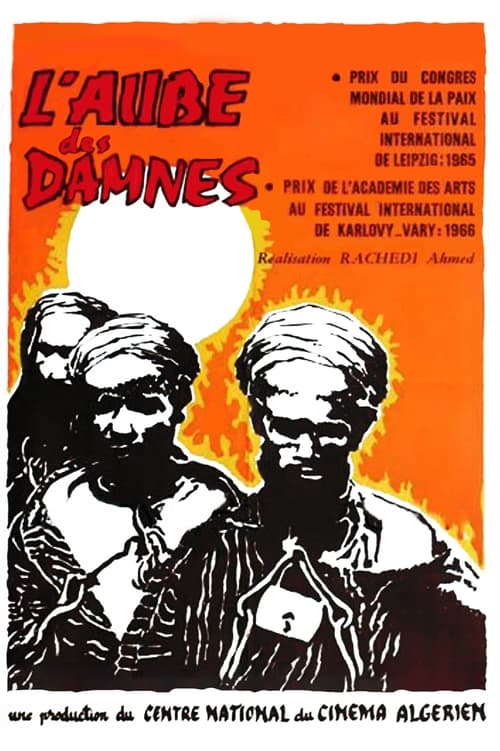
Film describes the miserable existence of a charcoal-burner who is barely able to feed his family. His search for work in town ends in failure and he is forced to return to his village.
In Algiers in 1993, while the civil war is starting, Mrs Osmane's tenants have to endure her bad temper. Her husband left her and the fear to lose her respectability haunt her. The former member of the Resistance during the Independence War persists in controlling the slightest moves of the households rather than struggle against her own frustrations. Learning her daughter is in love, the possibility of finding herself alone will push her to the limit: The symbolical Mrs Osmane "harem" is about to collapse.
Ruthless silver miner, turned oil prospector, Daniel Plainview, moves to oil-rich California. Using his son to project a trustworthy, family-man image, Plainview cons local landowners into selling him their valuable properties for a pittance. However, local preacher Eli Sunday suspects Plainview's motives and intentions, starting a slow-burning feud that threatens both their lives.
Pépé le Moko, one of France's most wanted criminals, hides out in the Casbah section of Algiers. He knows police will be waiting for him if he tries to leave the city. When Pépé meets Gaby, a gorgeous woman from Paris who is lost in the Casbah, he falls for her.
After her widowed father dies, deaf teenager Dot moves in with her godparents, Olivia and Paul Deer. The Deers' daughter, Nina, is openly hostile to Dot, but that does not prevent her from telling her secrets to her silent stepsister, including the fact that she wants to kill her lecherous father.
This excellent feature-length documentary - the story of the imperialist colonization of Africa - is a film about death. Its most shocking sequences derive from the captured French film archives in Algeria containing - unbelievably - masses of French-shot documentary footage of their tortures, massacres and executions of Algerians. The real death of children, passers-by, resistance fighters, one after the other, becomes unbearable. Rather than be blatant propaganda, the film convinces entirely by its visual evidence, constituting an object lesson for revolutionary cinema.
In prison in colonial Algeria, shortly after the end of the Second World War, three indigenous cellmates make out. Once free, they attack the authority represented by the triad of the boss, the gendarme and the administrator. “Living the colonial condition,” confided Tewfik Farès, “is something! It’s not sociologically or historically speaking. It’s life. And I think that’s all there in it. [...] For a hundred and thirty years, we wait. We hold back. We push back. We hope. At the same time, on different occasions, there are skirmishes, unrest.
“La Zerda and the songs of oblivion” (1982) is one of only two films made by the Algerian novelist Assia Djebar, with “La Nouba des femmes du mont Chenoua” (1977). Powerful poetic essay based on archives, in which Assia Djebar – in collaboration with the poet Malek Alloula and the composer Ahmed Essyad – deconstructs the French colonial propaganda of the Pathé-Gaumont newsreels from 1912 to 1942, to reveal the signs of revolt among the subjugated North African population. Through the reassembly of these propaganda images, Djebar recovers the history of the Zerda ceremonies, suggesting that the power and mysticism of this tradition were obliterated and erased by the predatory voyeurism of the colonial gaze. This very gaze is thus subverted and a hidden tradition of resistance and struggle is revealed, against any exoticizing and orientalist temptation.
Three troubled young girls will do anything to escape their stifling lives - even if it means turning to drugs and prostitution. Set in the generation of smartphones and web 2.0, the technology may have made communication easier than ever, but cautionary tales of misunderstood youths remain as relevant as they were two decades ago.
In Algeria in 1954, in a village in the Aurès region, poverty reigns over peasants enslaved by colonial administrators and Algerian landowners. Noua, in love with the son of a peasant dispossessed of his land, must be sold to a wealthy landowner.
In 1965, passionate musician Glenn Holland takes a day job as a high school music teacher, convinced it's just a small obstacle on the road to his true calling: writing a historic opus. As the decades roll by with the composition unwritten but generations of students inspired through his teaching, Holland must redefine his life's purpose.
At the outbreak of the Second World War, two friends, Mokrane and Menach, abruptly interrupt their studies and return to their remote native Kabylian village of Tagsa. While waiting to be drafted into the French Army they have time to woo. Mokrane falls for beautiful Aazi and soon marries her only to find out that she can bear no child. Menach, on his part, is stongly attracted to Davda, but the latter is already married to a rich merchant...Happiness does not seem to be in store for the two former students...
In Kabylie, rude mountain region in the north of Algeria. Arezki finds the young Larbi exhausted, buried under the snow. He takes him in and nurses him until he's recovered. The host seduces Arezki's daughter. She is pregnant. This is an unsupportable shame to the father of the female sinner. Arezki claims vengeance. He leaves his house and takes the oath not to come back before having killed Larbi who betrayed him under his own roof.
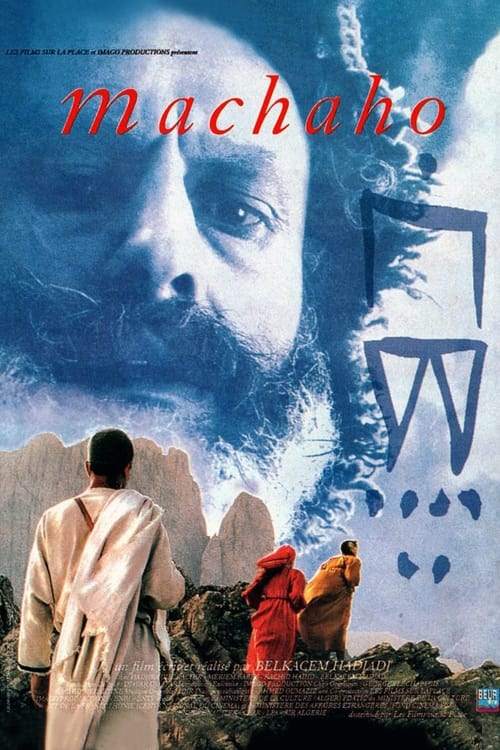
Set in the 1800s among the Berbers of North Africa, this 1997 Algerian feature concerns a noble widow who receives a customary purse of gold coins from the enemy tribe that murdered her husband; the gift puts her in conflict with her kinsmen, who want the money to buy back land taken by the enemy in cahoots with French colonials.
Deaf-mute Sergey enters a specialized boarding school for the deaf. In navigating through the school's hierarchy, he encounters a corrupt underbelly of criminality, known as The Tribe. By participating in several robberies, he gets propelled higher into the organization, when he meets one of the Chief’s concubines Anya, and unwittingly breaks all the unwritten rules of the group."